
May 22, 2025
A coalition of seven West African countries spearheads the transformation of African aviation through the accelerated rollout of the Single African Air Transport Market
The African aviation landscape stands at the precipice of unprecedented transformation as seven West African nations unite to fast-track the implementation of the Single African Air Transport Market (SAATM), marking what industry experts are calling the most significant aviation policy shift in the continent’s modern history.
According to comprehensive coverage by Travel and Tour World, the 18th plenary session of the Banjul Accord Group (BAG) in Abuja has emerged as a pivotal moment for African aviation, with Nigeria, Ghana, Liberia, Sierra Leone, Guinea-Conakry, Cape Verde, and Gambia demonstrating unwavering commitment to revolutionizing air travel across the continent.
Breaking Down Decades of Aviation Barriers
The SAATM initiative, which forms a cornerstone of the African Union’s ambitious Agenda 2063, represents far more than regulatory reform, it embodies a fundamental reimagining of how Africans connect with one another across vast continental distances. For decades, restrictive bilateral agreements, fragmented regulations, and prohibitively high airfares have constrained the growth potential of African aviation, limiting both economic integration and social connectivity.
Travel and Tour World’s reporting reveals that the current initiative addresses these systemic challenges through a comprehensive approach to market liberalization. The policy framework aims to eliminate the complex web of bilateral negotiations that have historically governed African aviation, replacing them with a unified regulatory structure that enables airlines to operate freely across participating nations.
Leadership and Vision at the Forefront
Nigeria’s Minister of Aviation and Aerospace Development, Festus Keyamo, emerged as a leading voice during the Abuja proceedings, articulating a vision that extends beyond mere policy implementation to encompass broader economic transformation. According to Travel and Tour World’s coverage, Keyamo emphasized that SAATM’s success hinges on its ability to deliver tangible benefits to African travelers while simultaneously strengthening the continent’s position in global aviation markets.
The minister’s remarks were reinforced by Adefunke Adeyemi, Secretary-General of the African Civil Aviation Council (AFCAC), who stressed the critical importance of regulatory harmonization across participating nations. Adeyemi’s call for urgent incorporation of SAATM provisions into national legislative frameworks underscores the complexity of transforming continental aviation policy from concept to operational reality.
Economic Integration Through Aviation Connectivity
The economic implications of SAATM implementation extend far beyond the aviation sector itself. Travel and Tour World’s analysis highlights how enhanced air connectivity serves as a catalyst for broader economic integration, potentially unlocking billions of dollars in trade and tourism revenue across participating nations.
Current aviation costs in Africa often exceed those of comparable routes on other continents, creating significant barriers to business travel, tourism, and family connections. By fostering increased competition and operational efficiency, SAATM aims to make air travel more accessible to ordinary Africans while simultaneously attracting international investment to the region’s aviation infrastructure.
The initiative’s alignment with AU Agenda 2063 positions aviation as a critical enabler of continental economic integration. Studies consistently demonstrate strong correlations between air connectivity and economic growth, suggesting that SAATM’s successful implementation could generate substantial multiplier effects across multiple economic sectors.
Addressing Implementation Challenges Head-On
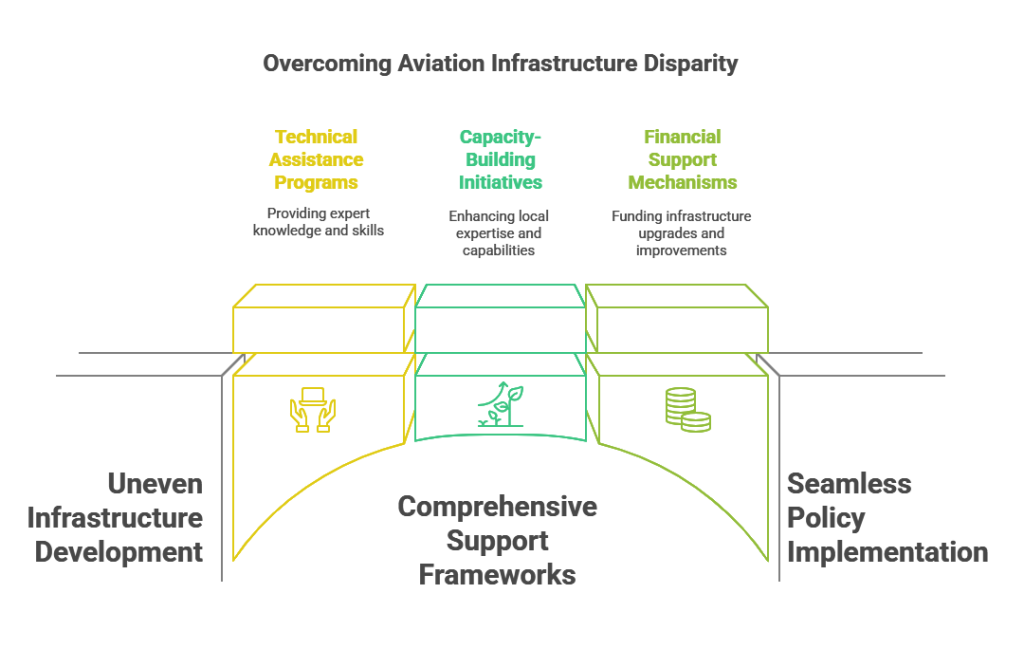
Despite the optimism surrounding SAATM, Travel and Tour World’s reporting acknowledges significant implementation challenges that must be addressed for the initiative to achieve its transformative potential. The disparity in aviation infrastructure development across African nations presents perhaps the most substantial obstacle to seamless policy implementation.
While some countries boast modern airports, sophisticated air traffic management systems, and well-developed regulatory frameworks, others continue to struggle with basic aviation infrastructure requirements. This uneven development landscape necessitates targeted support mechanisms to ensure that all participating nations can meet SAATM’s operational standards.
The BAG plenary session addressed these challenges through discussions of technical assistance programs, capacity-building initiatives, and financial support mechanisms for countries requiring infrastructure upgrades. Such comprehensive support frameworks are essential for ensuring that SAATM benefits extend to all participating nations, regardless of their current development levels.
Strategic Collaboration and International Partnerships
The success of SAATM implementation relies heavily on strategic collaboration between African aviation stakeholders and international partners. Travel and Tour World’s coverage highlights ongoing cooperation with the International Civil Aviation Organization (ICAO) and other global aviation bodies to ensure that African aviation standards align with international best practices.
This collaborative approach extends beyond regulatory compliance to encompass knowledge transfer, technology sharing, and professional development initiatives. The emphasis on capacity-building programs for aviation professionals across the continent reflects recognition that sustainable transformation requires human capital development alongside policy reform.
Transformative Impact on Continental Travel Patterns
The implementation of SAATM promises to fundamentally alter travel patterns across Africa, potentially making intra-continental travel as accessible and affordable as domestic travel within individual countries. This transformation could have profound social and cultural implications, fostering greater understanding and cooperation between African nations while strengthening continental identity.
For business travelers, reduced costs and increased flight options could facilitate expanded trade relationships and investment flows. Tourism sectors across participating nations stand to benefit significantly from enhanced connectivity, as travelers gain access to previously difficult-to-reach destinations at competitive prices.
Timeline and Future Prospects
While SAATM implementation has experienced delays, Travel and Tour World’s reporting suggests that recent developments indicate renewed momentum toward full operationalization. The commitment demonstrated by BAG member countries during the Abuja plenary session signals a shift from policy discussion to practical implementation.
The three-day session resulted in concrete commitments to align national policies with SAATM provisions, suggesting that participating countries are moving beyond rhetorical support toward meaningful regulatory reform. This transition from planning to implementation phases represents a critical milestone in the initiative’s development trajectory.
Implications for Global Aviation Markets
The successful implementation of SAATM could position Africa as an increasingly important player in global aviation markets. By creating a more integrated and competitive continental aviation sector, the initiative may attract international airline partnerships, aircraft manufacturing investments, and aviation technology transfers.
International carriers seeking to expand their African operations may find the liberalized regulatory environment more conducive to sustainable business development. This could result in enhanced connectivity between Africa and other global regions, further integrating the continent into worldwide aviation networks.
A Continental Aviation Renaissance
The unified commitment demonstrated by Nigeria, Ghana, Liberia, Sierra Leone, Guinea-Conakry, Cape Verde, and Gambia through the Banjul Accord Group represents more than policy coordination, it embodies a shared vision of African aviation’s transformative potential. As reported by Travel and Tour World, this initiative signals the beginning of what could become a continental aviation renaissance.
The success of SAATM will ultimately be measured not in policy documents or regulatory frameworks, but in the lived experiences of African travelers who gain access to affordable, efficient, and reliable air travel options. By breaking down the barriers that have long constrained African aviation, these seven nations are laying the foundation for a more connected, prosperous, and integrated continent.
The path forward requires sustained political commitment, continued international cooperation, and unwavering focus on implementation excellence. However, the foundation established through the BAG plenary session in Abuja suggests that African aviation stakeholders are prepared to meet these challenges head-on, ushering in a new era of continental connectivity and economic integration.
Based on comprehensive reporting by Travel and Tour World regarding the 18th Banjul Accord Group plenary session and SAATM implementation initiatives.