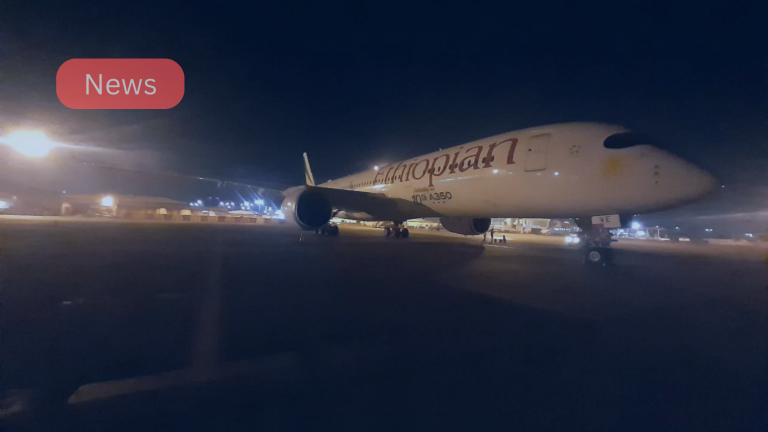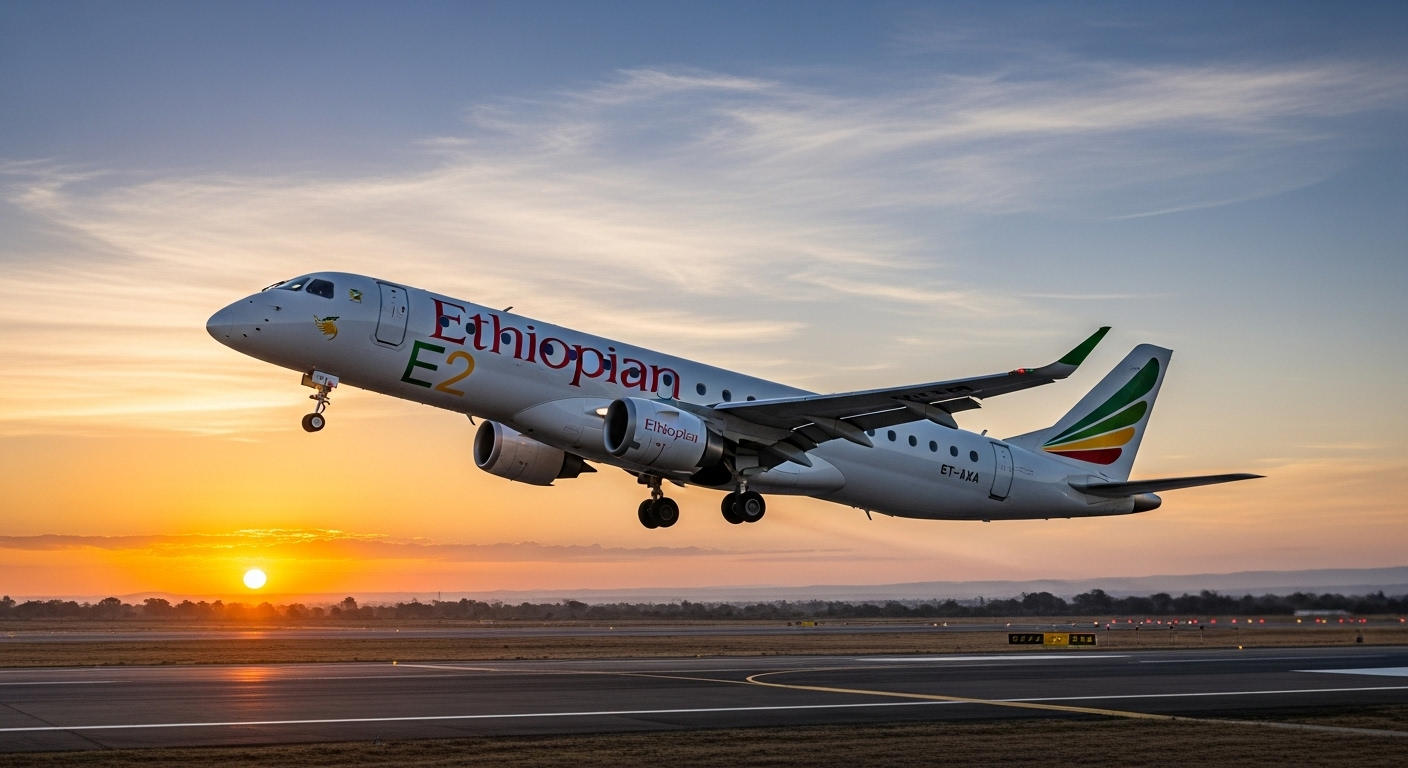

ADDIS ABABA, Ethiopia — Ethiopian Airlines, Africa’s largest carrier by fleet and passenger volume, is exploring a purchase of at least 20 regional or small narrowbody aircraft as part of a self-described strategy to bolster domestic capacity and replace ageing units, according to CEO Mesfin Tasew Bekele.
What’s on the Table
Speaking with Reuters during a gathering of the International Air Transport Association (IATA), Mesfin confirmed Ethiopian is evaluating three aircraft types:
- Embraer E2 family (E190‑E2/E195‑E2),
- Airbus A220 (A220‑100/‑300),
- and the still-to-be-certified Boeing 737 MAX 7.
“We are evaluating three aircraft models… The final order quantity will depend on the type chosen,” Mesfin said.
Why the Fleet Push?
Ethiopian is navigating multiple constraints:
- Surging domestic travel and regional network expansion have outpaced fleet availability.
- Delivery delays across major manufacturers have affected widebodies (Boeing 787/Airbus A350) and narrowbodies alike.
- Engine supply shortages, particularly Rolls‑Royce for 787s and Pratt & Whitney for turboprops, have grounded three 787s and five Dash 8‑400s, extending maintenance cycles beyond typical 3 months.
These factors compelled discussions with leasing companies as a contingency while finalizing any large procurement.
Strategic Fit & Regional Context
The completed order is expected to support:
- Feeder operations: connecting smaller Ethiopian cities to hubs,
- Replacing older Boeing 737NGs and Bombardier Q400s, enhancing fuel efficiency and range,
- Optimizing regional market penetration in East Africa and the continent.
Analysts consider the Embraer E2 and A220 ideal for 100‑seat markets familiar in Africa, while the 737 MAX 7 provides standardized fleet synergy, albeit delayed certification may postpone deliveries.
Additional Fleet Orders in Pipeline
Beyond potential regional jet additions, Ethiopian’s confirmed fleet commitments include:
- 11 787‑9 Dreamliners,
- 8 777‑9s,
- 11 A350‑900s.
In May 2025, the airline expanded Sharjah flight services in the UAE, marking continued network growth.
Regional Jet Comparison
Key Takeaways
- Embraer E2
- Best for thin routes with lower seat count and cost.
- Offers 16–24% trip cost savings versus A220 and A320 families
- Lower overhead but limited support in Africa.
- Airbus A220
- Ideal for longer regional routes, best-in-class fuel efficiency, and high comfort.
- Slightly smaller cargo volume; list price ~$81–92 M.
- Well-established regional jet with strong support and growing African adoption.
- Boeing 737 MAX 7
- Offers maximum capacity and cargo, ideal for trunk routes or high-demand sectors.
- Strong cargo belly-revenue potential.
- Certification pending; integration smoother for operators with 737 fleets.
Ethiopian’s Fleet Decision: Considerations
- Thinner domestic routes → E2 offers unmatched cost-efficiency.
- Busy regional/neighborhood links → A220 works well with high comfort and range.
- USA/Belt trunk/hub feeders or high cargo routes → MAX 7’s capacity and network synergy shine.
Aircraft Range Overview
| Aircraft | Typical Seat Config | Range from ADD | Key Route Examples |
| Embraer E2 | 97–114 seats | ~3,700 km (~2,000 nm) | Addis – Cairo, Nairobi, Dar es Salaam |
| Airbus A220 | 100–135 seats | ~6,000 km (~3,200 nm) | Addis – Dubai, Mumbai, Johannesburg |
| Boeing 737 MAX 7 | 138–153 seats | ~7,100 km (~3,850 nm) | Addis – Dubai, Istanbul, potential wider network links |
Route Potential by Aircraft Type
- Embraer E2: Best for short to medium African routes—ideal for domestic and regional connections (e.g., Addis–Khartoum, Lusaka).
- Airbus A220: Medium-haul with excellent flexibility; can cover Indian Ocean destinations and serve as an upgrade for Gulf–Africa routes.
- Boeing 737 MAX 7: Offers trunk-route range with higher capacity, suitable for dense or cargo-rich sectors such as Middle East corridors.
This map illustrates how each aircraft unlocks different network tiers:
- E2: Enhances intra-Africa connectivity.
- A220: Bridges Africa with South Asia and the Gulf.
- MAX 7: Opens broader access to key diaspora hubs and cargo flows, with route flexibility across 3,000–4,000 nm vectors.
Flight Time Comparison Table
(Assumes average cruise speed, direct routing, and no significant headwinds)
| Route | Distance (km / nm) | Embraer E2 (Mach 0.78) | Airbus A220 (Mach 0.78) | Boeing 737 MAX 7 (Mach 0.79) |
| Addis – Nairobi (NBO) | 1,160 km / 626 nm | ~1h 40m | ~1h 35m | ~1h 30m |
| Addis – Khartoum (KRT) | 990 km / 535 nm | ~1h 25m | ~1h 20m | ~1h 15m |
| Addis – Dar es Salaam | 1,540 km / 831 nm | ~2h 05m | ~2h | ~1h 55m |
| Addis – Dubai (DXB) | 2,540 km / 1,370 nm | ✘ (out of range) | ~4h 30m | ~4h 20m |
| Addis – Johannesburg | 3,950 km / 2,133 nm | ✘ (out of range) | ~6h 20m | ~6h 10m |
| Addis – Mumbai | 3,520 km / 1,901 nm | ✘ (out of range) | ~5h 45m | ~5h 30m |
| Addis – Istanbul | 4,450 km / 2,402 nm | ✘ (out of range) | ✘ (near limit) | ~6h 50m |
- Embraer E2: Ideal for <2.5 hr regional flights within East, Central, and Horn of Africa.
- Airbus A220: Suited for 2–6 hr missions; bridges Africa–Gulf–India comfortably.
- 737 MAX 7: Handles longer ranges up to ~7 hrs, with better fuel efficiency for larger capacity missions.
Operating Amid Global Supply Disruptions
Mesfin emphasized aircraft and engine delays were “from three months, some six months, some more,” due to global disruptions.
Such issues are echoed by other carriers and observed by AeroTime and TradingView’s Refinitiv summary, reinforcing the reliability of Bekele’s statements.
Impact on Network and Competitiveness
Increasing regional capacity may allow Ethiopian to:
- Expand hub feed via Addis Ababa,
- Capture short-haul traffic previously served by competitors,
- Generate operational efficiencies via fleet commonality,
- Enhance market presence in Middle Eastern and African gateways.
Optimizing fleet mix is critical for cost control and maintaining network flexibility.
Challenges Ahead
- Certification uncertainty of the 737 MAX 7 could delay plans.
- Financing and leasing negotiations need resolution before firm orders.
- Engine supply issues may persist without industry-wide capacity recovery.
- Deployment strategy, from configuration, route selection, to pilot training, will significantly impact financial success.
Final Thoughts
Ethiopian Airlines’ exploration of a regional jet order marks a pivotal evolution in its fleet strategy, one rooted in resilience, market responsiveness, and long-term network optimization. By shifting focus toward smaller, fuel-efficient aircraft that match underserved route profiles, the airline is reinforcing its role as both a domestic connector and continental leader.
As global aviation faces renewed pressure from fuel costs, supply chain disruptions, and shifting travel demand, this planned acquisition positions Ethiopian to address near-term operational gaps while enabling sustainable growth. Whether the final choice lands on the Embraer E2, Airbus A220, or Boeing 737 MAX 7, each aircraft offers a distinct balance of cost efficiency, range, and capacity, allowing the carrier to strengthen its East African hub and reclaim short-haul market share.
Ultimately, the decision will reflect Ethiopian’s ability to future-proof its operations against volatility while aligning with Vision 2035’s ambition to be the leading aviation group in Africa and a global benchmark in efficiency, service, and network reach.