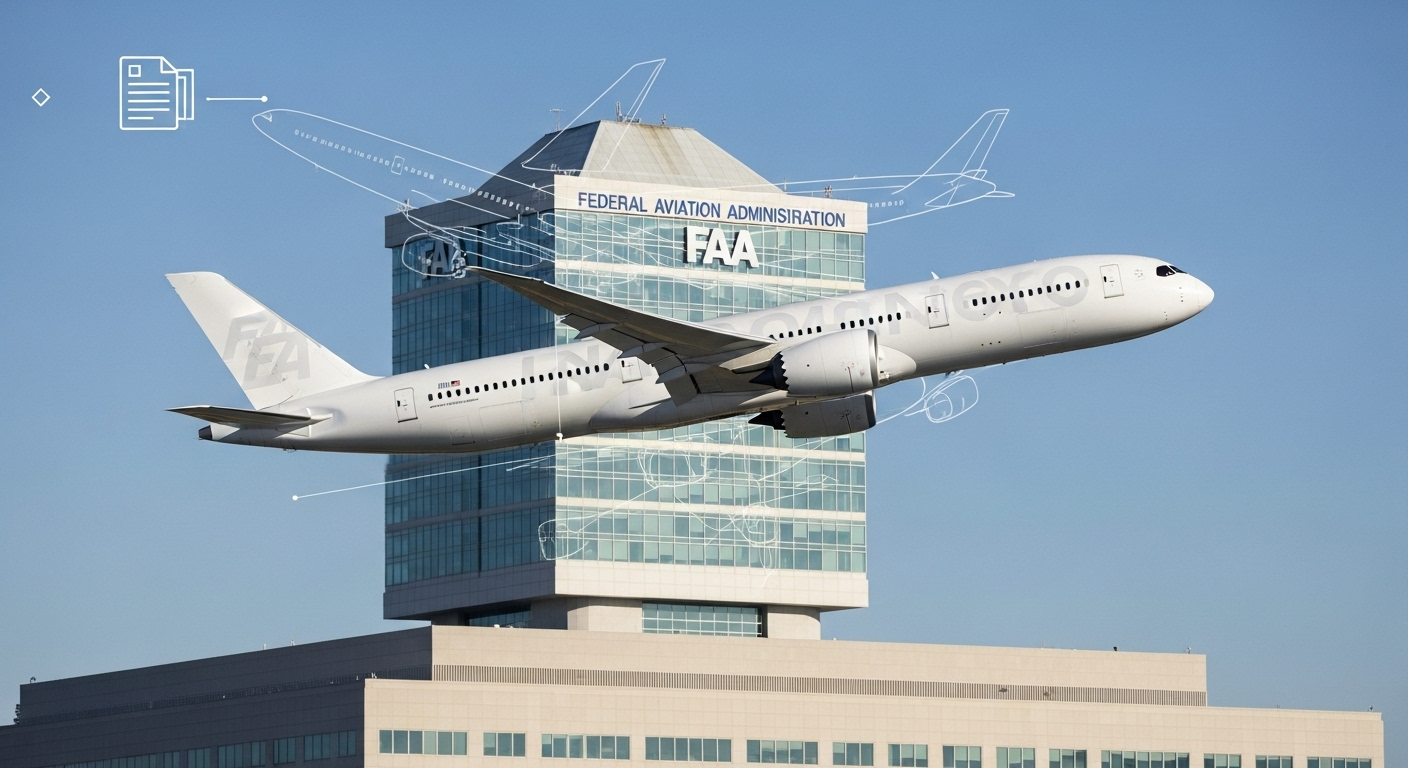

The U.S. Federal Aviation Administration (FAA) announced plans to propose regulatory changes by December 2025 aimed at speeding up certification of new commercial airplanes, the agency told industry and regulators, a move Reuters reported could cut certification costs and reduce the array of exemptions, special conditions and “equivalent level of safety” findings commonly used today. The FAA says any changes will preserve or enhance safety while modernizing certification standards for transport aircraft and propulsion systems.
Aircraft makers and industry watchers view the initiative as a response to long certification timelines and mounting development costs. The effort follows wider agency discussions about using modern tools and data to streamline requirements and better align U.S. regulations with international standards. Aviation trade outlets report the FAA will publish detailed proposals later this year.
What the FAA says and why it matters
According to Reuters, the FAA’s planned changes seek to reduce the number of ad-hoc exceptions (special conditions and equivalent finding processes) manufacturers must navigate, steps that currently add time and complexity to approvals for novel designs and propulsion systems. The agency frames the reforms as process modernization: clarifying standards, removing unnecessary duplication, and applying consistent requirements to new technologies.
Why this matters: certification timelines directly affect how quickly manufacturers can bring new airframes and engines to market, which in turn impacts airlines’ fleet renewal plans, OEM investment decisions and broader decarbonization timelines. Faster, more predictable approvals could lower program costs and encourage innovation, but only if safety and oversight remain robust.
How the change could work (process and international alignment)
Trade reporting indicates the FAA aims to align U.S. certification rules more closely with international standards to reduce duplicative requirements between regulators. Streamlining could involve clarifying technical standards, tightening scope for special conditions, and adopting more uniform criteria for equivalent level of safety findings, mechanisms now used when existing rules don’t neatly cover novel technologies. The agency has previously signaled willingness to use data-driven tools and advanced simulation in certification decisions.
The FAA will likely issue a Notice of Proposed Rulemaking (NPRM) that spells out the regulatory text, impact analyses and timelines. That NPRM will be subject to public comment and industry feedback before any final rule is adopted, meaning the December deadline refers to the agency’s plan to propose changes, not to immediately implement them.
Industry context: why manufacturers and airlines want faster certification
OEMs and airlines face pressure to replace older types with more fuel-efficient models and to incorporate novel propulsion systems such as open-fan engines, hybrid configurations or hydrogen technologies. Long, uncertain certification timelines raise program costs and risk. Observers say reform could support faster introduction of low-emissions aircraft, which aligns with broader decarbonization goals from ICAO and industry groups. Still, any deregulatory perception will invite scrutiny from safety advocates and lawmakers.
Boeing’s recent certification challenges, and the long timelines for certain MAX variants and the 777X, have placed additional pressure on the certification system. While the FAA stresses safety is paramount, manufacturers are pressing for clear, consistent, and timely pathways to approve new designs.
Safety, independent oversight and political sensitivity
Any talk of “speeding” certification raises natural concerns about preserving rigorous oversight. Aviation outlets note the FAA explicitly framed its intent as preserving or improving safety while reducing procedural overhead. Critics will watch whether reforms include independent monitoring, clearer enforcement powers and greater transparency, features that critics say are essential after high-profile safety lapses in recent years. Lawmakers and safety advocates are likely to scrutinize NPRM language closely.
What stakeholders are saying
- FAA (agency position): The agency announced plans to propose modernized certification standards that aim to reduce burdens without compromising safety; detailed proposals will follow. (as reported by Reuters).
- Aerospace trade press: FlightGlobal, Flying Magazine and SimpleFlying report the FAA move as intended to reduce reliance on exemptions and speed approvals, while noting the NPRM will be open to comment.
- Industry analysts: Analysts welcome clearer rules but emphasize the need for robust oversight and resourcing at the FAA to ensure faster outcomes don’t cut corners. (analysis aggregated from trade reporting).
Practical implications & timelines
- December 2025: FAA intends to propose the rule changes (publish NPRM). Stakeholders will be invited to comment.
- Public comment period: Expect months of industry, labor, safety and international partner input. Regulatory rulemaking typically takes 12–24 months from NPRM to final rule, depending on complexity and political pressures.
- Program impact: For OEMs with ongoing new-model programs, a clarified rule set could shorten future certification pathways, but near-term programs already underway will generally proceed under their current certification plans.
What’s next? Scrutiny and implementation
The immediate next step is watching the FAA’s NPRM text for specific language on exemptions, special-condition use, equivalency findings, and any new procedural deadlines or tools (e.g., standardized digital evidence platforms). Congressional oversight and safety groups will scrutinize whether the changes shift the balance toward speed at the expense of transparency or independent oversight. Ultimately, whether the reforms meaningfully accelerate safe aircraft entries will depend on the NPRM detail and the FAA’s resourcing to carry out robust certification work.