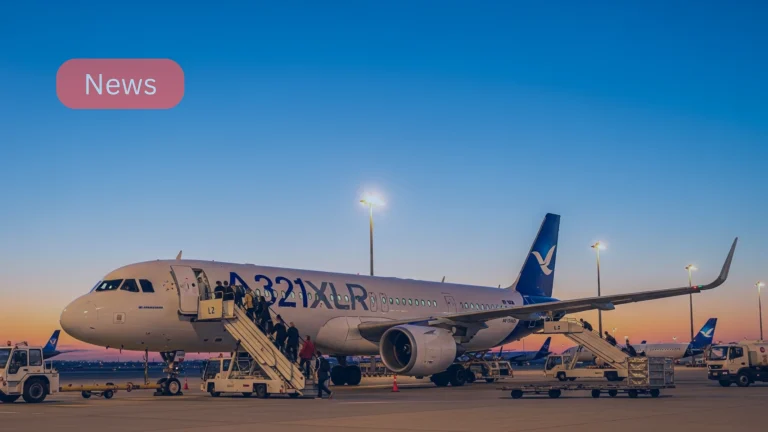

AirAsia COMAC C919 talks intensified this week after Capital A CEO Tony Fernandes confirmed the carrier is “in active discussions to buy the C919,” signalling a potential first overseas order for China’s single-aisle jet and underlining COMAC’s wider push into Southeast Asia.
AirAsia COMAC C919 talks, what was said and why it matters
At Hong Kong’s Belt and Road Summit, Tony Fernandes told attendees that Capital A, AirAsia’s parent, is negotiating with COMAC over the C919, adding: “We’re the first foreign airline to be working with COMAC [on a deal for the C919],” according to reporting in the South China Morning Post. Fernandes did not disclose the potential order size, pricing or delivery dates.
The public confirmation follows earlier signals from the group: Reuters reported in June that Capital A has had exploratory discussions with COMAC and that Fernandes has repeatedly said the airline is evaluating a wider fleet mix as part of its restructuring and growth plans. AirAsia remains a large Airbus customer, but the move to study COMAC options reflects commercial pressures, notably fleet delivery timing, cost and capacity needs, that are reshaping procurement thinking across the region.
The COMAC push: deliveries, export ambitions, and the timeline
COMAC has accelerated activity in the region. Reuters reported that COMAC aims for C919 commercial services into Southeast Asia by 2026 as part of a strategy to expand beyond the domestic market, and COMAC has made inroads with other models (e.g., the C909/ARJ-derived regional jet) in countries such as Laos. Lao Airlines has taken COMAC regional jets under leasing deals, and COMAC has discussed deeper partnerships with regional carriers and governments. Those steps underscore Beijing’s intent to internationalize its narrowbody program.
COMAC’s export play is deliberate: building operational presence in Asia helps support service networks, pilot and maintenance training pipelines, and parts/logistics, essential elements for a manufacturer moving from domestic to international operators. Reuters’s reporting also indicates COMAC’s objective to have C919s operating internationally within the next 12–24 months in select markets.
Technical fit: what the C919 offers operators (and limits)
The C919 is a single-aisle jet designed to compete with the Airbus A320 family and Boeing 737 series. Published technical summaries show seating in standard layouts from around 158 up to about 190 seats and a range sufficient for intra-ASEAN sectors; it uses CFMI LEAP-1C engines and modern avionics, though many avionics and system elements involve Western suppliers. Deliveries to Chinese carriers began in 2022–2024 and COMAC continues to ramp production. Analysts note the C919’s specifications are broadly comparable to rival narrowbodies for short-to-medium routes, but after-sales support, international certification and global spares networks remain factors foreign airlines weigh before committing.
Commercial calculus for AirAsia: price, delivery speed, training and risk
For AirAsia, the attraction is straightforward on the surface: additional narrowbody capacity at competitive acquisition prices, and potentially quicker delivery slots than Western OEMs who face backlog pressures. Fernandes and other executives have emphasized the importance of securing capacity quickly as traffic recovers and tourism rebounds between China and ASEAN. Reuters and trade outlets note, however, that Capital A’s fleet decisions will weigh financing, existing Airbus commitments, pilot training and geopolitical supply-chain risks (e.g., engine or component export constraints under U.S. policy). In short: commercial appetite exists, but operational and political hurdles remain.
Geopolitics and certification: the regulatory road ahead
A major question for any non-Chinese operator adopting the C919 is regulatory certification beyond China. Until now most C919 operations have occurred within China, under CAAC oversight. For broader international operations, especially in jurisdictions that require validations or supplementary approvals, COMAC will need to demonstrate robust compliance with international airworthiness norms and maintenance/parts networks. Reuters reported COMAC’s public aim to gain international operator confidence; regulators and airlines will evaluate the C919 against ICAO standards and national certification pathways.
Geopolitics also plays a role: procurement of Chinese aircraft by ASEAN flag carriers carries strategic signaling in a region balancing economic ties with China and security relationships with other partners. DefenceSecurityAsia stresses that implication; mainstream outlets report the fact of talks and note political sensitivity without adopting the site’s more alarmist tone.
Market reaction and industry context
Industry observers point out a mixed picture. On one hand, timely additional narrowbody capacity helps airlines meet surging demand; on the other, switching or diversifying fleet types increases logistical complexity. AirAsia historically achieved low unit costs via fleet commonality (a single family of aircraft), so any move to adopt the C919 would be a material shift requiring careful operational modelling. The airline has simultaneously pursued Airbus A321XLR deals and options for smaller regional types as part of a broader fleet strategy, underscoring that COMAC discussions sit alongside other procurement options.
Risks, caveats and what to watch next
- Certification & approvals: Watch for announcements about CAAC/foreign validation and any progress on EASA/FAR-style validations or bilateral arrangements. Without such steps, international network deployment will be limited.
- Delivery & spares networks: Confirmed delivery schedules and long-term spares/maintenance agreements will determine commercial viability.
- Political sensitivity: Monitor statements from ASEAN governments and trade ministries; some may actively encourage diversification while others will weigh geopolitical risks.
What’s next
- Short term: Expect more details from Capital A and COMAC regarding negotiation progress, order size, timetable, and potential delivery commitments. Media reports (SCMP, Reuters) will likely carry any official confirmations.
- Medium term: If an order materializes, the decisive tests will be certification for international operations, establishment of maintenance/parts networks in ASEAN, and demonstrable operational reliability on initial routes.