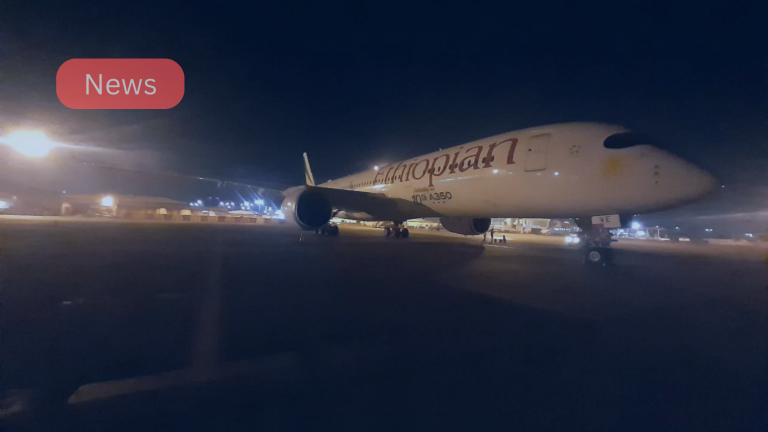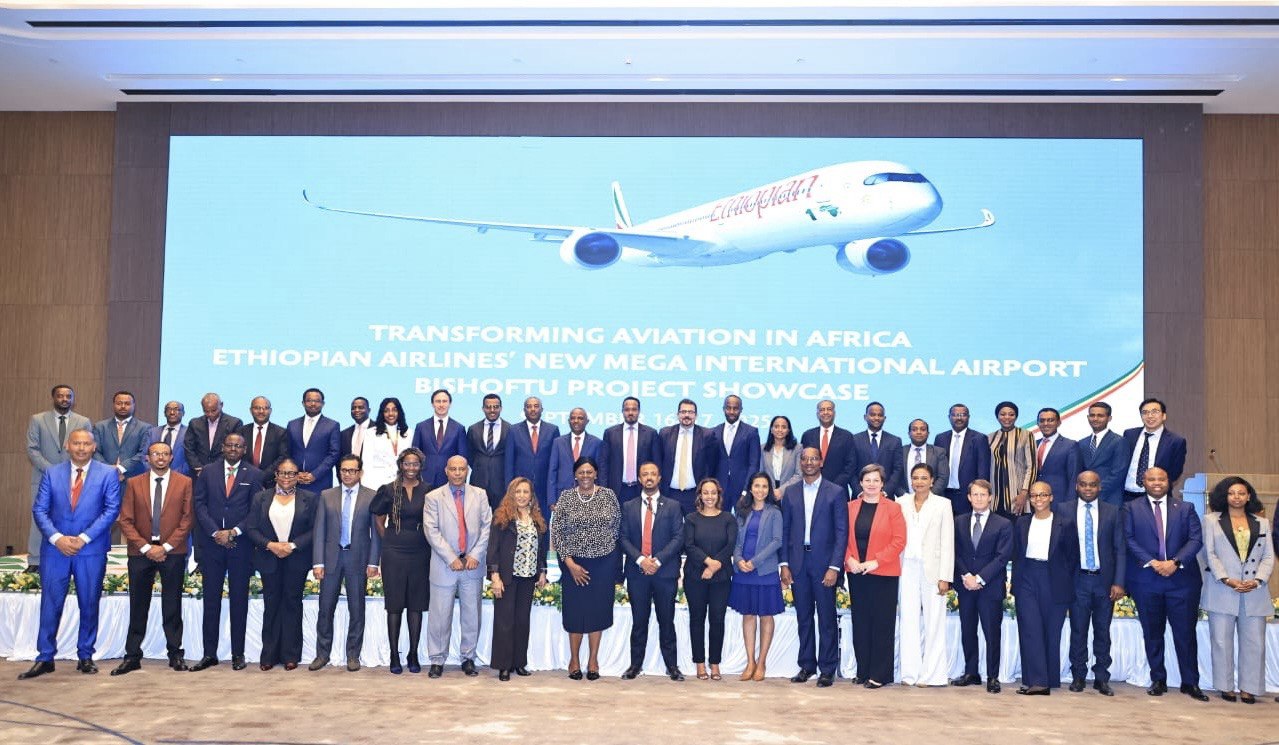

Ethiopian Airlines will form a Special Purpose Company (SPC) to develop, finance and operate the planned Bishoftu International Airport (BIA), a greenfield megaproject that the national carrier says will cost about US$10 billion and unfold in multiple phases. The airline disclosed the SPC plan during a two-day stakeholder showcase attended by Finance Minister Ahmed Shide, the airline’s CEO Mesfin Tasew, and representatives from the African Development Bank (AfDB), Dar Al-Handasah and KPMG.
Ethiopian Airlines and AfDB describe the project as a continental hub: Phase 1 is planned to deliver 60 million annual passenger capacity, expanding later to 100-110 million. The airline presented a provisional financing blueprint that envisions a roughly 70:30 debt-to-equity ratio and an EPC-contractor-driven Export Credit Agency (ECA) financing component. AfDB has signalled a US$500 million mandate pledge to lead mobilization of the remainder.
What the SPC does, structure and financing
- SPC ownership: Ethiopian Airlines says the project will be developed through an SPC wholly owned by the Group. The SPC will use limited-recourse project financing and ring-fence project cash flows to reassure lenders.
- Financing model: The airline outlined a three-tranche debt plan: multilateral development banks (indicatively US$1.8bn), ECAs (US$4.4bn) and commercial/private debt (approx. US$800m), with the remainder from airline equity and other sources. These are indicative figures presented at the showcase and will be refined during due diligence.
- Governance & cashflows: Revenues will flow into a lender-approved waterfall that prioritizes operations, statutory obligations and debt service before equity distributions, a standard project-finance mechanism to increase lender comfort.
(Note: the exact tranche amounts and debt-equity split are company projections announced at the stakeholder event; they are subject to negotiation and lender approvals.)
Project scale & design
- Location & capacity: The airport is planned near Abusera (Bishoftu), ~40 km southeast of Addis Ababa, at lower elevation than Bole, improving aircraft performance. Ethiopian Airlines promotes the site as accommodating up to 110 million passengers at full buildout (with Phase 1 ~60 million).
- Infrastructure: Plans include multiple runways (reports vary between three to four runways), modular terminal layouts capable of handling very large aircraft, rail links to Addis Ababa and an airport city with hotels and retail. Ethiopian Airlines projects the first phase could be completed as early as 2029, subject to financing and construction scheduling.
Why the project matters
- Capacity relief: Bole International Airport is nearing its practical capacity (~25 million p.a.), while Ethiopia’s air traffic has grown rapidly (the airline cited traffic rising toward ~20 million passengers). A new greenfield hub would relieve constraints and support long-term network growth.
- Regional hub ambition: Ethiopian Airlines positions the BIA as a continental hub to capture transfer traffic and expand cargo throughput, the airline forecasts significant cargo growth by 2060 (company projection).
- Financing precedent: The AfDB’s early involvement (US$500m mandate) is significant, the Bank will help mobilize institutional capital, giving the project credibility with ECAs and commercial lenders.
Caveats, risks and open questions
- Land & social impacts: Independent reporting has documented local concerns regarding land acquisition, resettlement and compensation in the Oromia area; these social and environmental issues can delay projects and add costs. Stakeholder engagement and fair compensation are material risks that will need transparent handling.
- Forecast uncertainty: Long-horizon passenger forecasts (to 2060) and financing tranche numbers are projections from the airline and consultants; they should be treated as indicative rather than definitive. Large infrastructure projects commonly face cost overruns or timetable shifts.
- Financing execution: The AfDB mandate is a strong signal but board approvals and syndicated commitments must be secured; the full US$10bn financing stack remains to be finalized.
Timeline (reported milestones)
- Aug 2024: Ethiopian signed design deal with Sidara/Dar Al-Handasah to design the airport.
- Aug–Sep 2025: AfDB mandate letter and stakeholder showcase; AfDB pledged to mobilize initial financing and appointed to lead fundraising.
- Proposed: Groundbreaking statements from Ethiopian’s CEO indicate site works and ground-breaking expected late 2025/Dec 2025 (subject to financing and permitting).
What’s next? Industry outlook
- Due diligence & financing: Over the next 6-18 months expect AfDB-led syndication work, ECA engagement and contract tendering for EPC contractors. Financing certainty will determine whether the 2029 phase-1 target is feasible.
- Regulatory & social license: Land acquisition, environmental impact assessments and local stakeholder agreements will be critical. Transparent resettlement programs and community compensation will influence project timetables.
- Regional impact: If realized, BIA could shift East African aviation flows and create new routes, but full impact depends on airport operations, slot coordination with Bole during transition, and modal links (rail/road).
Key sources
- Ethiopian Airlines corporate press, stakeholder showcase & project details.
- African Development Bank press release, US$500m mandate and financing role.
- Reuters coverage of the Bishoftu mega airport (design agreement & background).
- AllAfrica, regional reporting on project scale and schedule.
- The Reporter Ethiopia, article summarizing the SPC announcement and project projections.