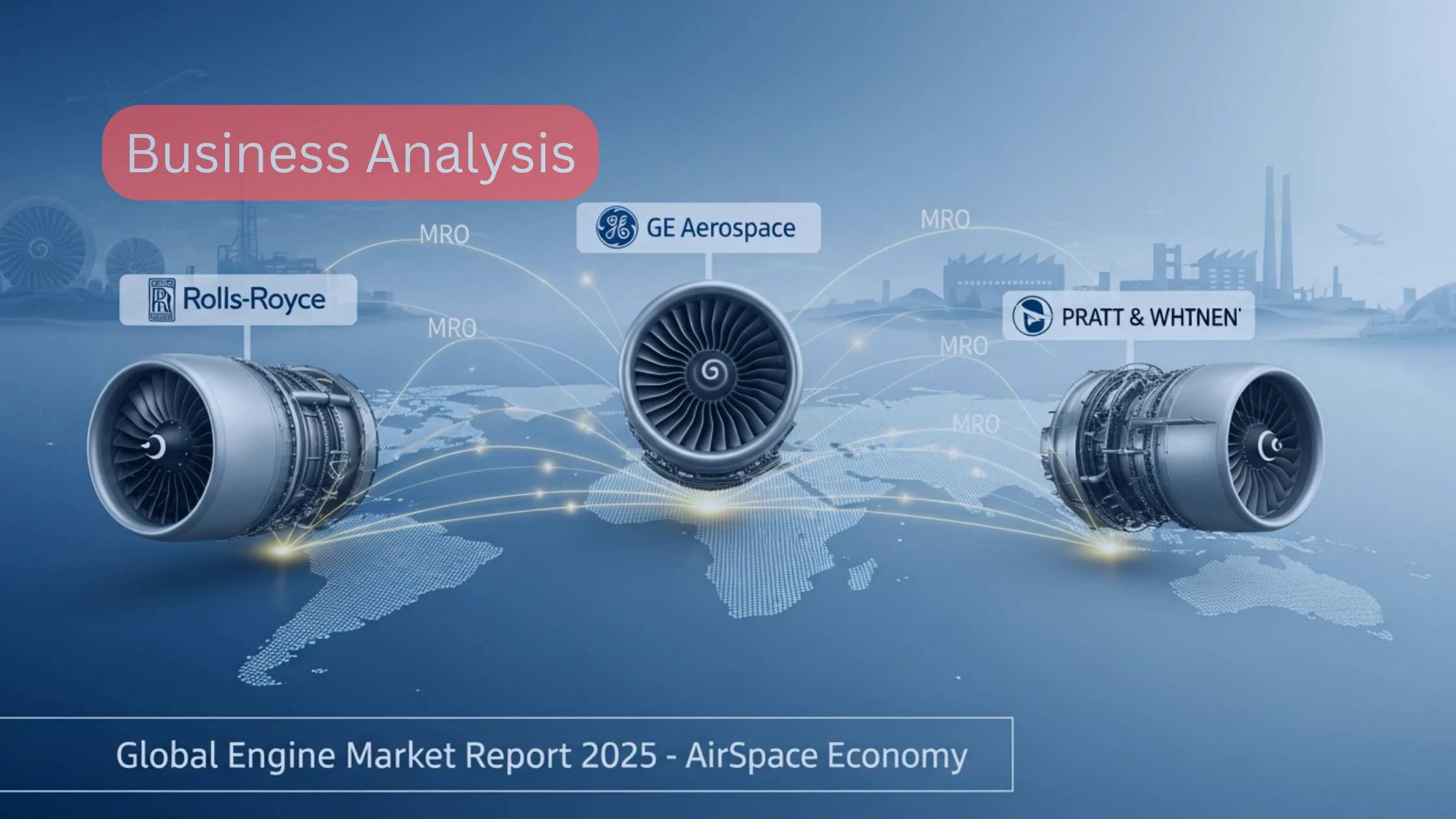

According to Simple Flying’s recent analysis of the commercial aero-engine landscape, Rolls-Royce, Pratt & Whitney (RTX), and GE (including the GE/Safran CFM joint venture) remain the dominant players across widebody and single-aisle markets. The competitive dynamic has bifurcated: CFM/LEAP and CFM/LEAP successors (LEAP/RE engines) and Pratt & Whitney’s GTF families lead the single-aisle segment, while Rolls-Royce and GE retain strength in widebody propulsion. This market structure drives concentrated aftermarket demand, large MRO investments, and targeted supply-chain expansion as OEMs scale production to meet backlogs and fleet renewals. For airlines, MROs, airports and investors, the immediate implication is that engine servicing and lifecycle management (shop visits, digital health monitoring, spares logistics) represent the highest near-term CAPEX/OPEX opportunity, especially where capacity bottlenecks create pricing power for OEM service networks. Strategic action should prioritize partnerships with OEM service networks, targeted MRO investments in high-demand regions, and financing models that capture long-term ancillary revenues built into modern engine life-cycle contracts.
(Source attribution: analysis derived from Simple Flying reporting and cross-checked with OEM and industry market reports.)
Market & financial impact
- Market structure & size: The commercial turbofan market is highly concentrated, top OEMs (GE/CFM, Pratt & Whitney, Rolls-Royce, Safran) account for the majority of production and installed base. Market estimates vary, but industry reports place the 2025 commercial aircraft engine market in the USD 70-80 billion range with a double-digit CAGR in some forecasts to 2030. This implies sizable CAPEX for OEMs and parallel OPEX in maintenance for operators.
- CAPEX/OPEX & ROI potential:
- Airlines: Incremental CAPEX for engine acquisition/lease for fleet renewal (single-aisle re-engining programs) and potential higher short-term OPEX due to shop visit congestion. ROI from re-engining is realized via 10-15% fuel burn improvements (varies by platform) and lower maintenance cost per seat-mile over engine life.
- MROs / Service Providers: Opportunity to invest in engine shop capacity; timely ROI depends on volume (shop visits) and contracts (power-by-the-hour vs. on-warranty). Safran’s €1bn MRO capacity expansion underscores large demand and revenue potential in services.
- Investors & OEMs: Strong aftermarket margins and long lifecycle revenue streams make engine and service business models attractive; stock performance in 2024-25 (e.g., Rolls-Royce improving profitability) supports investor interest.
Stakeholder impact
- Airlines: Must negotiate engine purchase/lease and long-term service agreements; exposure to shop visit backlogs increases operating risk.
- MROs: Local/regional MROs can capture value by capacity expansion or OEM partnerships, but face high capital intensity and certification barriers.
- Airports/Governments: Investment in engine-repair clusters and logistics (e.g., bonded warehouses, skilled workforce) improves national value capture.
- Investors/Financiers: Engine aftermarket contracts (availability, PBH) are bankable cashflows; look for structured financing tied to long-term service agreements.
Strategic context (policy & trends)
- Regional integration & frameworks: On Africa and other emerging markets, AU and ICAO policy frameworks that promote liberalized air services and infrastructure modernization increase demand for new aircraft and engine services. Tie-ins: airport modernization and training center investments create MRO corridors. (Reference ICAO/IATA frameworks for safety/ops modernization).
- Sustainability: OEMs’ roadmaps on SAF compatibility and efficiency (GTF, LEAP, Trent families) shape long-term fleet economics and regulatory compliance costs. Decarbonization policy will drive replacement cycles and retrofits.
- Digitalization: Engine health monitoring and predictive maintenance (digital offerings from OEMs) shift value to data-driven aftermarket services.
Business opportunities & risks
- Opportunities:
- Invest in regional MRO capacity where OEM shops are congested (high ROI if demand is stable).
- Partnerships with OEMs for authorized maintenance centers or joint ventures (reduces certification timelines).
- Financing products that bundle engine purchase with long-term PBH contracts, attractive to airlines seeking predictable OPEX.
- Risks & constraints:
- Supply-chain delays and skilled labour shortages increase lead times and cost.
- Geopolitical or trade constraints could limit parts flows and raise inventory costs.
- Forecasting errors: overly optimistic traffic recovery assumptions may lead to over-capacity.
PESTEL quick view
- Political: Trade policy, export controls, defense offsets.
- Economic: Fleet replacement cycles, fuel price volatility.
- Social: Skills gap for aero-engine technicians.
- Technological: GTF, ceramic matrix composites, digital health monitoring.
- Environmental: SAF uptake, emissions regulation.
- Legal: Certification and export/import rules.
Outlook & recommendations
- Short term (1-3 years): Expect sustained demand for shop visits and selective re-engining; near-term pricing power for OEMs and authorized MROs. Prioritize quick wins: capacity partnerships, targeted investments in spares/logistics, and PBH-based financing.
- Medium term (3-7 years): SAF and next-gen engine adoption influence fleet renewal; digital aftermarket services become differentiators. Position for lifecycle revenue (digital + MRO).
- Recommendations:
- Airlines: renegotiate service contracts with clear KPIs on turnaround and availability; consider PBH where cashflow predictability is needed.
- MRO investors: target regional hubs with OEM support; secure long-term contracts before CAPEX.
- Policymakers: incentivize MRO training and invest in bonded logistics to attract OEM service centers.
- Lenders/investors: use OEM-backed PBH and performance contracts as securitizable cashflows.
Key citations
- Simple Flying article page (topic reference).
- Industry summary on market concentration (Aerotime / reporting on top OEMs).
- Safran MRO capacity expansion (Reuters reporting on €1bn investment).
- Market size / CAGR references (Mordor Intelligence / MarketReportAnalytics / FactMR).
- The Guardian, Rolls-Royce financial/corporate performance summary.