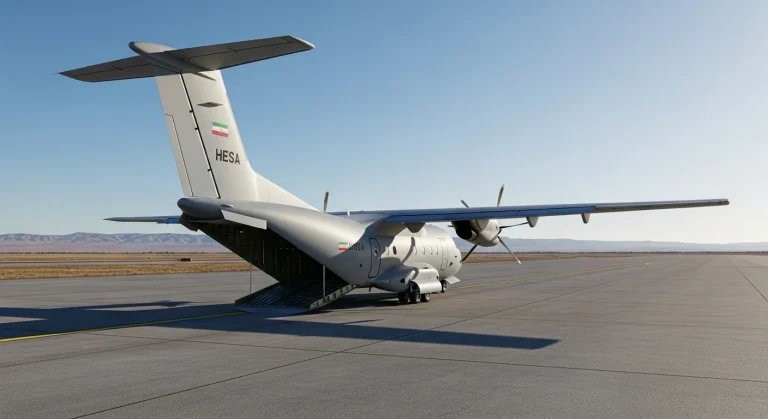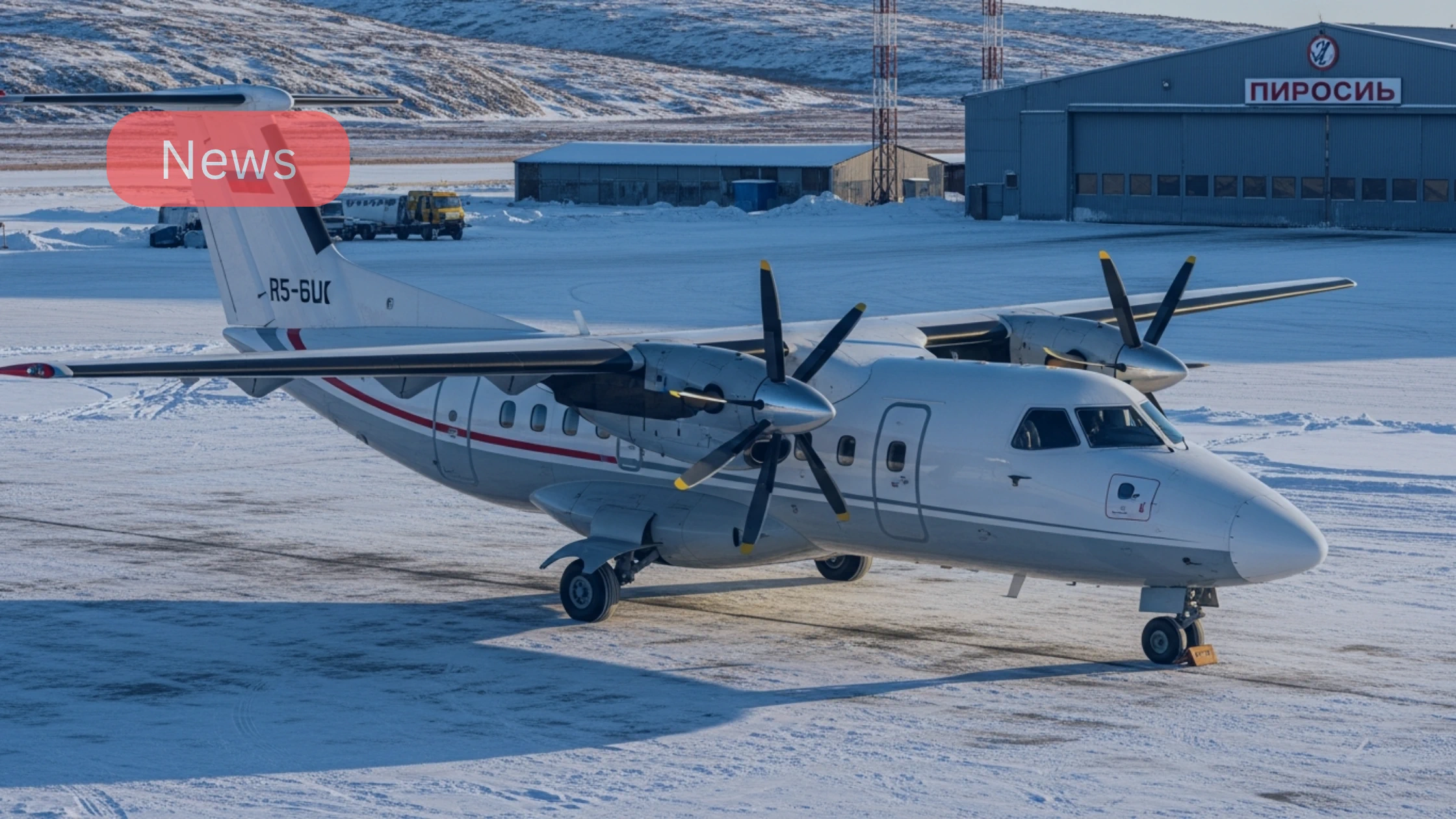

Russian airframer UZGA expects the first prototype of its TVRS-44 Ladoga regional turboprop to make a maiden flight in mid-2026, the company told industry press. The twin-engined, 44-seat Ladoga will use Klimov’s TV7-117ST-02 powerplant, which is scheduled for certification ahead of flight testing.
The programme, one of several reviewed by federal aviation authorities at a recent government co-ordination meeting, aims for type certification by 2029. Regulators say the Ladoga is intended to modernize Russia’s regional network and replace older types such as the An-24 and An-26.
What the TVRS-44 Ladoga is
The TVRS-44 Ladoga is a high-wing, twin-engine turboprop designed for regional routes with a 44-passenger layout. UZGA (Ural Works of Civil Aviation) developed the design to operate from a wide range of Russian airfields, including short and unprepared runways, and to replace ageing Soviet-era regional types. FlightGlobal reports the prototype build is underway and the test programme has been submitted to certification authorities.
Key specifications & intent
- Capacity: ~44 passengers.
- Engines: Klimov TV7-117ST-02 turboprops (modified from the TV7-117 family used on the Il-114-300).
- Design mission: Short/medium regional sectors, rugged field operations, cargo and passenger versions planned.
Programme milestones and timeline
- Prototype assembly: UZGA expects the first prototype to be built by the end of the year and to fly in mid-2026.
- Engine certification: Klimov’s TV7-117ST-02 is targeted for certification in the near term (industry sources indicate certification work and serial production ramp for TV7-117ST-02 in 2024–25).
- Type certification: UZGA and Rosaviatsia list 2029 as the target for type certification and entry into airline service.
Program risks & context
While the technical plan is credible, several structural risks could influence delivery and certification:
- Schedule risk: Milestone slippage is common in new airframe/engine programmes; prototype delivery, flight tests and certification typically take longer than initial targets.
- Supply chain & sanctions: Import restrictions or supply-chain constraints may affect component delivery or export-grade avionics and systems.
- Regulatory capacity: Certification timelines depend on regulator resources and test outcomes; Rosaviatsia’s backing is positive but not a guarantee.
Why the Ladoga matters
If delivered on schedule, the UZGA Ladoga could reshape domestic regional markets by offering a modern, domestically built 44-seat turboprop. That matters because:
- Operators across Russia and neighbouring markets rely on older turboprops. A new type tailored for rugged operations could reduce operating costs and improve connectivity.
- A domestically powered regional type reduces dependence on foreign platforms and supports local aerospace jobs and MRO needs.
- Multiple variants (cargo, commuter) increase potential commercial markets.
Timeline recap
- Prototype fuselage assembly underway, first prototype expected by end-2025.
- Maiden flight aimed for mid-2026.
- Engine certification for TV7-117ST-02 expected in the near term (industry targets 2024–25/2026).
- Type certification target 2029.
What’s Next? Industry outlook
If UZGA hits the mid-2026 flight target and the TV7-117ST-02 follows certification, the TVRS-44 programme will enter an intensive flight-test phase. Success would give Russian regional carriers a modern, domestically made turboprop option and could launch serial production plans. However, schedule risk and geopolitical/supply constraints remain significant variables, industry watchers should treat dates as targets, not fixed delivery commitments.
What industry experts will watch next
- Flight-test results (structural, handling, engine integration).
- Certification evidence: test reports, ETOPS/operational approvals for regional ops.
- Airline interest / letters of intent: initial launch customers and leasing deals.
- Supply-chain resilience: availability of avionics, propellers (AV-901/AV-44 variants), and components.
Sources
- Flight Global, David Kaminski-Morrow, “Russia’s prototype TVRS-44 regional turboprop set to fly in mid-2026” (4 Nov 2025).
- Aviation Week, TVRS-44 fuselage milestone / programme coverage (Feb 2025).
- Rostec / UEC / Klimov statements about TV7-117ST-02 development.
- Industry/regional reporting on TVRS-44 (ruavia, Izvestia summaries).