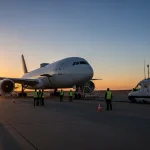

The U.S. Federal Aviation Administration has published a Boeing 787 MCP proposed AD that would require operators to replace Honeywell Mode Control Panels (MCPs) on 787-8/-9/-10 Dreamliners, after reports of uncommanded MCP selected-altitude changes.The Federal Register notice formalising the proposed airworthiness directive was published 17 November 2025 and opens a 45-day comment period.
Why the FAA acted
The FAA’s NPRM states it received operator reports of MCP selected-altitude changing without crew input and traced root causes to a combination of software, airborne electronic hardware and internal power-supply circuitry for the MCP encoder knob selectors. The regulator says the condition, if not corrected, “could result in controlled flight into terrain or traffic confliction.” The proposed remedy is replacement of the affected MCP units with updated hardware and an installation test based on Boeing’s April 2025 service bulletin.
Scope, cost and compliance
- Applicability: The NPRM applies to U.S.-registered Boeing 787-8, -9 and -10 airplanes fitted with specified Honeywell MCP part numbers (per Boeing Alert Requirements Bulletin B787-81205-SB220004-00 RB, Issue 001, dated 22 Apr 2025).
- Affected fleet: FAA estimates about 165 US-registered 787s are affected, effectively the U.S. fleet.
- Estimated cost: Replacement estimated at $405,000 per aircraft; FAA notes Honeywell may cover costs under warranty for some units.
- Comment period: FAA accepts comments for 45 days from 17 Nov 2025 (deadline: 2 Jan 2026). Stakeholders should file via regulations.gov (Docket No. FAA-2025-3426).
How the MCP fault can affect flight operations (Honeywell MCP; uncommanded altitude change)
The mode control panel is the pilot interface for autopilot and auto-flight mode selections including selected altitude. If the MCP selected-altitude changes without pilot input, the autopilot may command an unplanned climb or descent, a safety hazard particularly in congested airspace or during approach/terrain proximity. The FAA classified the potential outcome as severe (CFIT or traffic conflict), justifying a mandatory corrective action.
Operational and commercial impacts
- Operational downtime: Replacing MCPs and installation tests will require aircraft time in maintenance; FAA’s own cost estimate factors typical labour and parts.
- Airline scheduling: For high-utilisation carriers, removing aircraft for MCP replacement could require schedule adjustments or short-term wet-lease/transpose strategies.
- Liability and warranty: FAA acknowledged Honeywell may cover some costs under warranties; airlines will seek clarity from OEMs and lessors on cost apportionment.
What operators should do now (practical steps)
- Submit comments to the FAA docket (Docket No. FAA-2025-3426) before 2 Jan 2026 if they have operational data or concerns.
- Contact manufacturers: Coordinate with Boeing and Honeywell for parts lead times and warranty coverage.
- Plan maintenance windows: Schedule MCP replacements in planned heavy maintenance slots to minimise disruption.
What’s Next? Industry Outlook
- Regulatory: Expect FAA to review public comments and then either finalise the AD, revise compliance wording, or issue clarifying guidance; timeline typically runs months but the FAA has signalled urgency.
- Operational: Airlines should engage with OEMs and regulators to clarify logistics and warranty coverage and plan maintenance to reduce schedule impact.
- Reputation & trust: Quick, well-supported fixes reduce disruption and preserve operator confidence in the type; transparent manufacturer communication will be critical.
Sources
- Jon Hemmerdinger, FlightGlobal, “787’s unexpected altitude change prompts FAA proposed airworthiness directive”, 14 Nov 2025.
- Federal Register / U.S. Department of Transportation, Proposed Airworthiness Directives; Docket No. FAA-2025-3426 (published 17 Nov 2025).
- SimpleFlying, AviationDirect and other trade summaries confirming scope and commercial estimates.