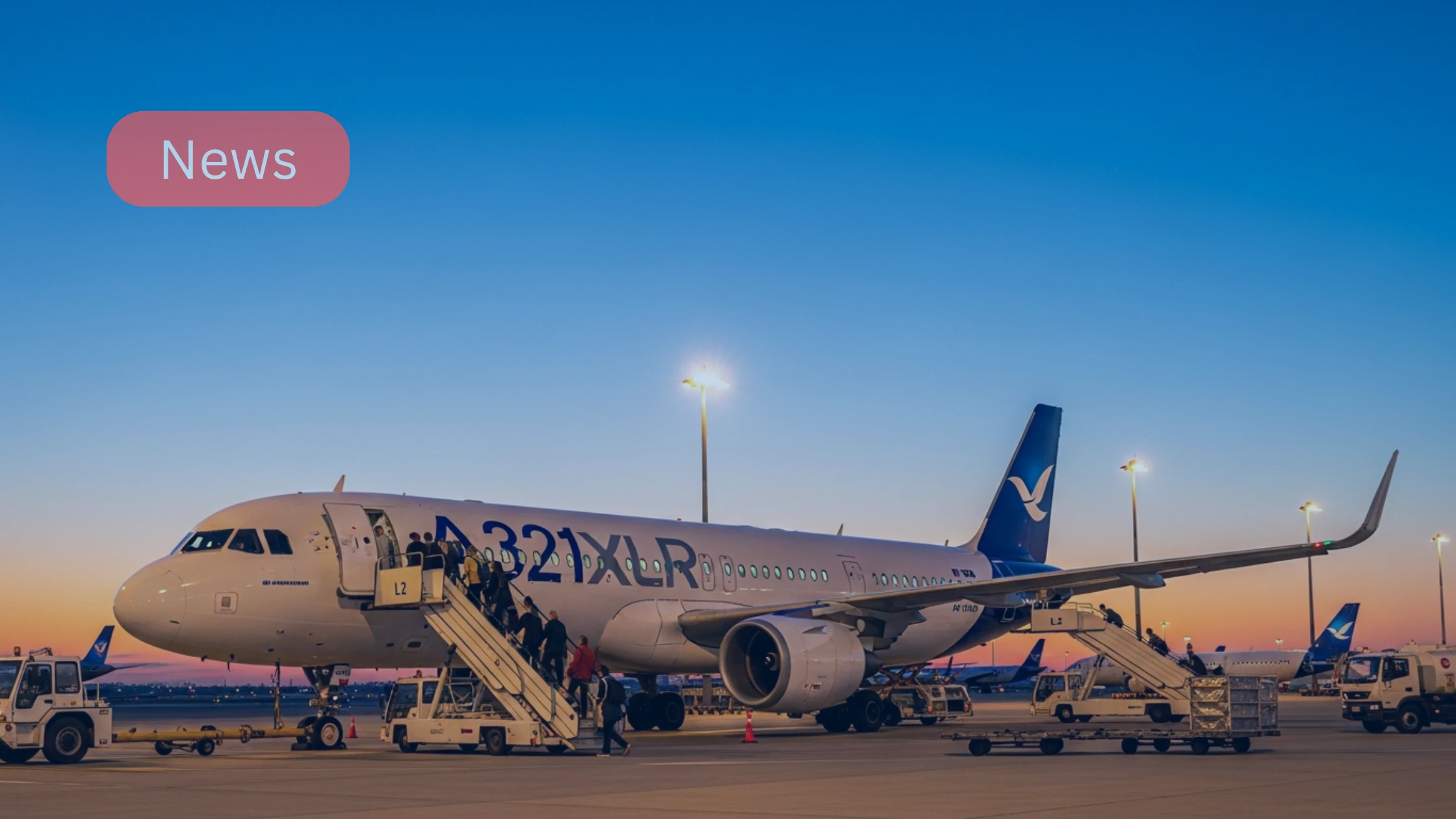

The A321XLR operational issues that surfaced in 2024-25 are forcing airlines and Airbus to recalibrate expectations for how far and how frequently a single-aisle can replace larger widebodies on long routes. Hailed as a “game-changer” when announced, the XLR has opened new long-thin routes but encountered early supply, seating and payload constraints, and in isolated cases, temporary groundings or fleet adjustments.
What happened
- Airbus designed the A321XLR to extend the A321neo family’s range to ≈4,700 nm (≈8,700 km) by adding a permanent rear centre fuel tank and higher MTOW. Airbus markets it as a route-opening aircraft for long, thin city pairs.
- Since entry to service, several teething issues have emerged: seat supply/installation bottlenecks delaying some deliveries, reports of payload limits on ultra-long missions, and airline decisions to ground or curtail operations on a small number of early airframes while fixes or operational mitigations are implemented.
Technical design vs operational reality
The XLR’s extra range comes from a permanent Rear Centre Tank (RCT) and structural/landing-gear strengthening to raise MTOW. That design is efficient but introduces tradeoffs:
- Weight penalty: the RCT and related structure increase aircraft empty weight versus an A321neo, reducing available payload on the longest sectors.
- Certification scrutiny: regulators required design mitigations and weight accounting that trimmed advertised range slightly compared with early marketing projections. Reuters/industry reporting documented these certification discussions in 2022–24.
Implication: Airlines must balance seat counts and cargo when planning ultra-long single-aisle sectors; some routes will face payload restrictions or require reduced seats to fly nonstop.
Early operational teething
- Seat and supply problems: Some early deliveries were delayed in-service because of seat supply/installation issues; American Airlines’ first A321XLR reportedly remained in Europe for seat work in mid-2025.
- Groundings & order adjustments: Wizz Air reported grounding two XLR airframes and later reduced future XLR commitments as it reassessed fleet plans. These are airline commercial decisions reacting to reliability and network fit.
- Payload/range discipline: Analysts and operators have noted that range figures are mission-dependent, runway length, headwinds, payload and regulatory reserves change real-world range vs ideal figures.
How airlines and Airbus are responding
- Airbus: Continues to support entry-into-service with customer support, modifications and supply-chain remediation where needed; Airbus’ A321XLR page continues to list range and performance specs while noting operational guidance.
- Airlines: Carriers have adjusted deployment plans, using the XLR for profitable off-peak long-thin routes and holding back on “edge-of-envelope” ultra-long payload-heavy missions until service experience grows. Some have chosen to reconfigure planned routes or reduce initial frequencies.
Timeline & quick facts
- 2019: Airbus launches A321XLR at Paris Airshow.
- 2022–2024: Flight testing and regulator discussions over the RCT and certification requirements.
- Late 2024–2025: First airline entries to service (Iberia, Wizz Air, American deliveries) and early operational reports, including seat supply and payload constraints.
What this means for network planning & the market
- Route economics: XLR enables city-pair nonstop services previously only possible with widebodies or multi-stop itineraries; that changes market dynamics for mid-sized long-haul markets.
- Fleet strategy: Carriers must model realistic payload vs range tradeoffs; some may prefer smaller widebodies or adjust frequencies instead of pushing XLR to its extreme limits.
- Manufacturing & supply chain: Early supply hiccups (seats, components) underline persistent post-pandemic production constraints that OEMs and suppliers continue to tackle.
What’s Next? Industry outlook
- Short term: Expect continued deployments on routes where payload/range tradeoffs are manageable; Airbus and suppliers will fix supply-chain issues and deliver support packages to customers.
- Medium term: Operators will aggregate real-world block-hour and payload data; that will refine route economics and set where XLRs become the preferred asset.
- Long term: If production and operational kinks are resolved, the A321XLR may substantially reshape long-thin route networks, but it will not be a universal replacement for widebodies on very high-capacity sectors.
Sources
- Airbus official A321XLR product page (specs, RCT, range).
- SimpleFlying, analysis of A321XLR performance and operational considerations.
- Reporting on airline operational actions: Wizz Air grounding and order changes (industry reports) and American Airlines seat installation issue.
- Historical/regulatory reporting on the XLR RCT certification discussions, Reuters.