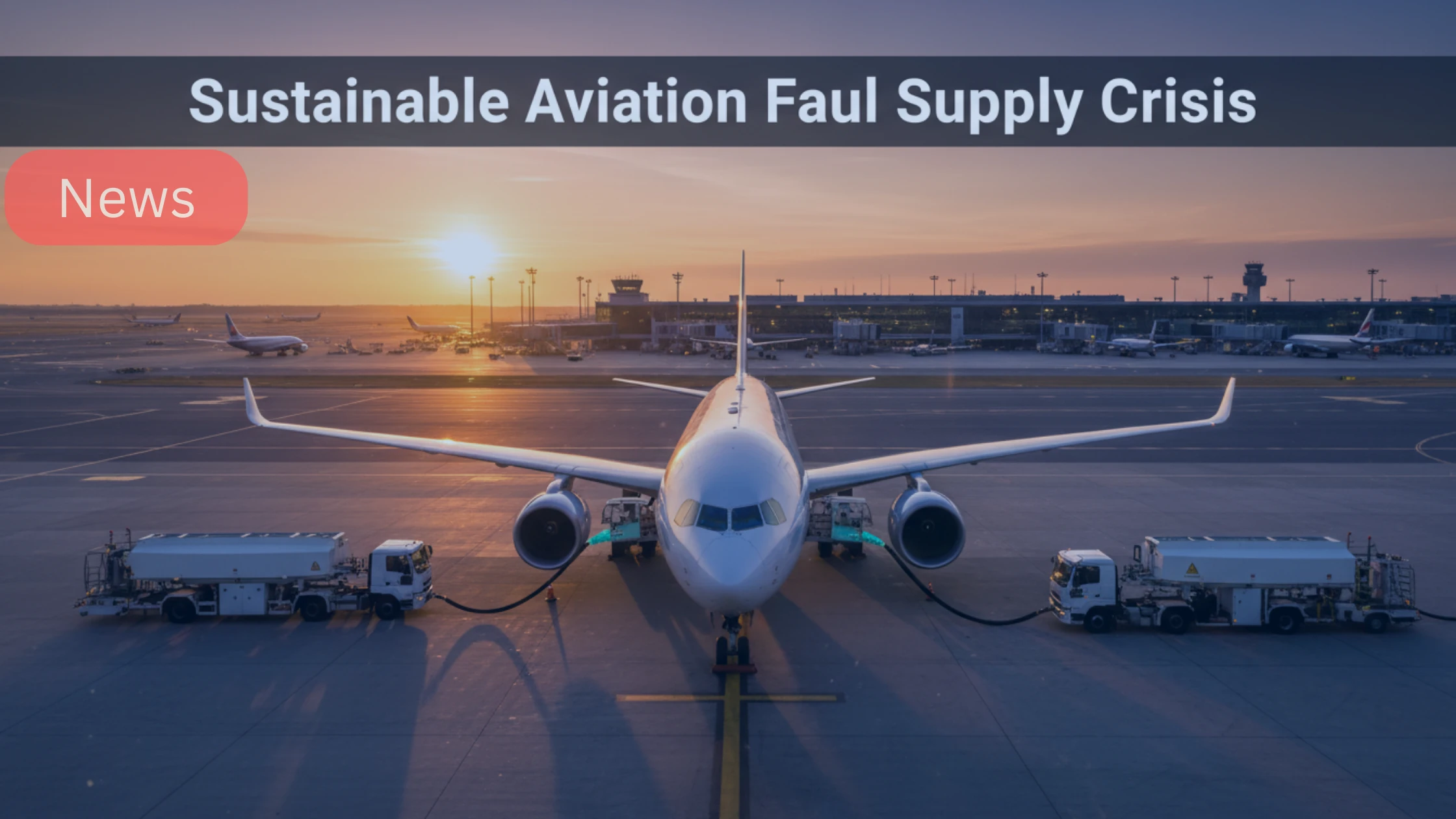

The global sustainable aviation fuel (SAF) supply crisis is putting the airline industry’s 2050 net-zero emissions target at risk, according to Reuters journalists Tim Hepher and Huey Mun Leong in a February 2, 2026 report. The story, grounded in an interview with Willie Walsh, Director-General of the International Air Transport Association (IATA), highlights deepening concerns around limited SAF output and delays in new, more efficient aircraft deliveries, factors that could slow decarbonization progress.
IATA, which represents roughly 350 global airlines, said current SAF production and aircraft delivery shortfalls are forcing carriers to retain older, less efficient planes and pay premium fuel prices. These issues, if not resolved, may prompt some member airlines to reconsider their long-term climate commitments at IATA’s mid-2026 meeting.
Why SAF Matters and the Current Supply Crisis
Sustainable Aviation Fuel (SAF) is derived from renewable or low-carbon feedstocks (such as waste oils and biomass) and can reduce lifecycle carbon emissions by up to 80% compared with conventional jet fuel. Industry roadmaps, including those coordinated by IATA and the International Civil Aviation Organization (ICAO), position SAF as essential for hitting net-zero aviation emissions by 2050, given the slow pace of alternative propulsion technologies like hydrogen or electric flight.
Yet despite incentives and mandates in regions like Europe and the UK, global SAF output remains a small fraction of total jet fuel consumption. According to IATA data, SAF is expected to reach about 2 million tonnes in 2025, only roughly 0.7% of total airline fuel use, underscoring how far the industry remains from meaningful scale.
Supply Challenges: Aircraft and Fuel Both Under Strain
Aircraft Backlogs and Aging Fleets
A major inability to clear backlog delays for new, fuel-efficient aircraft is compounding emissions concerns. Supply chain disruptions, dating back to the pandemic, are still constraining deliveries for major airframers and engine manufacturers, stretching wait times and reducing fleet renewal rates.
- Backlog of new aircraft orders exceeds 17,000 units, with implied delivery timelines stretching over a decade.
- Average airline fleet age has risen, slowing uptake of next-generation efficiency gains.
These delays mean airlines must keep older jets in service longer, eroding gains in fuel efficiency while increasing maintenance costs.
SAF Production and Cost Barriers
SAF production faces its own bottlenecks:
- High costs: SAF can be multiple times more expensive than conventional kerosene, reflecting limited feedstocks, production capacity constraints, and compliance costs in markets with fuel mandates.
- Policy fragmentation: Uneven policy incentives across regions can reduce commercial confidence in scaling SAF supply, even where mandates exist.
IATA’s own estimates suggest that without stronger policy frameworks and investment signals, SAF’s contribution to global fuel use will remain marginal for years, far short of the scale needed to materially bend the emissions curve.
Industry Voices: Walsh’s Warning Ahead of Singapore Airshow
Speaking in the lead-up to the February 2026 Singapore Airshow, Walsh underscored the gravity of the situation. He told Reuters that the combined impact of SAF shortages and aircraft supply issues is slowing emissions reductions and raising operating costs for airlines.
“We’re not making as much progress as we had been making in fuel efficiency,” Walsh said, noting that supply chain delays and limited SAF availability are increasing gross emissions.
Walsh also criticized fuel and engine suppliers for disproportionately benefiting from constrained markets, framing the situation as an industry conflict over pricing and production priorities.
Regulatory Context: Mandates and Global Targets
International regulatory frameworks, particularly through ICAO, have embedded SAF as a core strategy for aviation decarbonization:
- ICAO’s Long-Term Aspirational Goal (LTAG): Decarbonize global aviation by 2050, with interim SAF targets such as 5% carbon intensity reduction by 2030.
- Regional SAF mandates: Countries like the UK and EU have introduced phased SAF blending requirements in jet fuels, steadily increasing minimums through 2030 and beyond.
Such policies aim to drive investment and supply chain development for SAF. However, without adequate scaling of production infrastructure and consistent global policy alignment, supply remains unable to meet the ambition reflected in these targets.
Impacts on Airlines and the Broader Aviation Sector
The sustainable aviation fuel supply crisis carries several implications for airlines and the sector at large:
- Increased operating costs: Higher SAF premiums contribute to elevated fuel bills, pressuring airline margins.
- Delayed emissions improvements: Slower fleet renewal and limited SAF uptake impede progress toward decarbonization commitments.
- Strategic reassessment: Some carriers may reconsider their emissions pledges if supply constraints persist, potentially reshaping industry climate strategies.
Airlines that once forecast meaningful SAF adoption by 2030 may now push timelines further into the next decade, particularly where supply bottlenecks persist or investment incentives remain weak.
What’s Next: Policy, Investment, and Innovation Needed
Addressing the SAF supply crisis requires coordinated action across industry, government, and financial markets:
- Stronger global SAF mandates: Clear, long-term regulatory frameworks can reduce investment risk for producers.
- Feedstock infrastructure scaling: Broader development of SAF feedstock processing and conversion facilities is crucial.
- Cost-reduction strategies: Technological advances and policy-supported incentives could help close the price gap between SAF and conventional fuel over time.
- Cross-sector collaboration: Coordination between governments, fuel producers, airlines, and financial institutions can unlock capital for SAF production capacity.
Industry Outlook: Can Aviation Stay on Track for Net Zero?
The path to achieving net-zero emissions by 2050 remains possible, but it’s increasingly contingent on overcoming the dual challenges of SAF supply and aircraft production shortfalls.
Industry forecasts, such as those published by IATA and independent consultancies, suggest SAF capacity could grow significantly by 2030, but scaling to millions of tonnes annually will require strategic investment, supportive policy environments, and technological breakthroughs.
In the meantime, airlines will need to balance commercial pressures, environmental commitments, and operational realities, a complex mix that will define aviation’s sustainability trajectory through the next decade.
Sources
- Reuters: Shortages of new aircraft and fuel put emissions goal at risk, IATA’s Walsh says
- International Air Transport Association (IATA): Turning SAF promises into SAF production