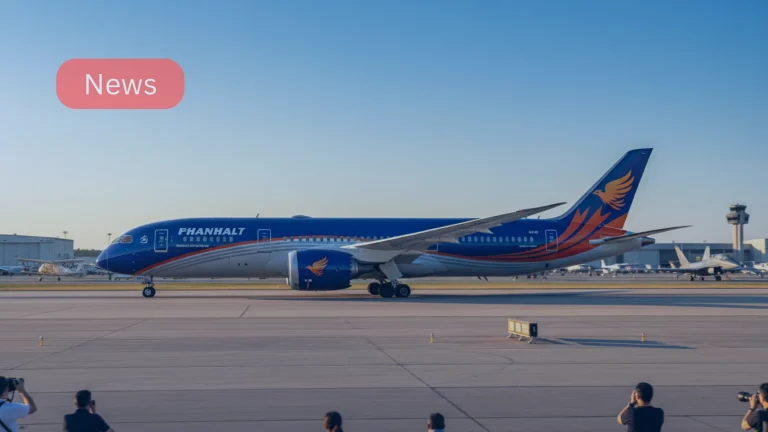
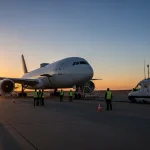
According to a Press Trust of India (PTI) report published by The Economic Times, Air India will begin commercial service of its custom-built Boeing 787-9 Dreamliner with certain limitations in passenger seat availability due to pending approvals from the United States Federal Aviation Administration (FAA).
The wide-body aircraft is slated to enter service on February 1, 2026, flying between Mumbai and Frankfurt, but the carrier has temporarily restricted 18 economy seats and kept business class sliding privacy doors fixed open until full FAA certification is obtained.
Certification Status and Operational Limitations
Air India’s newest Boeing 787-9, the first custom-mounted Dreamliner following the Tata Group’s acquisition of the airline, carries a total of 296 seats, including business, premium economy, and economy class configurations.
According to the airline spokesperson:
- 18 economy seats are blocked from sale and use due to regulatory interpretation issues.
- Business class suites’ sliding privacy doors remain fixed open until FAA certification is complete.
- Air India expects to receive the required approvals soon, after which the full cabin configuration will be available for passengers.
When contacted, the FAA declined to comment on ongoing certification progress. Boeing has also not issued a public statement on the matter.
What the Limitations Mean for Passengers
While the aircraft is fully airworthy and has received general regulatory clearance, the certification delays affect specific cabin features rather than the flight’s safety credentials:
Operational impacts include:
- Reduced seat availability in economy class on initial flights.
- Business class amenities lacking sliding doors until final approval.
- Ticket sales temporarily adjusted to reflect blocked seats.
These limitations do not affect safety or aircraft performance; rather they reflect FAA administrative certification interpretations on cabin feature compliance.
Air India’s Fleet Expansion Plans
Air India is undergoing substantial international network growth and fleet modernization in 2026:
- Five additional wide-body aircraft: including three Boeing 787-9s and two Airbus A350-1000s, are expected to join the fleet.
- The existing legacy Boeing 787-8s already in service continue to operate with fully certified cabin configurations.
Industry observers note that certification of cabin products often varies by aircraft model and interior fit-out, as regulators assess not only structural airworthiness but also cabin component design and compliance with safety standards.
Regulatory Background: FAA Certification and Aircraft Interior Approvals
The Federal Aviation Administration (FAA) oversees aircraft certification for equipment and interior fixtures on aircraft destined for operations under jurisdictions tied to U.S. manufacturing, export, or compliance standards. Certification applies to so-called “line-fit” products, those installed at the factory, and includes not just structural integrity but passenger comfort systems such as seats, egress, interior doors, and safety features.
How FAA Approval Works
- Aircraft and individual seat models must pass rigorous airworthiness and compliance tests.
- Custom cabin interiors, particularly unique configurations (such as sliding privacy doors), may require additional evaluation and documentation.
- Approvals ensure compliance with regulations like 14 CFR (Code of Federal Regulations) parts related to emergency egress, crashworthiness, and evacuation.
Delays in these approvals do not inherently indicate safety issues but reflect the meticulous scrutiny regulators maintain for any new airframe or cabin installation.
Industry Context
India’s aviation market continues robust growth, becoming one of the world’s most dynamic long-haul aviation sectors in terms of passenger volume and route expansion. According to industry data, India’s air passenger market is among the fastest-growing globally, driven by strong economic expansion and increased international connectivity.
Modernization efforts across carrier fleets, such as the introduction of next-generation Dreamliners and wide-body aircraft, are part of competitive strategies to secure market share on Europe, Middle East, and North America routes.
What’s Next?
Air India and Boeing are both expected to work closely with the FAA to complete certification of the blocked economy seats and business class doors. The airline will update its cabin configuration for commercial service once approvals are finalized.
Key upcoming milestones:
- Final FAA certification of interior components.
- Full revenue use of all seats and business class amenities.
- Further deployment of 787-9 and A350-1000 aircraft across long-haul routes.
Airline passengers and industry stakeholders should monitor official statements from Air India and FAA for updates on certification progress and fleet deployment changes in early 2026.
Sources
- The Economic Times (via Press Trust of India)Air India to operate new Dreamliner with limitations; awaits certain FAA approvals
- International Civil Aviation Organization (ICAO) :- Airworthiness and Safety Standards Used for: global regulatory context and certification framework explanation.
- Federal Aviation Administration (FAA) :- Aircraft Certification & Cabin Safety Regulations