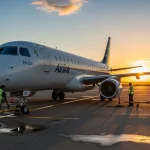

Airbus reported solid nine-month results on 29 October 2025, delivering 507 commercial aircraft and recording revenues of €47.4 billion with EBIT Adjusted of €4.1 billion, the company said in its official release. CEO Guillaume Faury highlighted delivery growth across commercial, helicopters and defence units while underlining a “complex and dynamic operating environment.”
The company kept its 2025 guidance intact but explicitly incorporated the impact of currently applicable tariffs. Airbus also confirmed that commercial deliveries remain backloaded into Q4 and signalled programme-level adjustments, notably a revised ramp plan for the A220. The results are documented in the company’s investor presentation and unaudited IFRS financial statements.
Key figures and highlights (Airbus deliveries & financials)
- Deliveries (9m): 507 commercial aircraft (62 A220; 392 A320 family; 20 A330; 33 A350).
- Revenue: €47.4 billion (up 7% year-on-year).
- EBIT Adjusted: €4.146 billion (vs €2.798bn in 9m 2024).
- Net orders / backlog: Gross commercial orders totalled 610; order backlog: 8,665 aircraft.
(These company-reported figures are corroborated by independent reporting and the IFRS statements published with the release.)
Production, programme adjustments and supply-chain context (A220, A320 and engines)
Airbus reiterated its ambition to ramp the A320 Family toward 75 aircraft/month by 2027 while adjusting the A220 ramp-up: the company now targets rate 12 in 2026 (down from an earlier, higher target). Management attributes the A220 change to the balance between supply and demand and programme costs. Independent reporting links these programme choices to ongoing supply-chain constraints and integration of supplier components.
Engine supply remains a key variable. Reuters and other outlets note improvements in engine deliveries (CFM/Safran/GE) and a decline in the number of “gliders” awaiting engines, a factor supporting stronger September delivery numbers, but manufacturers caution that the recovery was gradual and remains monitored.
Why this matters (market and airline implications)
- Airlines: More deliveries and better availability reduce lead times for carriers and freighter conversion planners; programme adjustments affect airline fleet planning and leasing markets.
- Supply chain: Higher production targets strain suppliers but expand aftermarket and MRO opportunity. Airbus’ improved adjusted EBIT suggests operational leverage as deliveries climb.
Timeline
- 29 Oct 2025: Airbus issues 9m 2025 results, 507 deliveries; revenue €47.4bn; EBIT Adj €4.146bn.
- Q3 2025: Noted recovery in engine deliveries and a September delivery peak (record monthly deliveries reported).
- 2026-2027: Airbus targets ramp rates (A220 ramp to rate 12 in 2026; A320 Family toward 75/month by 2027) while monitoring component and engine flows.
What’s next? industry outlook
- Near term: Airbus must execute Q4 deliveries to meet its ~820-aircraft 2025 target; engine availability and supplier performance will be decisive.
- Medium term: Achieving A320 monthly rates and stabilising A220 economics will shape market share and aftermarket growth; airlines and lessors will watch delivery cadence closely.
Sources
- Airbus press release, Airbus reports Nine-Month (9m) 2025 results, 29 Oct 2025.
- Airbus 9m 2025 presentation PDF and unaudited IFRS statements.
- Reuters coverage summarising deliveries and production context.
- Financial Times coverage providing market/analyst context.
- Industry outlets (CAPA/Centre for Aviation, Aviation24) summarising delivery breakdown and backlog.