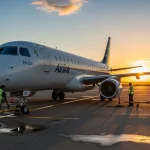

Nigeria’s aviation sector is running up against a shortage of serviceable aircraft that has left many pilots and aircraft engineers underemployed, according to reporting by BusinessDay. The article, based on interviews with industry insiders and workers, says reduced fleet availability at Nigerian carriers has constrained hiring and put skilled aviation professionals on the sidelines.
The local squeeze reflects wider, systemic pressures in global aviation. IATA and industry analysts have documented a multiyear delivery shortfall that began in 2018 and persisted through 2024–25, reducing the number of new, fuel-efficient aircraft available to carriers and forcing airlines to rely on older airframes or delay network expansion. That global delivery gap is feeding into regional labour market distortions: not enough aircraft in service means fewer seats to fill and fewer jobs for trained crew and technicians.
How the shortage is playing out in Nigeria
BusinessDay’s reporting highlights three practical effects in the Nigerian market:
- airlines are unable to add capacity despite rising passenger demand;
- pilots and licensed aircraft engineers face job scarcity or irregular rostering; and
- carriers are sometimes forced to operate older, less reliable aircraft that increase maintenance burdens.
The article quotes affected personnel and industry observers describing a market where demand for travel outstrips the supply of flyable aircraft.
Industry-level evidence supports this picture. IATA’s recent analysis shows that delayed deliveries and production constraints left thousands fewer aircraft in airlines’ hands than expected, a situation that has limited capacity growth and elevated operating costs for carriers. The shortage has ripple effects: airlines delay hiring, defer fleet renewal, and extend service lives of older aircraft, all of which influence staffing needs for both flight crew and maintenance teams.
Global and regional context: pilots and engineers in demand, and in flux
While Nigeria reports underemployment among some aviation workers, global forecasts still point to large long-term needs for trained personnel. ICAO and major training organisations project sustained demand for pilots and maintenance personnel over the next two decades, driven by fleet growth and retirements. For example, ICAO’s training reports and private forecasts anticipate hundreds of thousands of new aviation personnel will be needed globally, even as short-term mismatches emerge regionally.
In other words, the industry faces a temporal imbalance: short-term constraints in aircraft availability and airline hiring can coexist with long-term structural shortages of qualified people. The immediate consequence in markets like Nigeria is a dislocation, trained professionals available but not fully absorbed because aircraft and capital are the binding constraint today.
Why are there fewer aircraft available?
Multiple factors have combined to reduce aircraft deliveries and available leased frames:
- OEM production delays and supply-chain constraints: Airbus and Boeing production plans were disrupted by supply chain issues that began before the pandemic and lingered during the recovery, delaying new deliveries. Industry commentators note the backlog of orders and slower ramp-ups.
- Lease market tightness: Lessors reallocated aircraft to higher-yield markets, and some airlines kept older jets in service longer, reducing the pool of readily available used aircraft for secondary markets.
- Airline fleet strategies: Some carriers temporarily froze recruitment and route expansion following pandemic losses, meaning even trained personnel could not easily find roles. In 2024–25 many major carriers paused pilot-hiring sprees as capacity remained constrained.
For Nigeria, access to leased aircraft and the cost of acquiring serviceable frames are particularly binding: regional carriers often rely on leases to scale quickly, and a tight global market pushes lease rates up and availability down. That has a direct effect on how many pilots and engineers airlines can employ.
The human impact: pilots and engineers speak
BusinessDay collected testimony from affected workers who report furloughs, contract non-renewals or reduced hours. These personal accounts underscore that aviation careers, which involve lengthy and costly training, can become precarious when capital constraints, rather than skill shortages, determine hiring. BusinessDay frames this as an urgent labour-market problem for Nigeria’s aviation workforce.
That experience is mirrored elsewhere: when carriers lack aircraft, they postpone cadet intakes and defray training pipelines, meaning the supply of freshly qualified pilots and technicians can dip even as long-term demand projections remain high. Training institutions and private sector trainers (simulator providers, MRO schools) face revenue shortfalls and enrolment volatility as a result.
Possible policy and industry responses
Industry and policy responses to the mismatch fall into several buckets:
- Short-term liquidity and leasing solutions: Governments or development banks can support access to leased aircraft or finance to buy newer frames, easing immediate capacity constraints. IATA and industry stakeholders have advocated targeted measures to ensure fleet renewal is not derailed.
- Training and retention schemes: Even while aircraft availability is limited, governments and carriers can invest in training pipelines and retention incentives so that qualified personnel remain employable when capacity returns. ICAO and training providers recommend sustained investment in skills development.
- Regional cooperation and resource pooling: African carriers may benefit from regional leasing pools, shared MRO infrastructure, or coordinated fleet planning to smooth temporary shortages across markets. Analysts suggest coordinated procurement and equipment sharing could reduce local bottlenecks.
- Policy dialogue on retirement age and workforce mobility: Some global bodies and airlines have proposed policy changes (e.g., discussions about pilot retirement age) to manage near-term labour supply; such proposals are politically sensitive and would require ICAO deliberation and safety analysis.
What to watch next
- Regulatory data: Nigeria Civil Aviation Authority (NCAA) and carrier filings could provide precise numbers on active vs. stored aircraft and registered crew, those figures would verify the scale of underemployment described. (BusinessDay’s reporting signals the problem but does not publish the regulator’s dataset.)
- Lease market signals: Watch lessor announcements and lease rate indexes for signs of easing availability or falling rates that would enable more aircraft to flow into secondary markets.
- Training pipeline activity: Enrolments and graduation rates at Nigerian and regional aviation training organisations will indicate whether the talent pipeline is being sustained during the temporary demand squeeze.
What’s Next? Industry Outlook
In the short term, Nigeria’s pilots and engineers may continue to feel the pinch while aircraft remain scarce or costly to operate. Yet the medium- to long-term picture remains one of structural demand for trained aviation professionals globally. Industry stakeholders should use the current lull to shore up training, maintenance capacity and financing mechanisms so that when aircraft supply normalises, the skilled workforce can be rapidly redeployed to support network growth.