
Families of victims killed in two fatal Boeing 737 MAX crashes asked a federal judge on Sept. 3 to reject a U.S. Department of Justice deal that would dismiss a felony conspiracy charge against Boeing, arguing the agreement fails to deliver meaningful accountability. The hearing before U.S. District Judge Reed O’Connor drew emotional testimony from relatives who said only a public trial could produce justice for the 346 people killed in the Lion Air and Ethiopian Airlines disasters.
The government has proposed dismissing the criminal charge in exchange for Boeing agreeing to pay or invest roughly $1.1 billion toward fines, victim compensation and internal reforms. Prosecutors told the court the package, and Boeing’s enhanced compliance measures, serve the public interest and avoid the uncertainty of a lengthy criminal trial. Boeing and DOJ lawyers both urged the judge to accept the agreement. Families and some victim representatives pushed back, demanding greater transparency and, in some cases, a jury trial.
What’s at stake: the legal matter explained
- The charge: Boeing faces a felony conspiracy charge alleging it misled Federal Aviation Administration (FAA) regulators about the MAX’s flight-control software, which investigators found contributed to two crashes in 2018–19 that killed 346 people. The case dates back to an earlier 2021 settlement and subsequent findings that Boeing violated terms of that agreement.
- The proposed deal: The DOJ’s proposal would dismiss the criminal charge if Boeing implements the agreed measures and payments, an alternative to pursuing a criminal conviction. The deal would include roughly $445.5m earmarked for victim compensation among other payments and reforms; public reporting places the total package at about $1.1bn.
- The question before the judge: Whether the public interest favors the DOJ’s dismissal motion, a decision that weighs prosecutorial discretion against calls from victims’ families for a public trial and fuller accountability. Judge O’Connor, presiding over the Fort Worth hearing, said he would issue a decision later.
Families’ arguments: justice vs. settlement
Relatives of crash victims delivered emotional appeals in court. “What part of this screams justice?” said David Moore, whose sister died on Ethiopian Airlines Flight ET302, according to AP’s courtroom coverage. Some family members argued that a negotiated settlement lets Boeing avoid a public reckoning and deny victims the opportunity to see evidence and corporate executives examined at trial. Others supported the agreement, reflecting divisions among families about the best path to compensation and reform.
DOJ and Boeing: why they back the deal
Justice Department lawyers told the court the settlement balances accountability with practical public-interest considerations. Prosecutors argued the package would fund victim compensation, strengthen Boeing’s compliance and safety programs, and allow continued oversight without the uncertainty and delay of a criminal trial. Boeing, for its part, framed the deal as a way to move forward while implementing significant reforms and avoiding the collateral damage a felony conviction could have on federal contracting and the broader aviation supply chain.
Legal and policy context
The case traces back to a 2021 agreement and to investigators’ findings that Boeing did not fully disclose changes to the MAX’s Maneuvering Characteristics Augmentation System (MCAS) to regulators. After multiple reviews and renewed scrutiny following further incidents, DOJ prosecutors revived the conspiracy charge; the new plea-or-settlement talks reflect complex policy choices about corporate accountability for safety failures that produced mass fatalities. This dispute highlights tensions between punitive enforcement and negotiated settlements that aim to secure reform.
Wider implications for industry oversight
A key point of contention in court was whether the settlement should include an independent monitor to oversee Boeing’s reforms, a mechanism widely touted after corporate wrongdoing to ensure compliance. News reporting noted that the DOJ initially planned an independent monitor under prior agreements but later proposed a compliance consultant, a less robust measure, prompting criticism from some victim advocates and observers. Judges have in the past questioned whether internal monitoring is sufficient to prevent recurrence of systemic corporate failures.
Independent experts weigh in
Legal experts say the judge’s decision will hinge on whether he finds the DOJ’s approach appropriately calibrated to the public interest. Some scholars argue that negotiated resolutions can deliver faster compensation and structural reforms, while others counter that only a public trial creates a complete public record and can deter future misconduct. Aviation safety analysts say robust technical reforms and transparent oversight are essential regardless of the criminal-prosecution outcome.
What the numbers show
- People killed: 346 across the Lion Air (Indonesia) and Ethiopian Airlines disasters.
- Proposed package: Approximately $1.1 billion in payments, including victim compensation and internal reforms (reporting varies on exact breakdowns).
What’s next? Court timeline and likely outcomes
Judge Reed O’Connor said after hearing arguments he would issue a ruling at a later date. If he approves the DOJ’s motion, Boeing would avoid criminal prosecution under the terms negotiated. If he rejects the dismissal, the felony charge could proceed to trial, a high-profile proceeding that would put company practices and decision-making squarely under public scrutiny. Observers expect appeals and further legal maneuvering in either scenario.
What it means for aviation
The outcome will influence how prosecutors handle corporate wrongdoing in the aerospace sector. A dismissal in favor of negotiated reforms may set a precedent for resolving complex corporate safety cases through remediation packages. Conversely, a trial could strengthen legal accountability frameworks and influence future DOJ decisions about independent monitoring versus internal compliance arrangements. Either path underscores the challenge of balancing swift remedies and long-term systemic change in an industry where safety lapses carry catastrophic human and economic costs.
Related Articles
- RwandAir Fleet Expansion: Two Boeing 737-800s Arrive, Airbus A330-200 Due This Year
- Boeing Quietly Signals End of 737 Era With New Engine RFI
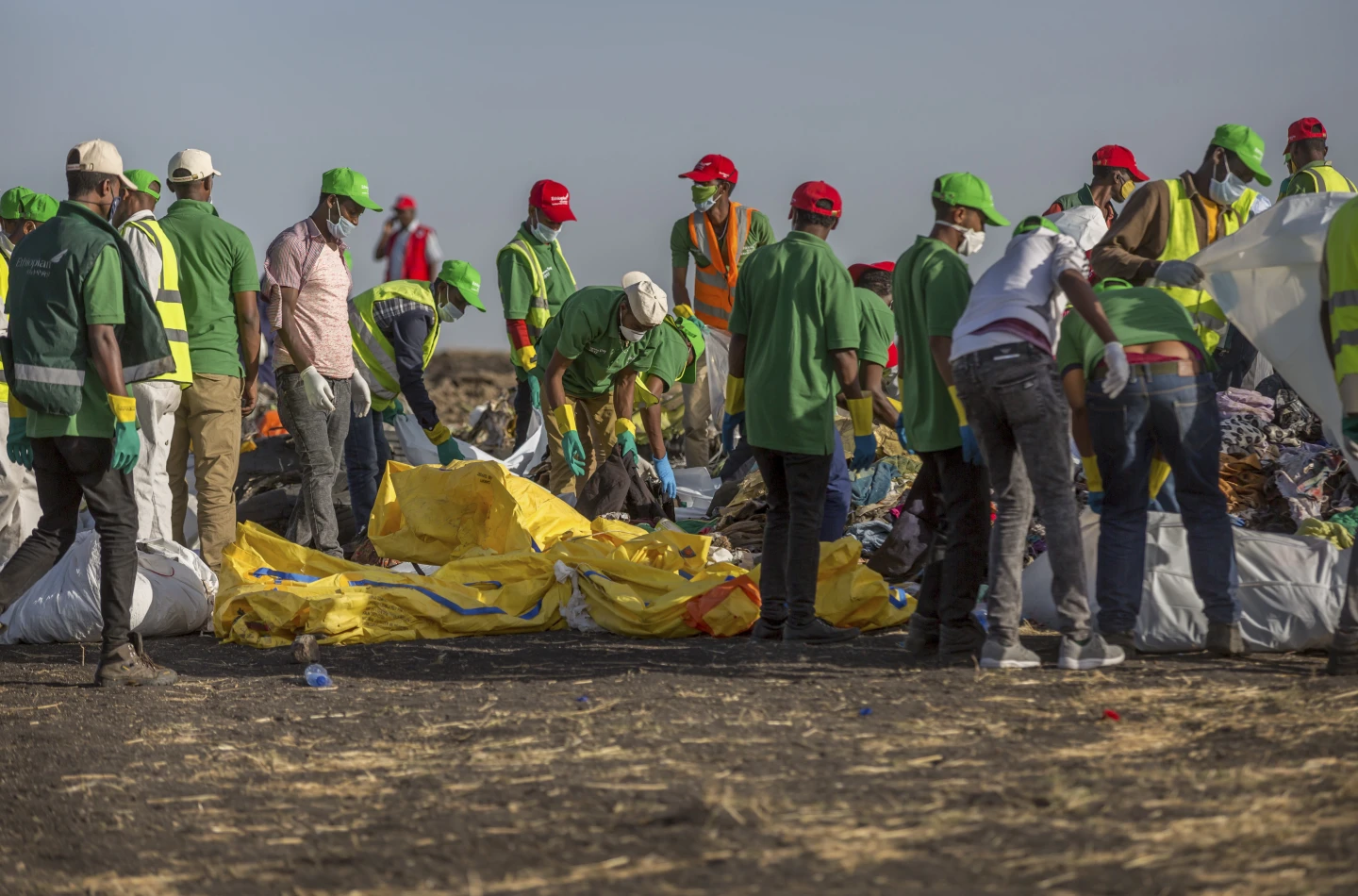
Image Credit: Workers collect debris on March 12, 2019 at the scene where an Ethiopian Airlines Boeing 737 Max 8 crashed shortly after takeoff, killing all 157 on board, near Bishoftu, or Debre Zeit, south of Addis Ababa, in Ethiopia. (AP Photo/Mulugeta Ayene, File)