
Boeing has secured the largest aircraft order in Alaska Airlines’ history, marking a decisive moment for both the US planemaker and the Seattle-based carrier. Alaska Airlines has committed to 105 Boeing 737-10 aircraft, with options for 90 additional jets, alongside a firm order for five Boeing 787-9 Dreamliners, according to a January 2026 announcement by Boeing and Alaska Airlines.
The deal, confirmed by Boeing in an official media release, represents a multi-decade fleet strategy rather than a short-term capacity play. Alaska Airlines said the order underpins its ambition to modernize its narrowbody fleet, reduce unit costs, and expand selectively into longer-haul markets using widebody aircraft for the first time in its history.
According to Boeing, the agreement is the largest airplane order ever placed by Alaska Airlines, reinforcing Boeing’s position as the carrier’s exclusive mainline aircraft supplier and deepening a partnership that spans more than five decades.
Deal Structure: What Alaska Airlines Ordered and Why It Matters
The Boeing Alaska Airlines record order is structured around three core elements:
- 105 Boeing 737-10 aircraft (firm order)
- Options for up to 90 additional 737-10s
- Five Boeing 787-9 Dreamliners
The 737-10 is the largest variant of the 737 MAX family and is designed to carry up to 230 passengers in high-density layouts. Alaska plans to deploy the aircraft primarily on high-volume domestic routes and transcontinental services, where seat economics and fuel efficiency are critical.
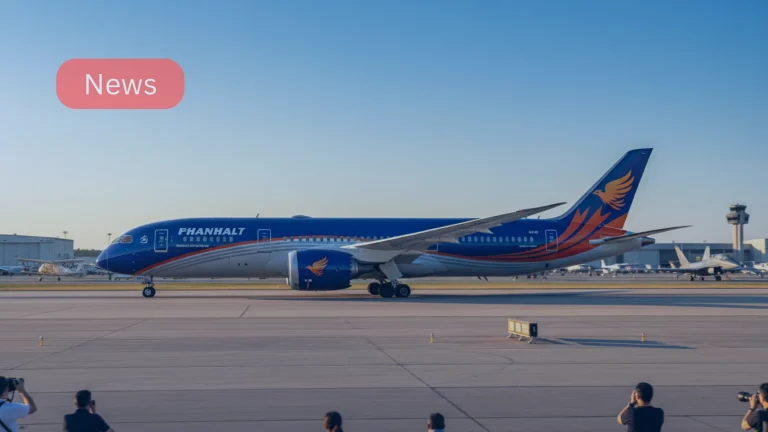
The inclusion of the 787-9 Dreamliner is strategically significant. Alaska Airlines has historically operated an all-narrowbody mainline fleet. The 787 order signals a shift toward long-haul international flying, potentially enabling new nonstop routes from the US West Coast to Asia and Europe.
Reuters independently confirmed the order size and composition, noting that the deal positions Alaska among the fastest-growing US carriers by future aircraft backlog.
Why Alaska Airlines Is Betting Big on the 737-10
Alaska Airlines executives framed the order as a response to long-term demand trends rather than near-term market cycles. The 737-10 offers lower fuel burn per seat than older 737-900ER aircraft and supports Alaska’s sustainability targets through improved emissions performance.
According to Boeing, the 737-10 delivers up to 20% lower fuel consumption per seat compared with previous-generation aircraft, depending on configuration and mission profile. These gains are central to Alaska’s cost-control strategy as competition intensifies on US domestic routes.
Industry analysts note that Alaska’s fleet decision also reflects a broader US airline trend toward up-gauging, replacing smaller narrowbodies with higher-capacity aircraft to maximize constrained airport slots and manage pilot availability.
Boeing’s narrowbody backlog, which exceeds several thousand aircraft globally, makes large, long-term commitments like Alaska’s particularly valuable as the manufacturer works to stabilize production rates after recent supply-chain disruptions.
The 787 Dreamliner: A New Chapter for Alaska Airlines
The five Boeing 787-9 aircraft mark Alaska Airlines’ entry into widebody operations. While the airline has not yet disclosed specific routes, executives indicated the aircraft will support “new global opportunities” once deliveries begin later in the decade.
The 787-9 is widely used by airlines for long-haul routes in the 250- to 300-seat range and offers strong economics on thinner intercontinental markets. For Alaska, the aircraft could enable:
- West Coast to Asia nonstop services
- Select transatlantic routes
- Cargo-heavy long-haul missions aligned with premium demand
Reuters and Investing.com both highlighted that the 787 order positions Alaska to diversify revenue streams beyond its traditional domestic focus.
Boeing’s Perspective: Orderbook Stability in a Challenging Market
From Boeing’s standpoint, the Alaska Airlines deal provides orderbook certainty at a time when aircraft manufacturers face ongoing production and certification pressures.
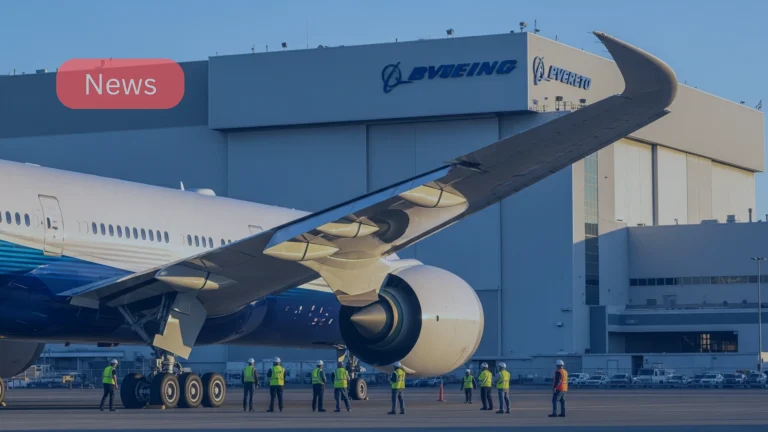
The 737-10, while popular among airlines, is still awaiting full regulatory certification. Boeing stated that it continues to work closely with regulators to complete the certification process, and Alaska’s delivery schedule is aligned with those expectations.
Boeing Commercial Airplanes leadership described the agreement as a vote of confidence in both the 737-10 and the 787 programs. The deal also reinforces Boeing’s competitive positioning against Airbus in the US market, where Airbus has made significant gains with the A320neo family.
PR Newswire’s distribution of Boeing’s announcement emphasized that the order supports thousands of US manufacturing jobs across Boeing’s production network.
Industry Context: How the Order Fits Global Aviation Trends
The Boeing Alaska Airlines record order aligns with several global aviation trends identified by industry bodies such as IATA and ICAO:
- Fleet renewal acceleration as airlines replace aging aircraft with more fuel-efficient models
- Capacity discipline, with airlines focusing on larger aircraft rather than rapid frequency expansion
- Sustainability pressure, pushing carriers toward lower-emissions fleets
IATA has repeatedly highlighted that fuel efficiency and fleet modernization remain the fastest ways for airlines to reduce carbon intensity in the near term, especially as sustainable aviation fuel supply remains limited.
Alaska’s order reflects these priorities, particularly in the North American market where competition and regulatory scrutiny remain intense.
Financial and Competitive Implications for Alaska Airlines
While Boeing and Alaska did not disclose the net purchase price after customary discounts, the deal’s list value runs into tens of billions of dollars at published catalog prices.
For Alaska Airlines, the order provides:
- Long-term fleet certainty through the 2030s
- Lower maintenance and training complexity through fleet commonality
- Improved operating margins via fuel and seat-cost efficiencies
Analysts caution, however, that execution will depend on Boeing’s ability to deliver aircraft on schedule and on Alaska’s capacity to integrate widebody operations successfully.
What Comes Next for Boeing and Alaska Airlines
Looking ahead, several milestones will shape the impact of this historic order:
- Certification progress for the Boeing 737-10
- Finalization of Alaska’s 787 route network
- Delivery timelines amid Boeing’s production ramp-up
- Competitive responses from rival US carriers
If executed as planned, the Boeing Alaska Airlines record order could redefine Alaska’s role in global aviation while providing Boeing with a cornerstone customer for its next-generation narrowbody and widebody programs.
Industry Outlook
The deal underscores a broader reality in commercial aviation: airlines are making fewer, but larger and more strategic, aircraft commitments. As supply chains stabilize and demand normalizes, manufacturers that secure long-term partnerships stand to gain disproportionate influence over fleet decisions.
For Alaska Airlines, the order is not just about aircraft. It is a declaration of intent to compete at scale, domestically and internationally, for decades to come.
Sources
- Boeing Media Release: Boeing and Alaska Airlines Announce Largest Airplane Order in Airline’s History, Official press release with full order details and quotes from executives.
- PR Newswire: Boeing and Alaska Airlines Announce Largest Airplane Order in Airline’s History, Press version of the Boeing release.
- Reuters Report: Alaska Airlines orders 110 Boeing aircraft in largest fleet deal, Independent confirmation of order size, composition, and strategic context.
- Investing.com Summary: Alaska orders 110 Boeing aircraft in largest fleet deal in company history, Market context and delivery timeframe details.