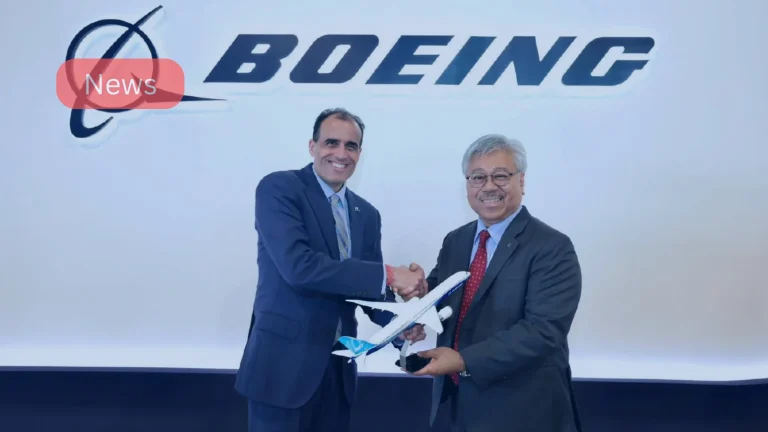

Boeing’s procurement from Turkish aerospace suppliers has surpassed US$2 billion, the company’s Türkiye and Central Asia country executive said in mid-September 2025, underscoring Ankara’s growing role in the global aviation supply chain. Ayşem Sargın told Anadolu Agency that the milestone reflects an 80-year partnership that now spans industrial collaboration, technology, regional services and capacity-building under Boeing’s Türkiye National Aviation Plan.
Boeing’s procurement figure and strategic message
Ayşem Sargın, Boeing Türkiye and Central Asia general manager, told Anadolu Agency the company’s total procurement volume from Türkiye’s aviation industry has exceeded US$2 billion. She framed the figure as proof that Türkiye is not just an important market for aircraft sales but also a critical supplier and engineering partner. Boeing’s remarks coincided with the company marking more than eight decades of engagement in Türkiye.
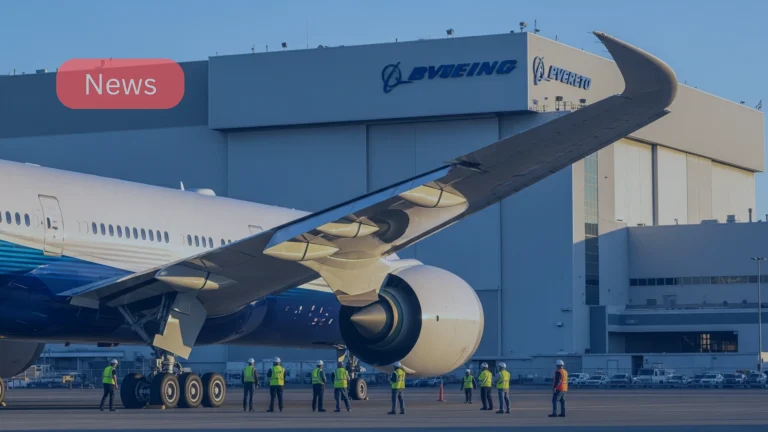
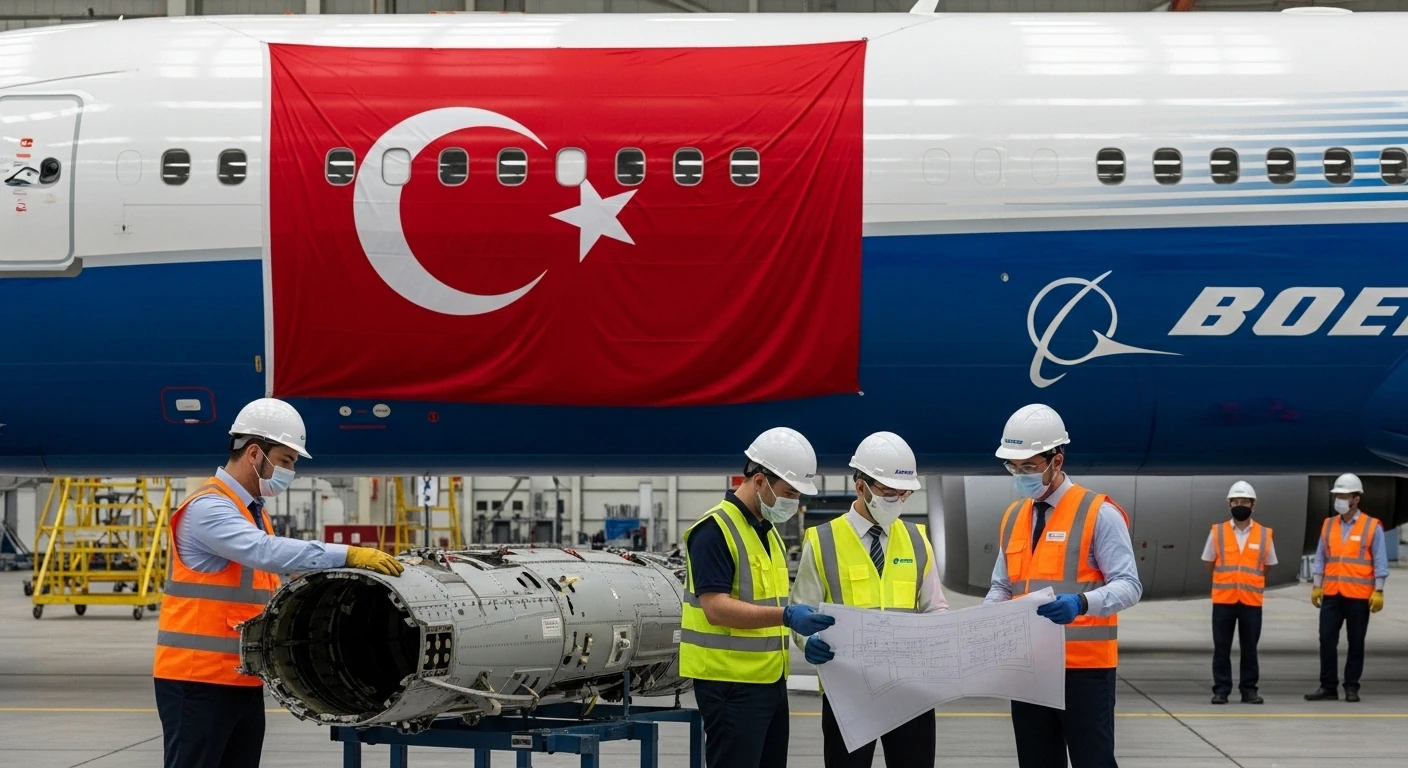
Sargın emphasised that Turkish suppliers now work on components used across Boeing’s current commercial aircraft family, from 737 models to the 787, and on defence platforms such as the CH-47 Chinook and P-8 maritime aircraft. That supplier base, she said, spans more than 20 Turkish firms located across key industrial cities including Ankara, Istanbul, Izmir, Bursa, Kayseri and Eskişehir.
The policy and program context: Boeing Türkiye NAI and engineering footprint
Boeing’s engagement in Türkiye operates within a formal framework: the Boeing Türkiye National Aerospace Initiative (NAI) launched in 2017, which set out collaboration pillars in industrial development, technology acceleration, services collaboration and advanced skilling. Boeing has also invested in an Engineering & Technology Center in Istanbul Teknopark, which the company says hosts nearly 100 engineers and contributes to global product development. Those programmes underpin the procurement flows and supplier development Sargın highlighted.
Boeing told interviewers it is pursuing sustainability projects with Turkish partners as well, including exploration of sustainable aviation fuel (SAF) supply chains and collaborative research on future propulsion technologies, remarks consistent with the company’s global strategy on decarbonization and innovation.
Why the procurement milestone matters
- Industrial depth: A procurement base above US$2 billion signals that Türkiye has moved beyond low-value parts toward more integrated supply roles, engineering, composite parts, assemblies and services, which carry higher value and skill requirements.
- Jobs and technology transfer: Sustained supplier contracts typically lead to local skill development, engineering jobs, and technology transfer, outcomes Boeing and Turkish policymakers have long framed as mutually beneficial.
- Regional logistics and services: Türkiye’s geographic position and airport infrastructure make it attractive for regional MRO, engineering support, and export logistics, a point Boeing raised in describing Türkiye’s strategic location.
Independent perspective and caveats
Industry analysts caution that headline procurement totals reflect cumulative contracts and supply-chain spend over many years, not necessarily a single-year purchase program. For instance, Boeing’s NAI launched in 2017 and subsequent supplier development work contributed to multi-year contract flows; the $2B figure should be read as aggregate procurement to date rather than an annual spend. The company’s statements also reflect corporate strategy and PR framing; independent auditing of supplier revenue breakdowns would provide additional granularity.
Moreover, while Boeing cites more than 20 Turkish suppliers, the depth of capability within individual firms varies. Some suppliers may handle lower-value subassemblies, while a smaller set of firms supply higher-technology components. That heterogeneity is common in aerospace ecosystems and shapes how countries capture value from supplier programs.
What analysts will watch next
- New supplier contracts and certification wins: Further OEM or tier-1 contract awards to Turkish firms, especially for composite structures or avionic systems, would indicate deeper industrial integration.
- Local R&D and engineering growth: Expansion of Boeing’s Istanbul engineering center or new joint R&D projects would show technology transfer beyond manufacturing.
- SAF and sustainability partnerships: Concrete SAF feedstock agreements or pilot projects would demonstrate alignment between Boeing’s sustainability agenda and Turkish industry capabilities.
What’s next (Industry outlook)
- Near term: Monitor formal contract notices, supplier certification announcements and any expansion of Boeing’s Istanbul engineering operations. Official procurement totals tend to be updated at corporate or government events.
- Medium term: Success will hinge on whether Turkish suppliers win higher-technology, higher-value components and on workforce development to sustain more advanced production and R&D roles.