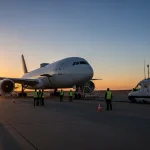
British Airways (BA) is bracing for prolonged groundings across its Boeing 787 Dreamliner fleet throughout 2025, citing persistent delays in Rolls-Royce Trent 1000 engine supplies. The impact has led to schedule readjustments, route suspensions, and heightened operational uncertainty.
Operational Disruptions
According to Daniel Fowkes, writing for DJ’s Aviation, BA’s Chief of Planning and Strategy confirmed at the recent Routes Americas 2025 conference that at least four 787s will remain grounded through the year. These aircraft are sidelined awaiting spare engine components and maintenance completion issues exacerbated by a prolonged global supply chain crisis. djsaviation.net.
Engine Shortage Rooted in Supply Chain Constraints
Trent 1000 engines have long been a pain point for 787 operators. Dating back to the early 2010s, operators have battled blade cracking, and more recently, the pandemic-era supply chain breakdowns have throttled production and spare-part availability. Airlines including Vietnam Airlines, Air New Zealand, and Kenya Airways have reported similar groundings, pointing to delayed servicing cycles stretching well beyond typical turnaround times.
British Airways Adjusts Network Strategy
The grounding of these aircraft has pressured BA to revamp its network planning. Fowkes reports that BA has already scaled back services to destinations like Doha, Malaysia, Bangkok, and now temporarily Abu Dhabi, originally scheduled from 30 March to 25 October 2025. Less aircraft availability has forced BA to “make its schedule leaner” in managing capacity shortfalls.
Operator Frustration over Uncertainty
Fowkes indicates that BA executives described “mixed messages” from engine manufacturers, complicating recertification timelines and planning. The lack of clarity forces airlines to operate under capacity constraints well into 2025 and beyond.
Industry-wide Challenges Confirmed
Aviation Week previously confirmed BA’s rollout of the 787 engine issue, noting that many globally operated Dreamliners with T1000 engines face “prolonged periods out of service.” Reports from Air New Zealand and Vietnam Airlines indicate maintenance backlogs have extended over a month.
Implications for BA and Boeing
While BA maintains hopes of a late‑2025 turnaround, the continuing groundings raise several concerns:
- Revenue and passenger impact: Suspended or reduced flights to key markets may lead to both revenue loss and customer dissatisfaction.
- Reliability and brand perception: Repeated capacity shortfalls risk eroding confidence in BA’s long-haul reliability.
- Supplier coordination concerns: Inconsistent communications between BA and Rolls-Royce, combined with extended supply timelines, signal potential systemic weaknesses affecting industry dependability.
Rolls-Royce Response
Rolls-Royce has acknowledged the production and parts-supply disruptions for its Trent 1000 engines but has not commented on timelines for resolving backlogs. The company is expected to ramp up production mid-2025, though exact dates remain unclear.
What Lies Ahead
BA’s reliance on the Boeing 787, central to its widebody, long-haul operations, means the airline could face capacity constraints well into the next year. Despite plans for enhanced maintenance and better supplier coordination, executives warn that forecasts remain uncertain.
DJ’s Aviation’s report (Fowkes, 13 Feb 2025) provides a timely lens into BA’s strategic response amid fleet disruptions caused by Trent 1000 supply delays. Though limited in sourcing, it aligns with verified industry developments and reinforces the widespread nature of Dreamliner challenges during 2025.