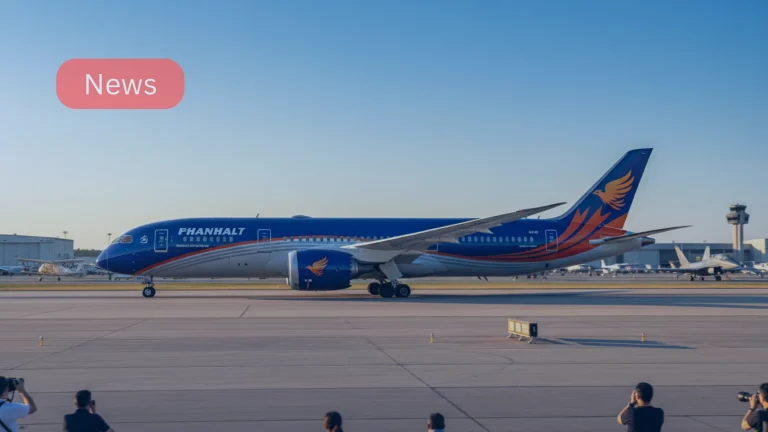
COMAC C919 flight evaluations are now underway as pilots from the European Union Aviation Safety Agency (EASA) conduct official test flights of China’s domestically developed narrowbody airliner in Shanghai, China. This series of flights represents a crucial step in the aircraft’s progress toward European type certification, a milestone for regulatory acceptance outside China and a key hurdle on its path to global market access. According to AeroTime Aero, EASA pilots began these flight evaluations in mid-January 2026, reinforcing a longer-term certification effort.
These evaluations took place at Shanghai Pudong International Airport, where the aircraft is manufactured and has logged extensive domestic service. The flights are part of a structured validation campaign required under EASA’s rules before the aircraft can be considered for type certification, a prerequisite for operation by European carriers.
Why COMAC C919 Flight Evaluations Matter
The COMAC C919 flight evaluations mark a procedural but meaningful stage in China’s long-running effort to expand the narrowbody’s international footprint. Although the aircraft has operated commercially within China since 2023, it has lacked certification from major global regulators outside the Civil Aviation Administration of China (CAAC).
Gaining EASA certification would signal compliance with stringent European airworthiness standards, enabling airlines based in the European Union, and potentially other regions that recognize EASA type certificates, to operate the aircraft. Currently, such certification remains pending, and regulatory leaders have projected a mid- to long-term timeline before approval is granted.
What the Evaluations Involve
EASA flight-test crews, including pilots and engineers, are examining several performance and compliance aspects of the C919, including:
- Handling characteristics in various flight regimes
- Flight control behavior and system responses
- Documentation and design validation
These evaluations are mandated under EASA’s validation procedures, which aim to confirm that the aircraft meets European safety and performance criteria consistent with ICAO standards and best practices.
Regulatory Context and Certification Timeline
The EASA certification process is typically rigorous, involving years of technical evaluation, flight testing, and documentation reviews. Certification authorities such as EASA or the Federal Aviation Administration (FAA) often require extensive evidence of an aircraft’s compliance with design, systems, and safety standards before issuing a type certificate that allows commercial operations in their jurisdictions.
Industry reporting indicates that EASA certification of the C919 may take several more years of data evaluation and testing before a final decision is reached. According to public statements by EASA leadership, the certification process for the C919 could take three to six years, reflecting both technical complexity and regulatory thoroughness.
Broader Global Significance
Progress in COMAC C919 flight evaluations carries implications beyond certification alone:
- Market competition: A certified C919 could provide airlines with an alternative to Airbus A320neo and Boeing 737 MAX families, particularly in Asia, Africa, and Europe.
- Supply chain and technology confidence: Successful validation supports confidence in Chinese aerospace design and manufacturing capabilities.
- Airline fleet planning: Carriers seeking to diversify narrowbody suppliers may gain broader options for future fleet renewal once regulatory clearances are achieved.
While the aircraft has logged considerable domestic service growth, including increased passenger operations and flight hours, its current lack of foreign certification still limits deployment outside China and immediate integration into Western airline fleets.
What’s Next for C919’s Certification
Flight evaluations represent one of the many steps before final approval. Following the current testing:
- EASA will review flight data and design documentation.
- Additional ground and flight tests may be required.
- Continued technical exchanges between COMAC and EASA teams are expected.
Achieving EASA certification is widely seen as a pivotal milestone for the aircraft’s global export prospects. It would pave the way not only for European operations but also for acceptance by other regulators that align with EASA standards, potentially including some African and Asian authorities.