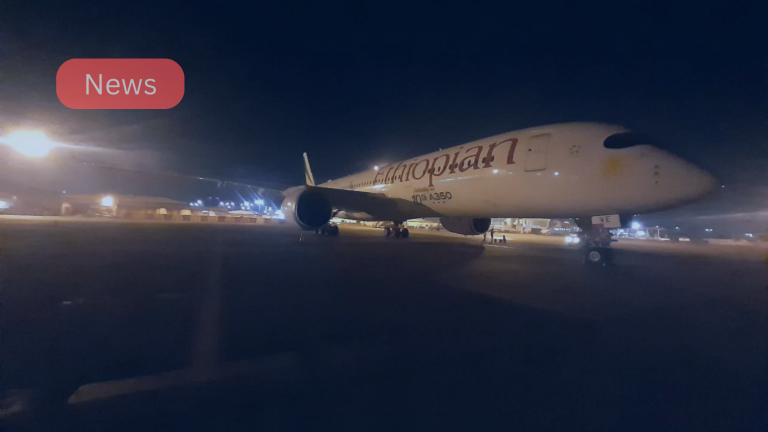
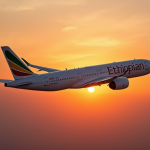
ADDIS ABABA, Ethiopia – In a milestone for African aviation, Ethiopian Airlines is preparing to launch its first-ever direct flights to Australia, marking a transformative step for intercontinental air travel. This initiative comes as the airline evaluates ultra-long-haul aircraft and secures regulatory approvals for routes likely to include Melbourne, with Sydney and Brisbane also in contention.
What’s Announced
In its July 7, 2025 coverage, Aviation A2Z reporter Shweta Shukla cited comments from Telila Deressa Gutema, Ethiopian Airlines’ Asia-Pacific regional manager, confirming plans to connect Addis Ababa (ADD) with an Australian city using either Airbus A350 or Boeing 787 Dreamliner aircraft.
Exploring the Route Options
The airline is examining multiple Australian destinations, with Melbourne emerging as the frontrunner. Data from the OAG Traffic Analyzer indicates approximately 6,000 round-trip travelers between Addis Ababa and Melbourne in the year ending July 2024. Brisbane and Perth recorded around 1,000 travelers each, while Sydney had lower volumes, still significant, potentially driven by connecting passengers.
Aircraft and Operations
Initial speculation suggests that Ethiopian will deploy either the A350-900/A350-1000 or Boeing 787-8/787-9 on these Australia routes, aircraft capable of covering 6,500–7,000 nm nonstop.
The airline currently boasts 20 A350-900s, 3 A350-1000s, 19 787-8s and 10 787-9s, along with 23 Boeing 777s; 63 aircraft are on order across future widebody fleets.
Regional Strategy and Connectivity
Utilizing Addis Ababa as a hub, Ethiopian plans to funnel connecting traffic from African and Middle Eastern markets via cities like Cairo, Johannesburg, and Nairobi. One underexplored proposal includes an Addis–Cairo–Sydney routing, reducing competition faced on more saturated Johannesburg–Sydney services.
Competitive Landscape
Ethiopian Airlines would enter a market currently dominated by one-stop services offered by Gulf carriers such as Emirates (via DXB) and Qatar Airways (via DOH). However, Qantas already serves Africa with limited operations, and Ethiopian would become the third African carrier offering flights into Australia, alongside South African Airways and Air Mauritius.
Route Viability
The proposed flights rank among the longest in Ethiopian’s network:
- ADD–BNE: ~6,948 nm
- ADD–SYD: ~6,819 nm
- ADD–MEL: ~6,495 nm
These distances demand aircraft with proven long-range credentials.
What’s Holding Up the Launch
The project is currently contingent on
- Finalizing aircraft commitments: Potential lease or order of suitable A350 or 787 variants.
- Clearing regulatory approvals: Both Australian and Ethiopian aviation authorities must authorize the routes.
Market speculation points to a 2026 launch, likely with Melbourne as the inaugural destination.
Market & Passenger Impact
- Elevated diaspora travel: Melbourne is home to a large East African community.
- Boost in tourism and education travel: Australia’s universities and immigrant links represent significant traffic.
- Economic utility: New routes may drive trade, investment, and mobility between the continents.
Expert and Industry Opinion
According to IATA, the global airline industry is poised for modest profitability growth in 2025, driven largely by cost efficiencies such as a 13% drop in jet fuel prices. This context supports the viability of ultra-long-haul routes like Addis Ababa–Australia, which, while niche and operationally complex, can be financially sustainable if managed effectively.
Potential Fare Class Strategies
Based on Ethiopian Airlines’ current practices and competitive benchmarks on ultra-long-haul routes, here are potential fare class strategies the airline may adopt for its planned Australia service:
1. Four-Class Cabin Configuration (Flagship Model)
For ultra-long-haul flights (~14–17 hrs), Ethiopian could use a premium-heavy configuration similar to its flagship A350-1000 or 787-9 setup, although it is highly unlikely since the airline uses a two-class strategy, in which case this strategy will force it to change the seat configuration.
| Cabin Class | Features |
| Business Class | 1-2-1 reverse herringbone layout, lie-flat seats, Do & Co catering |
| Premium Economy | Wider recliners, extra legroom, upgraded dining, priority boarding |
| Economy Plus | (Optional) Enhanced legroom, early seat selection, higher baggage limits |
| Economy Class | Standard 3-3-3 (787) or 3-3-3 (A350), with generous 32–33″ pitch |
- Advantage: Targets all customer segments — business, VFR (visiting friends & relatives), tourists, and students.
- Risk: Premium Economy is not yet standard in Ethiopian’s fleet, requiring retrofits or new aircraft.
2. Market-Specific Bundled Fares
Ethiopian may launch custom fare bundles for the Australia market, tailored to:
- Diaspora and family travelers (East African expats in Melbourne/Brisbane)
- Students (Kenya/Ethiopia–Australia university travel)
- Pilgrimage & leisure travel
Example Bundles
| Fare Bundle Name | Inclusions |
| Connect Africa | Extra checked bag, date change flexibility, $0 minor fees |
| EduFly Student | 45 kg baggage allowance, low change fees, proof of study required |
| Diaspora Return | Multi-city ticket (e.g., MEL–ADD–JNB), family booking discount |
3. Corporate & NGO Partnership Fares
Given Addis Ababa’s role as a regional hub for:
- AU headquarters
- UN agencies (e.g., UNECA)
- Global NGOs (e.g., Oxfam, MSF)
Ethiopian could negotiate:
- B2B fixed fares
- Last-minute change waivers
- Dedicated business desks or lounges
4. Dynamic Pricing Strategy
Using yield management tools (e.g., Sabre AirVision or Amadeus Altea), Ethiopian may:
- Price early-bird tickets for the diaspora ~20% cheaper
- Implement seasonal surcharges for Southern Hemisphere peak (Dec–Jan, Jun–Jul)
- Offer upgrade bids for Economy to Business (similar to Emirates Skywards) which is also a common practice within the Ethiopian Airline’s Shebamiles program.
Competitor Benchmarking
| Airline | Service to Australia | Fare Strategy |
| Qatar Airways | 3-class ultra-long-haul | Premium-heavy, loyalty focused |
| Emirates | 4-class incl. First Class | Bundled family + luxury products |
| Singapore Air | High-volume Economy traffic | Precision segmented fare classes |
| Ethiopian | 3–4 class emerging model | Likely hybrid (price + demographic) |
Ethiopian Airlines will likely use a hybrid fare strategy for Australia service that includes:
- 3 to 4 class cabin layout
- Tailored fare bundles for diaspora, students, and NGOs
- Dynamic yield management
- Corporate and institutional engagement
Timeline & Future Outlook
Arrivals in Australia would solidify Ethiopian’s pan-global network across six continents. The Ethiopian Business Review confirmed CEO Mesfin Tasew pledged Australia inclusion by 2026 under Vision 2035, aiming for 65 million annual passengers.