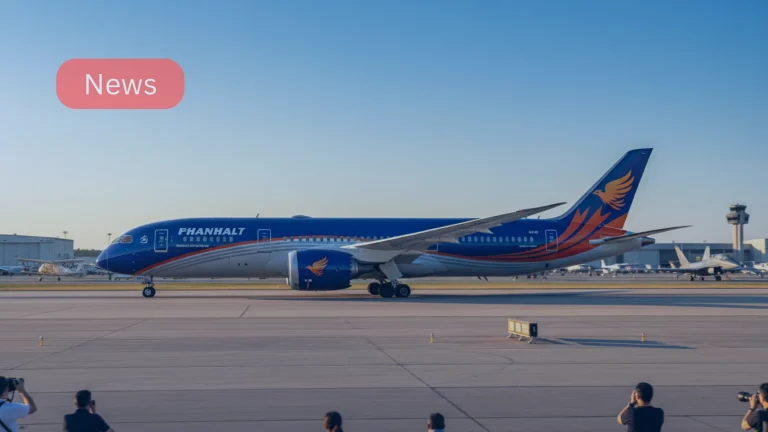
Ethiopian Airlines has cemented its dominance in Africa’s cargo aviation sector, according to the newly released State of Africa’s Infrastructure Report 2025 by the African Finance Corporation (AFC). The airline now controls 35 percent of the continent’s air cargo market, outpacing its nearest rivals, Kenya Airways and Royal Air Maroc, who share a combined 25 percent.

The report underscores Ethiopian Airlines’ aggressive expansion strategy, which includes operating 17 dedicated freighter aircraft, 11 Boeing 777-200F, 4 Boeing 737-800F conversions, and 2 Boeing 767-300F freighters. These aircraft serve 60 international cargo destinations, with half located within Africa. From 266,000 tons in 2016, the airline’s annual cargo capacity soared to 715,000 tons by 2023, with plans to expand the fleet to 37 freighters by 2035.
AFC praised both Ethiopia and Kenya for leveraging national carriers to promote intra-African trade, urging other nations to emulate their strategies. The report also highlighted structural shortcomings, noting that intra-African transport infrastructure remains underdeveloped, particularly in West Africa, where European carriers still dominate.
Beyond aviation, the AFC report spotlighted Ethiopia’s agricultural success. The country’s wheat cultivation surged from 5,000 hectares in 2018 to 650,000 hectares by 2023, making it sub-Saharan Africa’s top producer. Simultaneously, advancements in digital infrastructure and increased telecom adoption were applauded as signs of broader economic modernization.
Despite the progress, the AFC warned of lingering infrastructure deficits across the continent, particularly in logistics, IT, mining, and agriculture sectors. It emphasized the need to unlock over $4 trillion in untapped local capital to fund essential development projects.
With a robust cargo network and investment-backed expansion, Ethiopian Airlines is not just flying goods; it’s lifting the trajectory of African trade and connectivity.