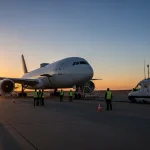
India-Russia civil aviation cooperation is gaining traction as both countries deepen aerospace industrial ties, notably on SJ-100 and Il-114 regional aircraft projects. Recent developments and public showings at the Wings India 2026 airshow in Hyderabad underscore growing bilateral interest in collaboration for commuter and short-haul aircraft.
While some commentary on defence and aerospace blogs like Indian Defence Research Wing has framed this as a broad “full-spectrum civil aviation package,” independent verification shows that specific, verifiable agreements focus on regional aircraft production and display rather than a formal government-to-government offer including larger platforms such as the Tu-214.
Industry attention is centred on the potential for joint manufacturing and broader engagement between India’s Hindustan Aeronautics Limited (HAL) and Russia’s United Aircraft Corporation (UAC), aligning with India’s goals for expanded regional connectivity and aviation infrastructure growth.
Regional Aircraft Collaboration Takes Shape
In October 2025, HAL signed a memorandum of understanding (MoU) with Russia’s UAC for local production of the Sukhoi Superjet-100 (SJ-100) regional jet in India. More than 200 SJ-100 aircraft are already in operation globally, and this partnership paves the way for India to produce and integrate these aircraft under its expanding domestic civil fleet strategy.
The SJ-100 is a twin-engine regional jet seating approximately 100 passengers. It has been touted for its suitability to India’s regional connectivity schemes, particularly under government initiatives aimed at enhancing air connectivity between tier-II and tier-III cities.
In parallel, discussions between Indian and Russian officials have expanded to include cooperation on the Il-114-300 turboprop, a short-haul aircraft with potential appeal for markets that require efficient operations on shorter airfields and remote routes.
Wings India 2026 and Aircraft Showcases
In January 2026, the United Aircraft Corporation confirmed plans to present the SJ-100 and Il-114-300 aircraft at Wings India 2026, one of Asia’s premier civil and general aviation exhibitions, running from January 28–31 in Hyderabad.
At this event, static displays and planned demonstrations aim to highlight the capabilities of these aircraft to Indian airlines, lessors, and potential civil operators. Russia’s Ministry of Industry and Trade and Rostec have emphasised the strategic partnership and the growing market demand for cost-effective regional aircraft in Asia.
Market Impact
India’s civil aviation sector is projected to undergo rapid growth over the next decade, with the need for hundreds of regional jets and turboprops to support both domestic and international regional routes. Analysts estimate that demand for aircraft sized between 70–120 seats is rising, driven by expanding airport networks and government connectivity programs.
This backdrop sets the stage for deeper participation by foreign aircraft manufacturers in Indian aviation markets, especially where joint production or technology transfer arrangements can support India’s industrial strategy and employment goals.
Challenges and Realities
Despite positive momentum, realising full manufacturing cooperation will involve overcoming:
- Certification and regulatory approvals under Indian and international aviation standards
- Supply chain integration for parts and components
- Market demand validation and operator commitment
Independent aviation analysts note that plans for larger aircraft such as the Tupolev Tu-214 in a collaborative package have yet to be confirmed by industry bodies or government releases, and therefore should not be taken as verified at this stage.
Industry Outlook
India Russia civil aviation cooperation, especially in regional aircraft production, reflects a broader trend of industrial partnerships in aerospace. As India continues to develop its domestic aviation manufacturing base, partnerships with established OEMs like UAC could accelerate capability growth, support fleet diversification and introduce new aircraft types to South Asian markets.
Looking ahead, announcements at events like Wings India 2026 are expected to clarify future orders, MoUs, and potential production pathways, shaping the trajectory of this bilateral aviation engagement.