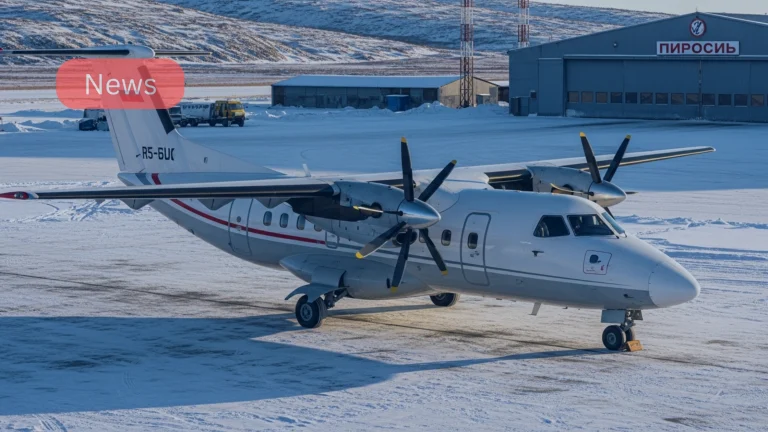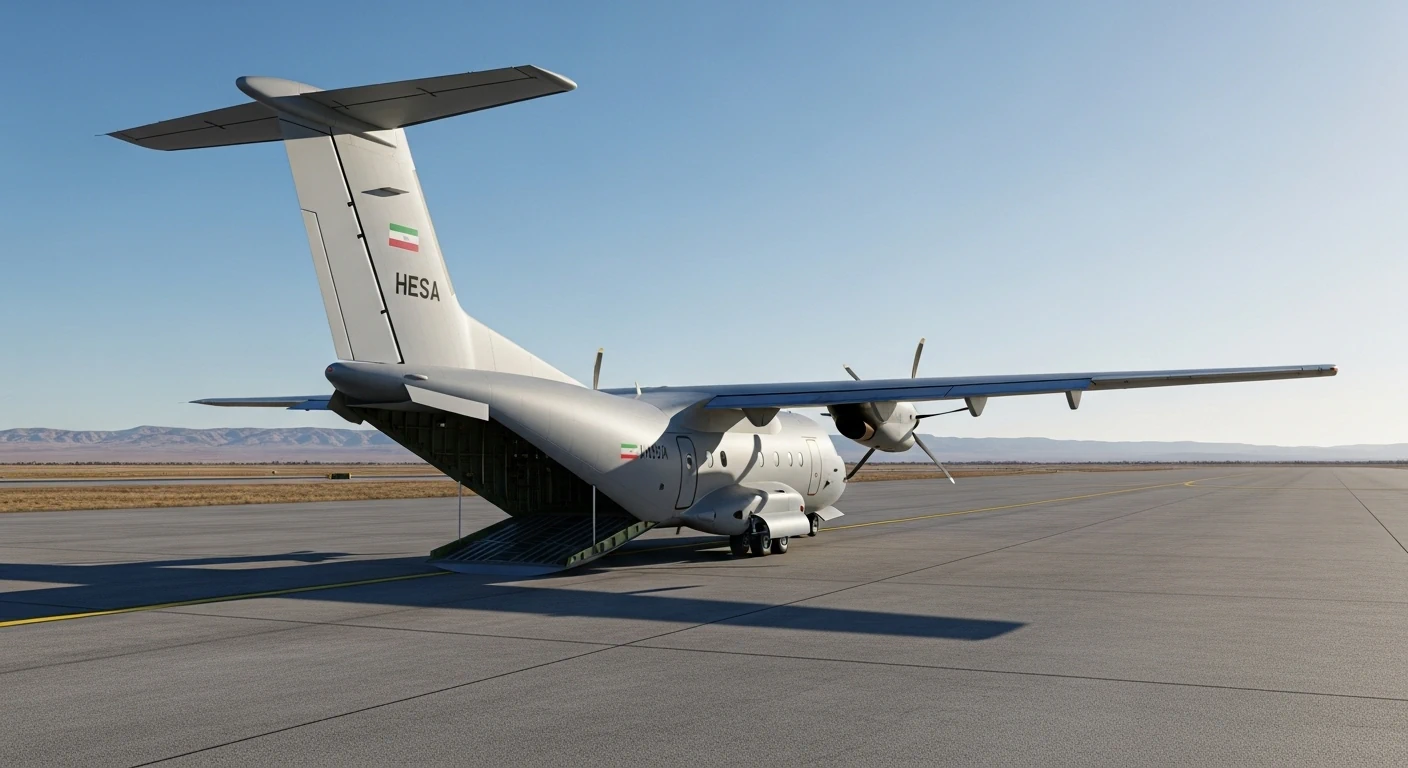

Iran has begun an official flight-test campaign of the domestically built Simorgh light transport aircraft, state media reported on 28 October 2025, marking a new step in Tehran’s long-running effort to field a home-grown tactical and light cargo type. The Ministry of Defence–backed programme will now move through a 100-hour test campaign ahead of type-certification and potential entry into military and civilian service, Iranian outlets say.
The announcement reiterates technical claims that have accompanied previous Simorgh appearances, a turboprop twin configuration with an advertised payload of roughly 6 tonnes, ranges in the multi-hundreds to low-thousands of kilometres depending on load, and runway requirements compatible with regional airfields. Iranian press and specialist defence sites published imagery and reportage of ground activity and test sorties at Shahin Shahr / Isfahan, which Iran has used for prototype trials.
What the announcement says
- Who: HESA (Iran Aircraft Manufacturing Industrial Company) / Iran Ministry of Defence, as reported by PressTV and other Iranian outlets.
- What: Start of official test flights for the Simorgh light transport/cargo aircraft and commencement of a 100-hour flight-test campaign required before in-service approval.
- Where: Flight tests reported from Shahin Shahr / Isfahan test facilities and other Iranian flight-test sites.
- When: PressTV dated the report 28 Oct 2025; earlier prototype flight activity was visible in public reporting during 2023–2024.
Technical claims and past record
Publicly available specifications repeated in state and specialist reporting describe the Simorgh as a twin-turboprop light transport with a maximum payload of approximately 6 tonnes, MTOW around 21.5 tonnes (reported in prior leaks/briefings), range figures quoted in some outlets of >1,500 km at payload, and runway performance suited to austere fields. These numbers align with previous Simorgh disclosures and apparent design lineage traced to An-140-type designs. Still, these remain manufacturer/state figures pending independent measurement or certified data.
Why it matters — capability, sanctions context and airlift needs
- National capability: Iran sees the Simorgh as a way to bolster domestic airlift capacity and reduce reliance on foreign platforms, a priority under sanctions and restricted access to Western spares. A certified domestic transport would provide both military logistics flexibility and potential civilian utility for remote routes.
- Regional airlift: If Simorgh testing leads to certification, Iran could field light transports for short-to-medium lift tasks, humanitarian logistics and regional connectivity, roles typically filled by ageing fleets of An-12/An-26 and some C-130 variants in the region. That said, claims that Simorgh will directly “replace C-130s” should be read as aspirational program framing rather than an immediate operational equivalence.
- Verification & export limits: International buyers and neutral observers will look for independent evidence, documented test results, civil aviation type certificates (if pursued), and third-party validation, before treating the aircraft as proven in service. Export is also constrained by sanctions and international regulation.
Timeline & what to watch
- 2023–2024: Public prototypes, fast-taxi tests and demonstration flights reported by Iranian sources.
- Oct 2025: PressTV and other Iranian outlets report the start of formal 100-hour test flights. Watch for incremental test reports, telemetry summaries and, crucially, any civil-aviation authority type-certification announcements.
Verification & caveats
- Multiple Iranian outlets (PressTV, ABNA, Tehran Times, Mehr News) and specialist defence/aviation sites (ArmyRecognition, TheIranProject) report the test campaign and cite official statements.
- Independent confirmation from major global wire services or neutral aviation authorities (e.g., ICAO, non-Iranian civil aviation authorities) is limited at the time of writing. For sensitive technical claims and export/operational assessments, rely on third-party validation where possible.
What’s next? industry outlook
- Short term: Expect incremental test updates from Iranian defence/civil aviation channels: flight hours logged, envelope expansion, and perhaps pilot reports. Independent observers may cite satellite imagery or open-source video to corroborate activity.
- Medium term: If the programme completes the required test hours and progresses to certification, HESA may pursue limited domestic production for military and state cargo roles. Broader export or commercial service will be constrained by regulatory compatibility and international market access.
Sources & further reading (load-bearing)
- PressTV, Iran begins test flights of home-made cargo plane, 28 Oct 2025.
- ABNA News, Iran’s Simorgh Aircraft Begins Official Test Flights, 29 Oct 2025.
- ArmyRecognition / Defence press, New Iranian Simorgh transport aircraft takes flight, 29 Oct 2025.
- Tehran Times / TheIranProject, prior coverage of demonstration flights and specifications (2024–2025).
Quick editorial note
The start of official test flights is newsworthy and plausibly accurate given the repeated Iranian reporting and earlier public prototype activity. However, because the reporting is driven by state sources and independent international confirmation is still limited, be cautious about treating manufacturer performance claims as proven in-service capabilities. We recommend following up with non-Iranian wire services, satellite imagery/OSINT verification, and any formal certification notices from Iranian civil aviation authorities for a fully validated, long-form piece.