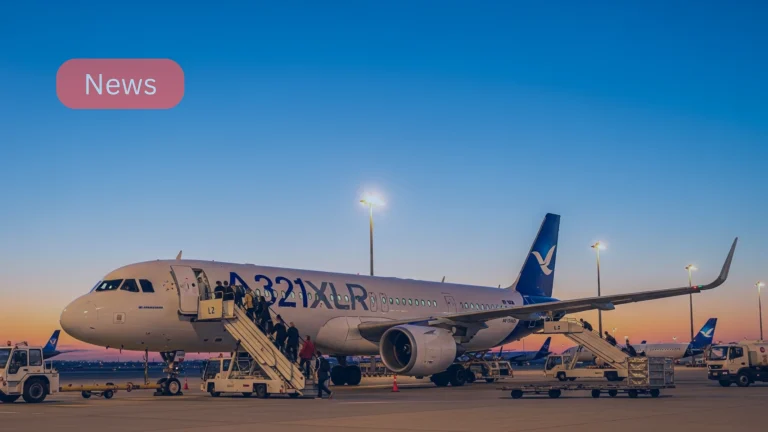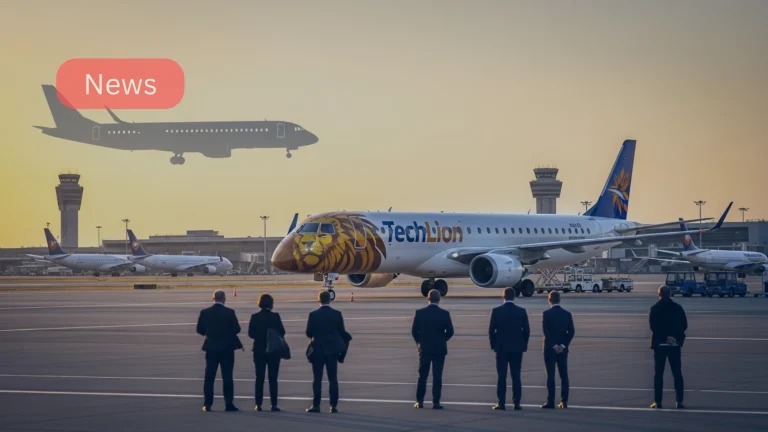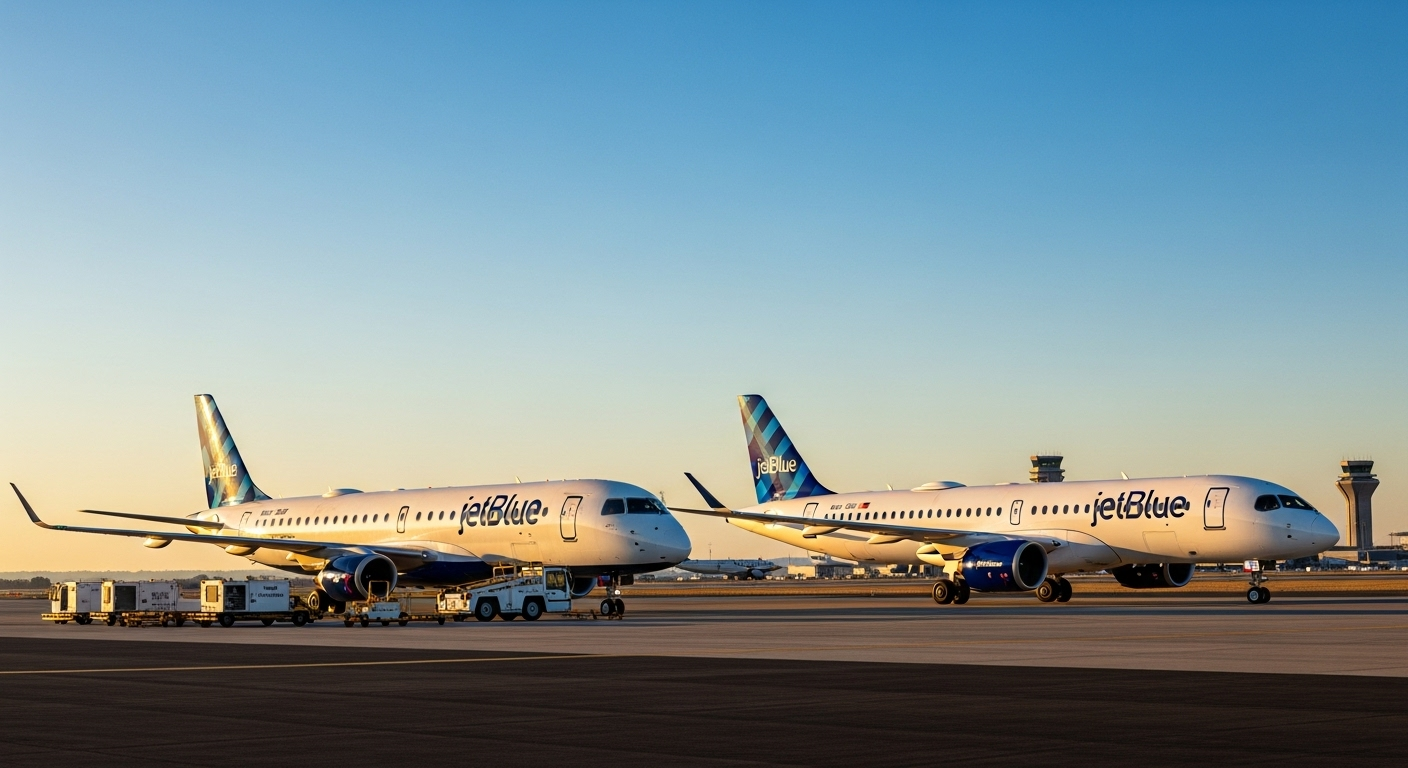

JetBlue Airways is moving swiftly to retire its Embraer E190 fleet, with two separate transactions handing over more than two dozen aircraft and dozens of engines to aviation leasing and parts specialists. The deals, confirmed in late July and early August 2025, mark another milestone in JetBlue’s fleet simplification strategy as it pivots toward the Airbus A220.
Two Major Sales, Two Different Buyers
Florida-based lessor Azorra signed a Sale and Purchase Agreement (SPA) with JetBlue for 13 Embraer E190 airframes and 36 General Electric CF34-10E6 engines, with deliveries beginning in July and scheduled through Q2 2026.
“We’re excited to once again partner with JetBlue on this transaction, which reinforces our commitment to the Embraer E-Jet family and GE’s CF34-10 engines,” said John Evans, CEO of Azorra. “It underscores our confidence in the performance, reliability, long-term value, and continued demand for these assets, while advancing our mission to deliver innovative, value-driven powerplant solutions to customers worldwide.”
(Source: Azorra press release)
Separately, Werner Aero, a U.S.-based aftermarket and MRO services firm, confirmed the purchase of 12 Embraer E190-100 airframes and associated engines. The aircraft are being delivered to Ascent Aviation’s Marana, Arizona facility between June 2025 and February 2026.
“This acquisition represents a continued commitment to supporting the E-Jet platform. With the delivery of these twelve aircraft, we will be able to offer our customers increased access to quality assets, ultimately supporting fleet reliability and reducing operational costs,” stated Tony Kondo, CEO of Werner Aero.
(Source: Werner Aero press release)
Comparative Fleet Shift: E190 Decline vs. A220 Growth
The scale of JetBlue’s E190 exit becomes clearer when set against its Airbus A220 expansion:
- E190 Fleet Shrinkage: As of August 2025, JetBlue operates just 9 active E190s, down from 38 earlier in the decade. The type’s final scheduled flight, Flight 6190 from JFK to BOS, is set for September 9, 2025.
- A220 Expansion: JetBlue has 50 Airbus A220s in service and 50 more on firm order. The airline expects 18 deliveries in 2025 and 16 in 2026, with additional aircraft arriving through 2029.
- Market Leadership: With 100 firm orders, JetBlue is the largest A220 customer globally, ahead of Delta’s 95 orders.
This transition reflects more than a fleet refresh. The A220 offers superior fuel efficiency, lower maintenance complexity, and operational commonality compared to the smaller, less fuel-efficient E190.
Strategic Implications
JetBlue’s shift is part of a broader trend among U.S. carriers toward streamlining fleets for efficiency and scale. The retirement of the E190 eliminates an older, costlier aircraft type, while the growing A220 fleet positions JetBlue to expand domestic and transcontinental routes more profitably.
For Azorra, the acquisition ensures a steady supply of E-Jet assets for secondary markets where the type still commands demand. Werner Aero’s purchase aligns with its strategy to bolster E-Jet support capabilities for operators worldwide, leveraging surplus parts and engines to reduce operational downtime for customers.
Looking Ahead
By early 2026, the E190 will be fully retired from JetBlue’s fleet, completing a nearly five-year phase-out process. The A220, meanwhile, will form the backbone of the airline’s short- and medium-haul network, supported by an aggressive delivery schedule and operational efficiencies.
With its largest E190 disposal to date and clear growth trajectory for the A220, JetBlue is executing one of the most decisive fleet transitions in recent U.S. aviation history, leaving little doubt that the airline’s future will be powered by Airbus.