
Kenya’s government has officially pivoted to financing the long-anticipated expansion of Nairobi’s Jomo Kenyatta International Airport (JKIA) through multilateral development banks, abandoning a controversial concession arrangement with India’s Adani Group. The move follows months of public pushback, political debate, and scrutiny over transparency in awarding the deal.
Transport Minister Davis Chirchir confirmed in an interview with Reuters that his ministry had already initiated formal outreach to international lenders.
“We have written … to development agencies … to basically tell them there’s an opportunity to build the airport through the Jomo Kenyatta International Airport, borrowing on its balance sheet,” Chirchir said.
From Concession to Public-Led Build
Under the original plan, the Adani Group was to finance, build, and operate the new terminal and supporting infrastructure in exchange for a long-term concession. But in a policy reversal, Kenya will now front the construction costs through publicly backed loans before exploring private operational partnerships.
“Instead of bringing concessioning to build the airport, we build the airport that we can concession later,” Chirchir told Reuters.
The strategy aims to keep control of the construction process in public hands while retaining flexibility for future management arrangements.
This shift follows growing unease over foreign concessions in critical infrastructure. Lawmakers and labor unions had argued the Adani deal lacked transparency, carried an unclear revenue-sharing structure, and risked placing strategic assets under the control of a single foreign operator.
Why the Adani Deal Collapsed
The Adani agreement, initially heralded as a breakthrough for speeding up JKIA’s modernization, quickly became politically contentious. Critics questioned whether the arrangement complied with Kenya’s procurement regulations and whether it offered value for money compared to publicly financed alternatives.
Civil society groups also raised sovereignty concerns, noting that the airport handles over 80% of Kenya’s international passenger traffic and serves as the country’s primary cargo hub. The political optics worsened when India’s Adani Group faced international scrutiny over corporate governance and environmental issues.
Financing the New Approach
Kenya’s outreach to development banks, including institutions such as the African Development Bank (AfDB), the World Bank’s International Finance Corporation (IFC), and regional infrastructure lenders, reflects a broader trend across Africa to secure concessional financing for strategic projects.
Such funding typically comes with lower interest rates, longer repayment terms, and embedded governance requirements compared to commercial borrowing. Chirchir said the government believes JKIA’s strong revenue performance and strategic importance will make it an attractive proposition for lenders.
Strategic Importance of JKIA
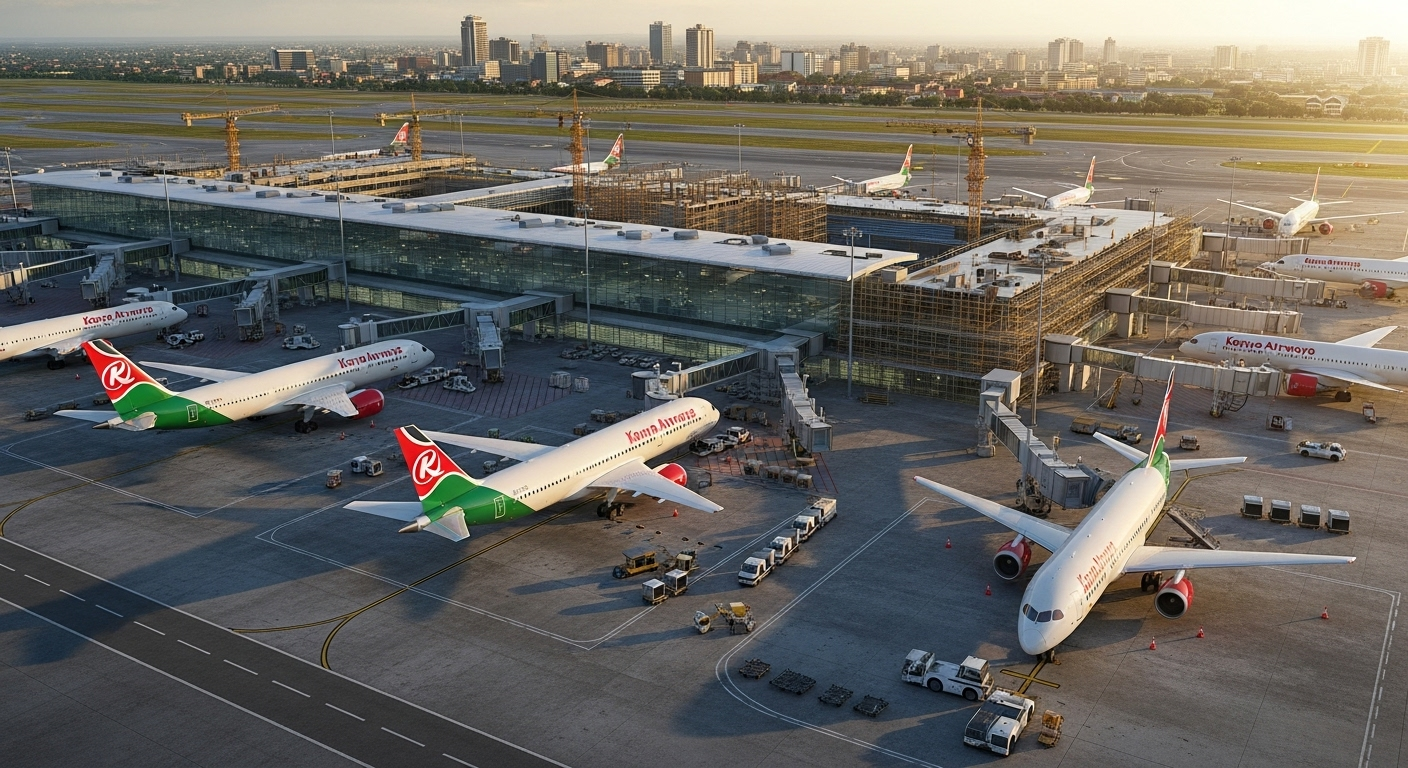
Opened in 1978, JKIA has long been East Africa’s aviation gateway, handling more than 8 million passengers annually before the COVID-19 pandemic. It serves as the primary hub for Kenya Airways and a major connecting point for international carriers linking Africa to Europe, Asia, and the Middle East.
However, infrastructure capacity has struggled to keep pace with passenger growth, and terminal congestion has become a frequent complaint from airlines and travelers. The expansion is expected to add new gates, a modern arrivals hall, upgraded baggage systems, and improved cargo facilities.
Political & Economic Implications
Kenya’s pivot is not just a technical financing decision, it’s a political signal. By opting for development bank financing over a direct concession, the Ruto administration is positioning itself as responsive to public sentiment while aiming to safeguard long-term state control over key infrastructure.
The decision could also have diplomatic undertones. While India remains a valued trade partner, development bank financing allows Kenya to avoid the perception of leaning too heavily on a single foreign investor.
Industry Reaction
Aviation analysts note that while development bank loans may take longer to arrange than a turnkey concession, they offer more flexibility for project design and operational control.
“This is a longer runway to take off, but it gives Kenya more say over the final shape of the airport,” said a regional transport policy expert.
Airline operators have cautiously welcomed the shift, with some expressing relief that expansion plans remain on track despite the contractual shake-up.
“What matters to us is that capacity increases and passenger flow improves,” said one senior airline executive.
What’s Next
The Ministry of Transport is expected to release a detailed project financing plan by early 2026, outlining lender participation, repayment schedules, and construction timelines. If funding commitments are secured promptly, groundbreaking could begin in late 2026, with phased completion targeted for the early 2030s.
For now, Chirchir’s remarks underscore Kenya’s commitment to a publicly led build, one that retains the option of introducing private operators only after construction is complete and operational control can be balanced with national interests.