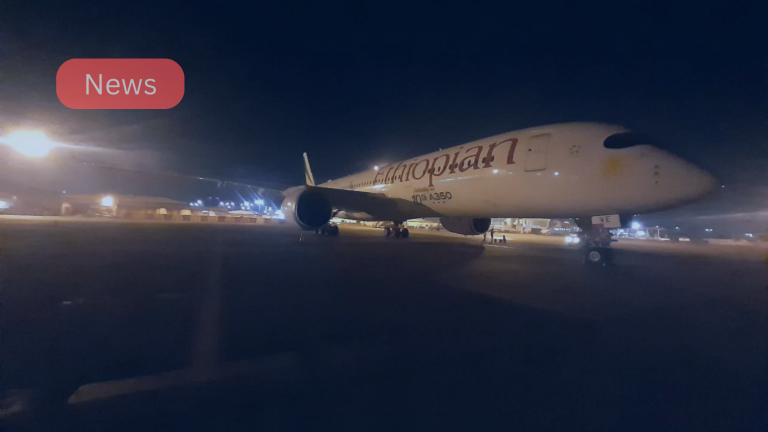
RwandAir has reinforced its narrowbody capacity with two additional Boeing 737-800s and expects an Airbus A330-200 before year-end, advancing a measured growth plan centered on reliability and regional connectivity. The move adds immediate seats on short- and medium-haul routes while preserving widebody flexibility for medium- and long-haul services. The developments were first detailed by FlightGlobal’s David Kaminski-Morrow, whose report includes aircraft registrations and cabin configurations (12 business, 162 economy).
According to FlightGlobal’s Kaminski-Morrow, the 737-800s, registered 9XR-WT and 9XR-WU and formerly with Malaysia Airlines, have joined the Kigali-based carrier as part of a reliability push. Additional corroboration from Aviation Week notes the arrivals on Aug. 27, 2025, with one airframe already in revenue service and a further widebody expected in the fourth quarter.
Why the RwandAir fleet expansion matters
The RwandAir fleet expansion addresses two immediate needs. First, it adds dependable narrowbody lift on high-demand intra-African and near-regional sectors. Second, it positions the airline to restore schedule resilience after technical disruptions earlier in the month, as reported by The EastAfrican. The additional A330-200, expected later this year, will give the carrier added versatility for medium- to long-haul markets where range and belly cargo capacity are critical.
New Boeing 737-800s: Capacity and configuration
Each 737-800 is configured with 12 business-class and 162 economy-class seats, consistent with the airline’s two-class product for regional operations. AirlineGeeks confirms the seating and notes that these aircraft will primarily operate short- and medium-haul services within Africa and to nearby regions. This setup aligns with RwandAir’s strategy to balance premium demand with high-density leisure and VFR (visiting friends and relatives) traffic.
In practical terms, the 737-800s allow for:
- Higher frequency on core routes from Kigali to East, Central, and Southern Africa.
- Fleet commonality, aiding pilot rostering and maintenance efficiency.
- Quick capacity injection to stabilize the schedule after recent disruptions.
A330-200 on the way: Widebody flexibility returns
FlightGlobal reports that an Airbus A330-200 is expected before the end of the year. While RwandAir has not published the exact MSN or engine variant in the public domain, the A330-200’s performance profile fits RwandAir’s network design. It offers strong range for medium-haul missions from Kigali and supports cargo uplift, an important revenue stream for African carriers seeking diversification.
Aviation Week adds that a “widebody” is slated for the fourth quarter, reinforcing the widebody fleet ahead of peak travel windows. This timing suggests the airline is targeting operational readiness for the holiday season and early-year travel upticks.
Operational context: Reliability and growth
RwandAir experienced unexpected technical disruptions this month that reduced available aircraft for operations, according to regional reporting by The EastAfrican. By inducting two ready-to-fly 737-800s, both ex-Malaysia Airlines frames, the carrier is plugging near-term capacity gaps while maintaining schedule integrity. The move also spreads maintenance events across a slightly larger fleet, decreasing the risk that a single prolonged AOG (aircraft on ground) event cascades into widespread cancellations.
This expansion sits within a longer-term plan. ch-aviation reports that RwandAir aims to grow from 14 to at least 21 aircraft by 2029, part of Rwanda’s Transport Sector Strategic Plan 2024–2029. While plans can evolve, the near-term acquisitions and the expected A330-200 are consistent with that trajectory, signaling measured growth rather than rapid, debt-heavy expansion.
Cabin product and customer impact
From a passenger perspective, the 737-800s’ two-class layout enables RwandAir to serve business travelers on key city pairs while maintaining competitive economy fares. The airline’s strategy emphasizes schedule reliability, a critical differentiator in African markets where weather, infrastructure, and aircraft availability can create operational variability. The incoming A330-200 will also support belly cargo, which can stabilize yields on thinner passenger routes by adding freight revenue.
Market positioning from Kigali
RwandAir’s Kigali hub sits at the crossroads of East and Central Africa. The additional 737-800 lift helps the carrier densify frequencies into Nairobi, Entebbe, Bujumbura, Lusaka, Dar es Salaam, and Johannesburg, typical markets for the type. Meanwhile, the A330-200 can underpin medium-haul connectivity to the Middle East, India, or Europe, building on prior long-haul ambitions (for example, service to Paris launched in 2023).
What analysts are watching
Industry watchers are tracking three issues as the RwandAir fleet expansion takes shape:
- Dispatch reliability. The immediate test is whether the extra 737-800s reduce cancellations and delays, as intended. The EastAfrican frames the additions explicitly as a response to recent disruptions.
- Network optimization. Will RwandAir deploy the A330-200 to strengthen existing medium-haul markets or open new city pairs? The aircraft’s cargo capability could influence route choices.
- Financial discipline. With a 2029 fleet target publicized by ch-aviation, investors will watch utilization and yields to ensure growth supports profitability.
Verified details at a glance
- Two Boeing 737-800s added; 9XR-WT and 9XR-WU, ex-Malaysia Airlines; 12J/162Y seating.
- A330-200 expected before end-2025 (widebody due in Q4 2025).
- Rationale: Improve reliability and capacity after technical disruptions.
- Long-term plan: Fleet could grow to 21 aircraft by 2029.
What’s next
RwandAir’s near-term priorities will likely include stabilizing the schedule and maximizing utilization of the two 737-800s. If the A330-200 arrives on time in Q4, the airline could add capacity on trunk medium-haul routes ahead of the holiday peak. Over the medium term, attention will shift to whether the carrier advances toward the 21-aircraft target by 2029 while maintaining operational reliability and yield discipline.
Citation Note