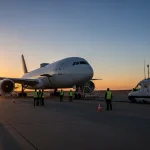
South African investigators have concluded that an Airbus A330-300 operating a domestic SAA flight from Cape Town to Johannesburg on 27 October 2024 entered a cruise-altitude turbulence-induced pitch oscillation that was aggravated when the first officer disengaged the autopilot and attempted manual corrections, contrary to Airbus flight-manual guidance. FlightGlobal reports the finding based on the South African AIID investigation.
The A330, cruising at 41,000 ft, briefly exceeded the maximum operating Mach (M0.86), reaching M0.875 for about 9 seconds. The aircraft oscillated between nose-down and nose-up attitudes, with a peak descent rate of 2,176 ft/min and altitude fluctuations between 41,176 ft and 40,404 ft. Four cabin crew were injured, one seriously, when the cabin service was underway and trolleys and hot beverages were in use. No passengers were seriously hurt.
Investigation findings: what the AIID flagged
- Autopilot guidance ignored: Flight manuals recommended leaving the autopilot engaged and deploying speedbrakes to dampen the oscillation; the first officer chose to disconnect the autopilot and “settle” the attitude manually. Investigators concluded that this action led to “chasing the aircraft” and triggered multiple angle-of-attack protections.
- Objective data vs perception: The inquiry recorded that the first officer believed the aircraft’s speed “remained steady,” despite trend vectors and overspeed warnings. Investigators noted that she “disbelieved” the recorded data, a critical human-factors insight. The captain said he assumed the first officer would deploy speedbrakes and did not intervene promptly.
- Simulator validation: Airbus simulations conducted for the inquiry showed that leaving the autopilot engaged and deploying speedbrakes would have produced a faster, controlled recovery while keeping overspeed within limits. The crew instead descended to 39,000 ft to regain speed margins.
Safety impact and operational lessons
- Cabin risk during service: The incident highlights the vulnerability of cabin crew during unexpected upsets when cabin service is underway. Investigators reported trolleys and hot drinks caused burns and impact injuries. This reinforces industry emphasis on securing service during potential turbulence and the value of conservative cockpit-to-cabin communication when flight crews detect potential turbulence.
- Human factors and automation policy: The report underscores a recurring theme in modern safety investigations: inappropriate manual inputs in situations better handled by certified automated protections can worsen outcomes. AIID’s findings align with prior global cases where disengaging autopilot during a high-energy event increased instability.
- Crew resource management: The captain’s testimony, expecting the first officer to act per the manual, and the lack of timely intervention point to CRM (crew resource management) opportunities: clearer command-authority protocols and assertive cross-monitoring when flight parameters change rapidly.
Timeline, quick facts
- 27 Oct 2024: SAA A330-300 en route CT-JNB experiences pitch oscillation at FL410; four cabin crew injured.
- Nov 2024: Initial probes reported; investigators open formal inquiry.
- Oct 2025: AIID final/investigative summary released and reported by FlightGlobal, detailing human factors and recommending adherence to flight manual procedures.
What’s next? industry outlook
- Operator actions: Expect South African Airways and other operators to review A330 SOPs with flight crews, emphasise the flight manual’s recovery techniques for cruise upsets, and reinforce CRM training to ensure timely interventions when one crew member diverges from recommended procedures.
- Regulatory/industry guidance: Regulators and OEMs may continue to reiterate automation-management policies and training syllabi that specify when to trust autopilot protections vs manual intervention during high-energy events. The incident will likely be cited in recurrent training modules for A330 operators globally.
- Cabin safety emphasis: Airlines may tighten procedures for cabin service in cruise or turbulence-prone airspace and update crew-briefing practices to reduce risk to cabin staff during periods of potential turbulence.
Sources
- FlightGlobal, David Kaminski-Morrow, Pilot attempted manual correction during SAA A330 cruise-altitude turbulence upset, 22 Oct 2025.
- South African AIID – CAA, incident executive summary (aircraft serious incident report, Oct 2025 release).
- BEA notified event page, Airbus A330 registered ZS-SXJ incident notification.
- Aviation Herald – trade reporting, prior event log and investigation tracking.