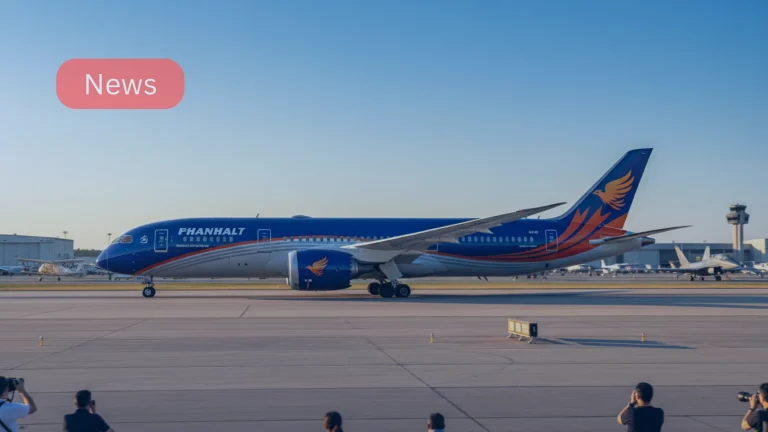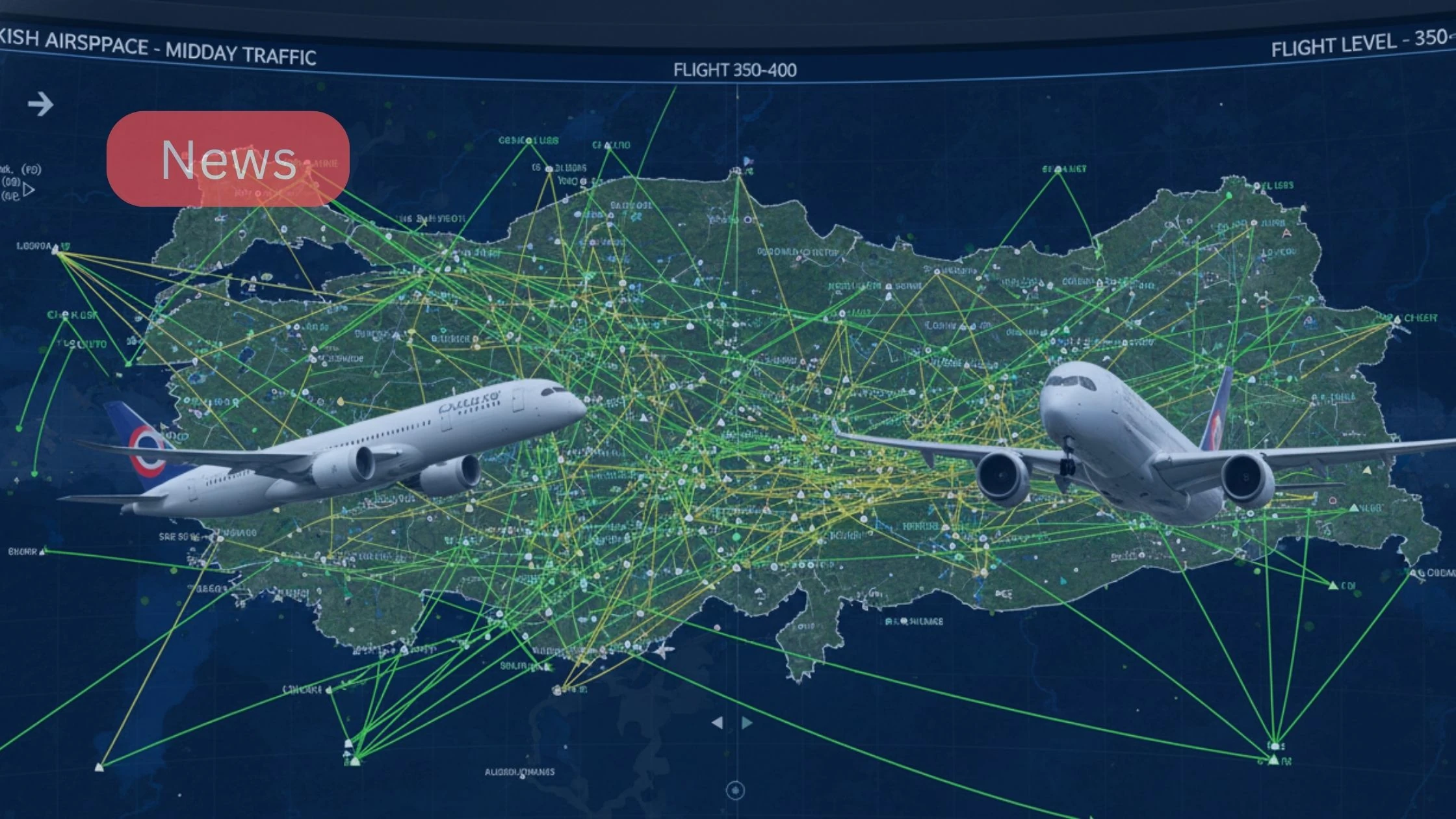

ISTANBUL, Türkiye’s airspace reached a new peak in transit traffic on January 4, 2026, when a total of 2,177 daily transit flights crossed the country’s skies, the highest ever recorded, Transport and Infrastructure Minister Abdulkadir Uraloğlu announced. The figure represents a significant increase from the previous record of 1,906 transit flights on August 31, 2025, highlighting Türkiye’s growing role as a global air traffic crossroads.
The data, first reported by Daily Sabah with Anadolu Agency (AA) and derived from Eurocontrol statistics, underscores the strategic importance of Turkish airspace for carriers operating transcontinental routes. Uraloğlu said the record reflects “superior coordination and management capabilities” at the State Airports Authority (DHMI) Air Traffic Control Center,” which safely handled the increased volume.
The surge contributes to an ongoing trend of rising air traffic in Türkiye, which also saw total passenger figures exceed 247 million in 2025, with aircraft movements reaching roughly 2.51 million, both all-time highs.
Why Türkiye’s Airspace Is Bustling with Traffic
Geographical Advantage and Hub Connectivity
Türkiye’s unique position between Europe, Asia, and Africa makes it an ideal corridor for airlines connecting these regions. International carriers regularly choose flight paths through Turkish airspace to optimize fuel efficiency and scheduling, benefiting from the country’s proximity to major transcontinental air routes.
Istanbul Airport, the country’s primary international hub, continues to cement its status as a central aviation junction, handling millions of passengers and flights each year. In 2025, it served 84.4 million passengers, rising year-on-year, while domestic hubs such as Sabiha Gökçen and Antalya also contributed to strong growth.
Record Transit Flights: What It Means for Airlines
Transit flights are those that pass through a country’s airspace without landing. High transit figures indicate not only robust air traffic control capabilities, but also the strength of an aviation ecosystem that supports seamless overflight operations.
- Efficiency: Airlines benefit from efficient routing across Turkish airspace, which can reduce flight time and operating costs for long-haul services.
- Demand: The record reflects rising demand for intercontinental connectivity, particularly between Europe and South Asia/Middle East corridors.
- Network Strategy: Carriers using Türkiye as a transit point include major European, Middle Eastern, and Asian operators, underscoring Türkiye’s role as a global aviation conduit.
(Industry analysis based on general traffic patterns and Eurocontrol routing data.)
Historical Traffic Trends in Türkiye
Türkiye’s aviation sector has shown consistent growth in recent years:
- In 2025, more than 247 million passengers traveled by air through Turkish airports, up over 7 percent year-on-year, with total flights around 2.5 million.
- Transit flight records have been broken multiple times, with the DHMI reporting incremental increases and improved throughput capacity in peak periods.
These figures align with broader industry data showing escalating demand for post-pandemic air travel and transit traffic recovery. Eurocontrol’s network data reflects increasing flight volumes across the continent, with Türkiye often positioned as a vital airspace corridor linking multiple regions.
Operational and Infrastructure Context
The record achievement owes in part to investments in air traffic management systems and controller training overseen by the DHMI. The agency’s ability to handle high flight volumes reflects advances in radar, navigation, and coordination tools critical for safe operations in busy skies.
Turkey has also invested heavily in airport infrastructure, including the expansion of Istanbul Airport, which serves as both an origin/destination hub and a transit point for connecting flights. This ongoing development supports handling larger aircraft numbers and improved passenger flows.
Impact on Regional & Global Aviation
The new daily transit flight record signals several key impacts:
- Attraction of long-haul carriers: Airlines increasingly view Turkish airspace as a strategic routing advantage.
- Competitive positioning: With passenger and flight figures rising, Türkiye strengthens its competitive position relative to other major hubs in Europe and the Middle East.
- Air traffic resilience: Sustained growth in both traffic and operational capability demonstrates resilience in the face of industry fluctuations, including economic pressures and geopolitical factors.
Analysts see Türkiye’s performance as consistent with IATA and ICAO forecasts anticipating increased global flight demand and the continued importance of interconnected airspace networks.
What’s Next for Turkish Airspace Traffic
Looking forward, Türkiye’s aviation authorities and industry observers expect:
- Continued growth in transit flights as airlines optimize global route networks.
- Ongoing infrastructure investments to support capacity increases.
- Potential leveraging of air traffic growth to expand international services and partnerships.
Sources
- Türkiye sets record with 2,177 daily transit flights on Jan. 4 — Daily Sabah/Anadolu Agency.
- New year begins with record-breaking air traffic over Türkiye — Turkiye Today (cites Eurocontrol & official statement).
- Turkiye records daily transit trip record — Azernews (context on operational efficiency).
- Türkiye sees over 247M air passengers in 2025 — Daily Sabah (wider aviation growth context).
- Turkish airports welcome record 247 million travelers in 2025 — Hürriyet Daily News (comprehensive passenger figures).