
General Aviation (GA) in Africa, covering all civil aviation activities outside of scheduled commercial airlines, is emerging as a strategic pillar in regional development. Whether supporting remote logistics, facilitating business travel, or offering critical services like medical evacuation and aerial surveys, GA is proving indispensable in overcoming infrastructure challenges and driving economic inclusion across the continent.
Changing Perceptions: Business Aviation as an Economic Catalyst
Once seen as a luxury reserved for the ultra-wealthy, business aviation in Africa is now recognized as a practical solution for development. It enables investment in regions with poor transport infrastructure, particularly in resource-rich sectors like mining and oil. In East Africa, business jets support thriving tourism by connecting visitors with remote national parks and coastal resorts.
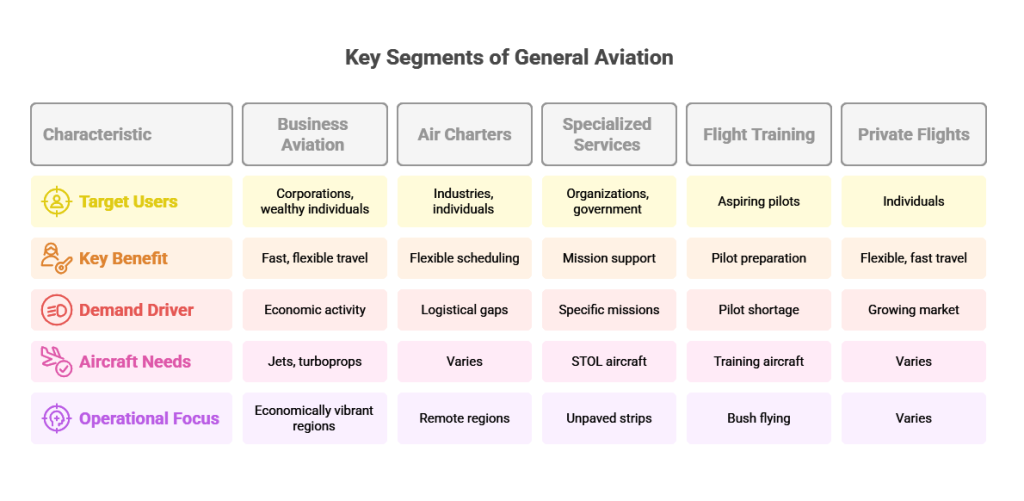
Key Segments of General Aviation in Africa
1. Business Aviation: Used primarily by corporations and high-net-worth individuals, business jets and turboprops enable fast, flexible travel. Demand is high in economically vibrant regions with active natural resource sectors.
2. Air Charters: Charter services bridge logistical gaps by offering flexible scheduling to regions beyond the reach of commercial airlines. Both cargo and passenger charters are vital for industries like construction, mining, and humanitarian operations.
3. Specialized Services: GA supports missions such as MedEvac, wildlife patrols, aerial surveying, and crop dusting. Aircraft capable of operating from unpaved strips are critical for these operations.
4. Flight Training: With Africa’s pilot shortage and growing aviation demand, flight training centers play a key role. Many focus on preparing pilots for the rigors of bush flying and remote operations.
5. Private Flights: Privately owned aircraft serve a small but growing market of individuals requiring flexible and fast travel.
Challenges Facing General Aviation in Africa
- Maintenance and MRO access: Scarce, expensive, and often centralized in major cities.
- Fuel availability: Avgas is hard to find at small airports; fuel costs vary widely.
- Skilled workforce: Shortage of trained mechanics and bush pilots.
- Permit complexity: Overflight and landing permit bureaucracy hampers cross-border operations.
- Limited FBO network: Sparse availability of ground services like fueling, handling, and hangar.
Strategic Opportunities in African General Aviation
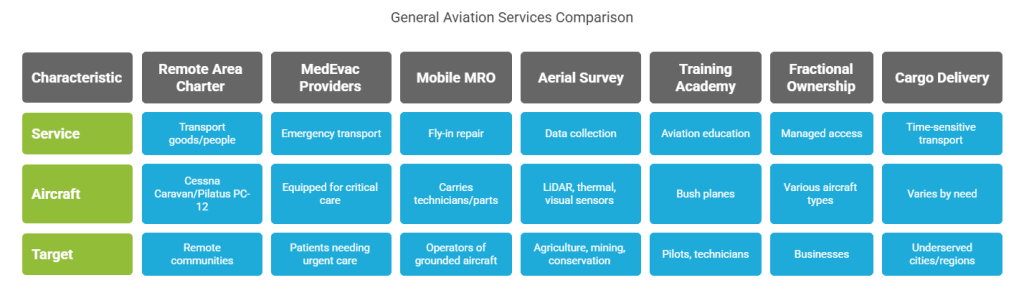
1. Remote Area Charter and Logistics Services: Use rugged aircraft like Cessna Caravan or Pilatus PC-12 to transport goods and people to remote locations.
2. Medical Evacuation (MedEvac) Providers: Offer rapid-response emergency transport with aircraft equipped for critical care.
3. Mobile MRO and Parts Delivery: Fly in technicians and spare parts to grounded aircraft in remote areas, reducing downtime and repair costs.
4. Aerial Survey and Mapping Services: Deploy aircraft with LiDAR, thermal imaging, or visual sensors to serve agriculture, mining, and conservation sectors.
5. GA Pilot and Technician Training Academy: Establish programs focused on bush flying, remote field repair, and regulatory navigation.
6. Fractional Ownership & Aircraft Management: Provide businesses with managed access to aviation assets without full ownership costs.
7. Specialized Cargo Delivery: Transport critical, time-sensitive goods (like medical supplies) to underserved cities and regions.
Conclusion: General Aviation as Africa’s Airborne Lifeline
From unlocking new markets to saving lives, general aviation has a transformative role to play in Africa’s future. With the right infrastructure, regulatory support, and entrepreneurial spirit, GA can bridge the continent’s transport gaps and fuel inclusive growth.