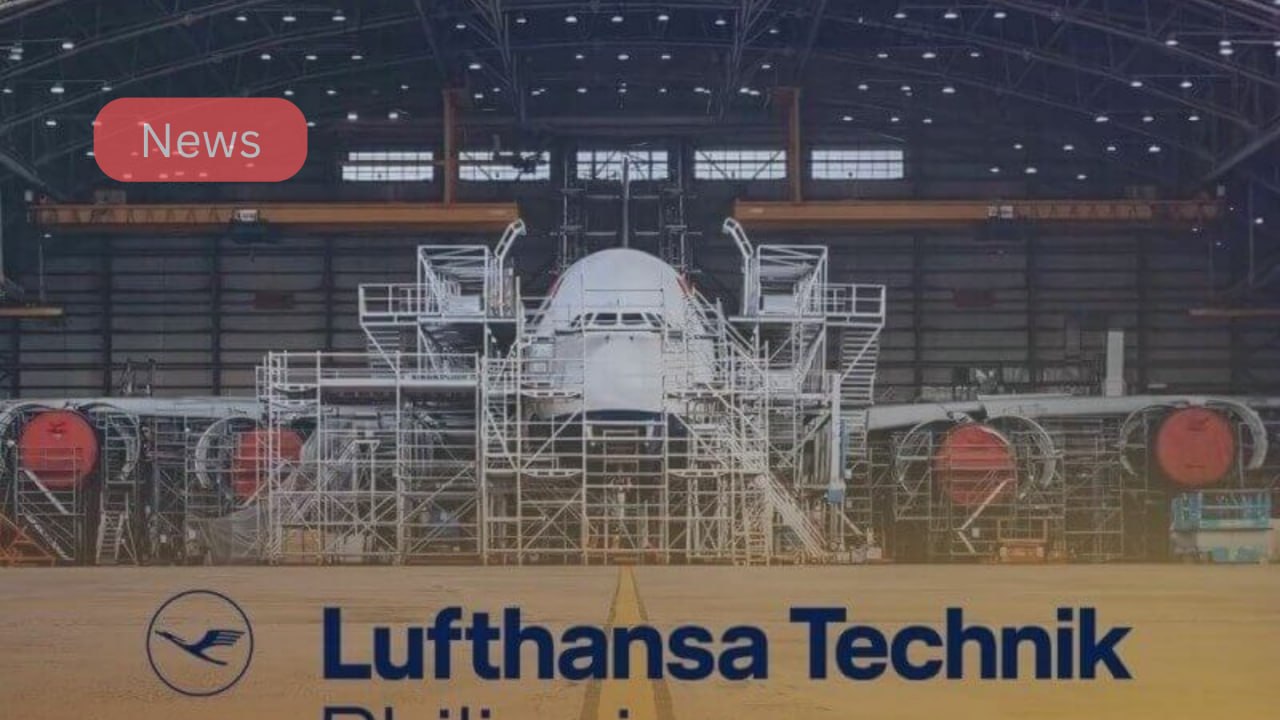

The Lufthansa Technik Philippines line maintenance closure marks a significant restructuring in the Philippine aviation maintenance industry. According to business publication InsiderPH, Lufthansa Technik Philippines (LTP) will discontinue its line maintenance services effective August 1, 2026.
The report states that Philippine Airlines will assume full responsibility for line maintenance activities through its internal maintenance organization. Lufthansa Technik Philippines will instead focus on base maintenance and aircraft overhaul operations at its Manila facility.
The move affects one of Southeast Asia’s most established aircraft maintenance providers. Lufthansa Technik Philippines operates a 226,000-square-meter facility near NAIA and employs more than 3,000 workers.
What Is Changing at Lufthansa Technik Philippines?
Line maintenance refers to routine aircraft inspections, servicing, and minor repairs conducted between flights. These activities are critical for maintaining aircraft turnaround schedules and operational reliability.
Under the restructuring plan:
- LTP will stop line maintenance operations on August 1, 2026.
- PAL will internalize line maintenance for its fleet.
- LTP will continue heavy maintenance and aircraft overhaul work.
- PAL will remain an LTP customer for base maintenance services.
Industry observers view the move as part of a broader aviation trend. Airlines increasingly bring maintenance functions in-house to improve operational control and reduce outsourcing costs.
Why the Lufthansa Technik Philippines Line Maintenance Closure Matters
The Philippine aviation MRO sector plays an important role in Asia-Pacific aircraft servicing. Lufthansa Technik Philippines is certified by multiple aviation authorities, including:
- Federal Aviation Administration
- European Union Aviation Safety Agency
- Civil Aviation Authority of the Philippines
Its Manila hub services aircraft including:
- Airbus A320 family
- Airbus A330
- Airbus A380
- Boeing 777 aircraft
The closure of the line maintenance division could reshape employment patterns and competitive dynamics within Philippine aviation maintenance.
Potential Industry Impacts
- Increased in-house maintenance capability at PAL.
- Workforce displacement among LTP technicians.
- Greater specialization in heavy maintenance and overhaul.
- Possible expansion of third-party MRO opportunities elsewhere in the Philippines.
Philippine Airlines Expands Internal Maintenance Operations
The restructuring supports PAL’s strategy to strengthen operational self-sufficiency.
CAPA reported that airlines globally have increased investment in internal maintenance systems to reduce turnaround risks and improve scheduling flexibility.
Industry discussions indicate that PAL had been preparing the transition for several years. While these claims remain unofficial, multiple aviation community discussions suggest planning began as early as 2023.
The airline’s regional subsidiary, PAL Express, has also maintained technical cooperation agreements with Lufthansa Technik in recent years.
Workforce Concerns Following the Closure
One unresolved issue involves the number of employees affected.
InsiderPH reported that industry estimates place affected jobs “in the hundreds,” though Lufthansa Technik Philippines has not released official numbers.
Social media discussions and aviation forums referenced concerns over technician displacement, especially among line maintenance personnel stationed in Manila, Cebu, Clark, Davao, and General Santos.
Some aviation companies have already responded. Cebu Pacific and Aviation Partnership Philippines reportedly launched recruitment efforts targeting displaced LTP workers.
Broader Context in Asia-Pacific Aviation Maintenance
The Asia-Pacific aviation maintenance market continues to grow as regional air travel recovers and airline fleets expand.
According to IATA forecasts, Asia-Pacific remains one of the fastest-growing aviation markets globally. Increased aircraft utilization raises long-term demand for maintenance, repair, and overhaul services.
Lufthansa Technik Philippines has continued investing in heavy maintenance infrastructure. In 2022, the company opened a new aircraft overhaul hangar in Manila, increasing maintenance capacity by up to 20 percent.
The company is also linked to future expansion projects outside Manila, including Clark International Airport developments.
These developments suggest LTP is not exiting the Philippine market but repositioning toward higher-value MRO services.
Industry Outlook
The Lufthansa Technik Philippines line maintenance closure highlights ongoing structural changes in global aviation maintenance.
Airlines increasingly seek:
- Operational control
- Faster turnaround management
- Reduced outsourcing dependency
- Improved fleet integration
Meanwhile, specialized MRO providers are focusing on:
- Heavy maintenance
- Aircraft overhaul
- Long-term technical support
- High-margin engineering services
For the Philippines, the transition may create short-term labor disruption but could strengthen the country’s position in advanced aircraft overhaul and heavy maintenance operations.
The long-term impact will depend on:
- PAL’s ability to scale internal maintenance efficiently
- Workforce absorption across the aviation sector
- Continued investment in Philippine MRO infrastructure







