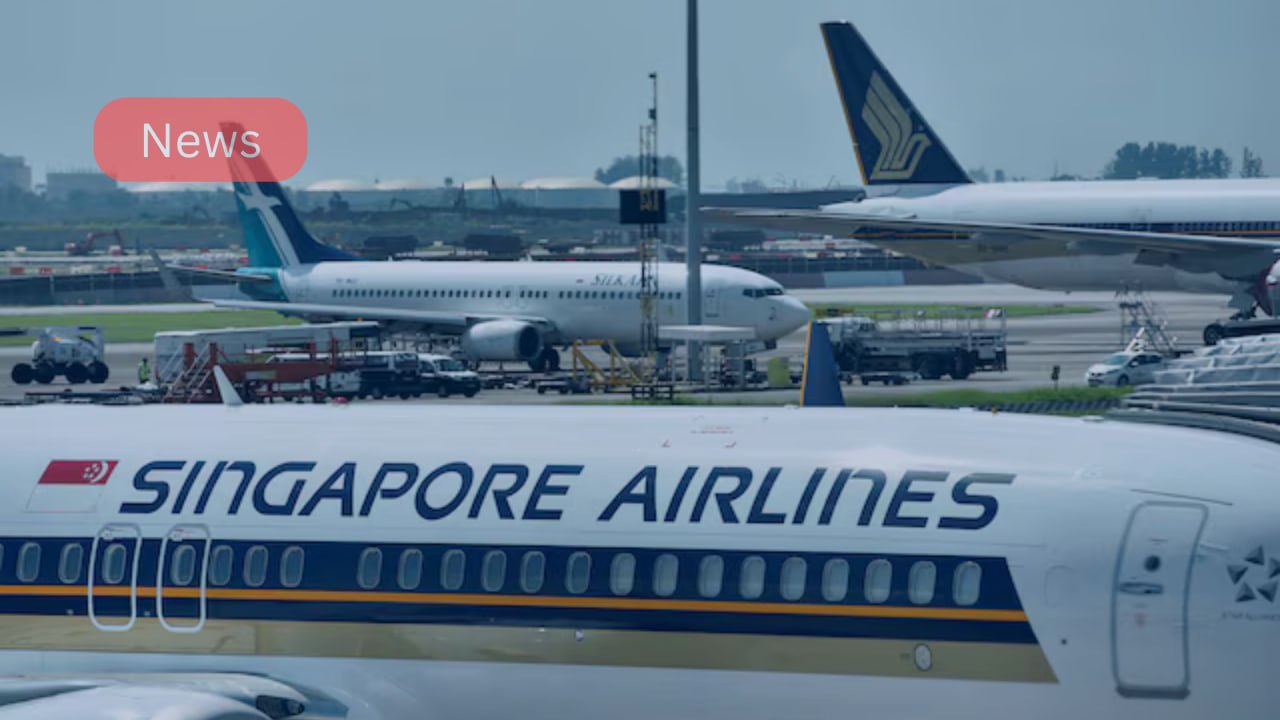

Singapore Airlines is reportedly in discussions with Airbus and Boeing regarding a major aircraft acquisition that could include at least 50 widebody jets. According to Reuters journalists Tim Hepher and Julie Zhu, the airline is evaluating aircraft for the next phase of fleet growth expected in the 2030s.
The reported negotiations involve Boeing’s 777X family and Airbus’ A350-1000 aircraft. Industry sources told Reuters that discussions remain preliminary and could include options for dozens of additional aircraft. Airbus and Boeing declined to comment, while Singapore Airlines did not publicly confirm the talks.
Singapore Airlines is widely regarded as one of the aviation industry’s most influential long-haul operators. Fleet decisions by the carrier often attract global attention because they can influence future aircraft development and airline purchasing trends.
Why the Singapore Airlines Jet Order Matters
The potential Singapore Airlines jet order arrives during a period of renewed airline fleet expansion.
Many carriers are increasing widebody capacity to address long-term passenger demand, replace aging aircraft, and improve fuel efficiency. Airlines across the Asia-Pacific region continue to invest in modern fleets despite ongoing supply-chain challenges affecting aircraft deliveries.
For Singapore Airlines, the decision would likely support:
- Future passenger growth
- Replacement of older aircraft
- Expansion of ultra-long-haul routes
- Improved operational efficiency
The airline already operates substantial fleets of Airbus A350s and Boeing 777s, making both proposed aircraft candidates operationally compatible.
Boeing 777X vs Airbus A350-1000
Boeing 777X
The Boeing 777X is designed as Boeing’s next-generation flagship widebody aircraft.
Key advantages include:
- Approximately 400-seat capacity
- Long-range performance
- Replacement capability for older 777 variants
However, the program has experienced certification and delivery delays.
Airbus A350-1000
The Airbus A350-1000 offers:
- Advanced fuel efficiency
- Long-haul route capability
- Fleet commonality with existing A350 operators
Airbus is also studying a larger A350 derivative that could compete more directly with the 777X market segment.
Impact on the Asia-Pacific Aviation Market
The Asia-Pacific aviation market remains one of the fastest-growing regions globally.
According to industry forecasts from organizations such as International Air Transport Association and International Civil Aviation Organization, long-term passenger growth is expected to be concentrated in Asia.
A large Singapore Airlines purchase would:
- Strengthen demand for widebody aircraft
- Support manufacturer production planning
- Influence future aircraft development
- Reinforce confidence in long-haul travel growth
The order could also affect competition between Airbus and Boeing in the high-capacity twin-engine aircraft market.
Industry Outlook
Although no agreement has been announced, the reported discussions highlight Singapore Airlines’ long-term confidence in global air travel demand.
Industry observers will closely watch whether the carrier ultimately chooses the Boeing 777X, Airbus A350-1000, or a combination of both aircraft families. Any eventual deal could become one of the most significant commercial aircraft orders of the decade.
What’s Next?
Key developments to monitor include:
- Official confirmation from Singapore Airlines
- Responses from Airbus and Boeing
- Potential order announcements at upcoming air shows
- Delivery schedules and fleet replacement plans
- Future Airbus A350-2000 development decisions







