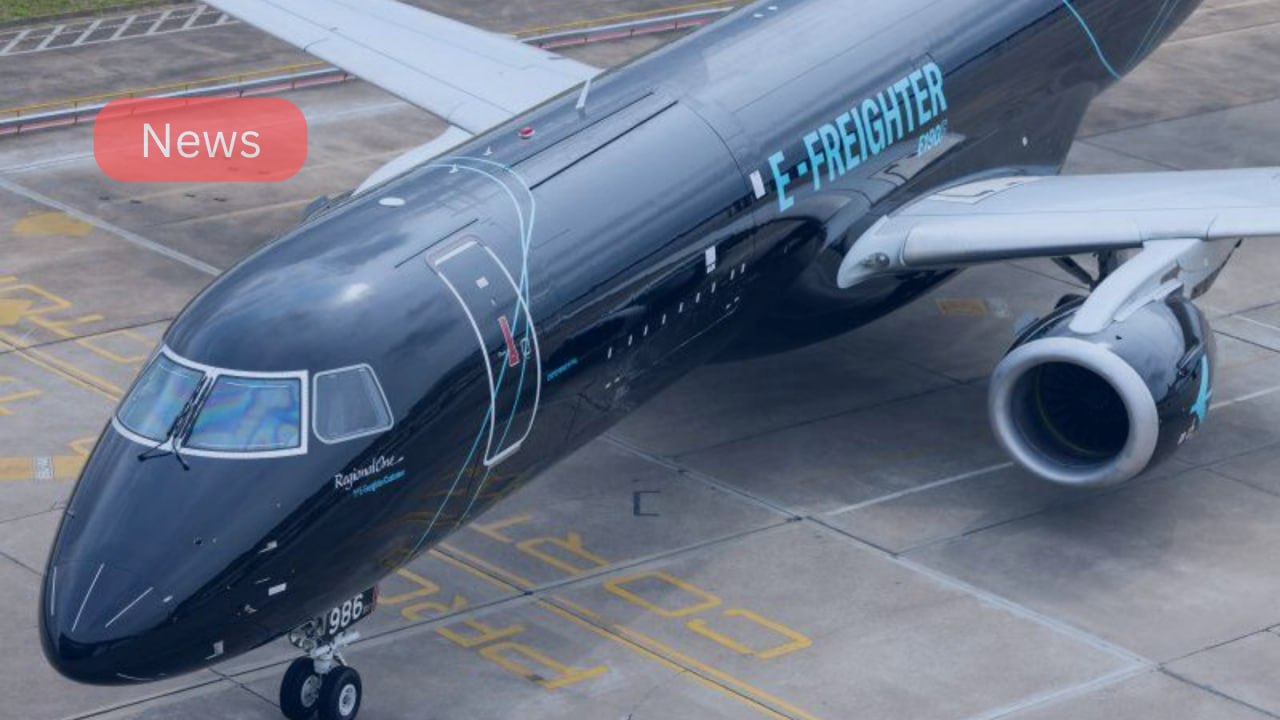

Brazilian airframer Embraer is actively expanding its Embraer freighter conversion capacity to meet the growing global demand for regional air cargo. According to Aviation Week reporter Jens Flottau, the manufacturer is scaling up its passenger-to-freighter (P2F) conversion facilities in São José dos Campos, Brazil, while establishing international lines to convert pre-owned E190 and E195 passenger jets into dedicated cargo transports.
The initiative targets a high-growth niche in the air freight ecosystem. Embraer designed the E190F and E195F P2F conversions to bridge the gap between regional cargo turboprops and larger narrowbody freighters such as the Boeing 737-800SF and Airbus A320P2F. By providing 50% more volume capacity and up to three times the range of large turboprops, Embraer offers cargo operators an ideal platform for time-definite e-commerce distribution networks.
Passenger-to-Freighter Conversion Program Details
The E-Freighter conversion goes far beyond simple seat removal. Embraer performs extensive structural modifications on mature E-Jet airframes to handle heavy main-deck loads.
Key engineering modifications in the conversion process include:
- Forward Main Deck Cargo Door: A large hydraulically actuated door that allows standard Unit Load Devices (ULDs) to load directly onto the main deck.
- Cargo Handling System: Floor-mounted roller trays and hold-downs designed to support up to 7 main-deck ULD pallets on the E190F and 8 ULDs on the E195F.
- Class E Cargo Compartment: Advanced fire detection and suppression systems integrated with modified cabin environmental control systems.
- Structural Reinforcement: Floor beam hardening and a rigid 9G safety barrier positioned behind the cockpit.
By tapping into passenger-to-freighter conversion technology, airlines can extend the revenue-earning lifecycle of first-generation E-Jets by 10 to 15 years. International Civil Aviation Organization (ICAO) standards for noise and emissions are easily met by these CF34-powered jets, allowing 24/7 operations at noise-sensitive urban airports.
According to data from the International Air Transport Association (IATA), regional e-commerce shipments continue to outpace traditional general cargo growth. Embraer estimates a market potential for roughly 700 crossover-sized freighters over the next two decades, with regional airlines across the Americas, Europe, and Asia-Pacific replacing aging fleets.
Regional Freighter Operations and Market Impact
Expanding the Embraer freighter conversion capacity offers airlines up to 30% lower operating costs per flight compared to larger single-aisle cargo aircraft. The right-sized capacity prevents operators from flying “empty volume,” maximizing profit margins on regional feeder routes.
Key Benefits for Express Operators
- Route Flexibility: Operates efficiently on short runways, opening access to secondary regional airports.
- Low Direct Operating Cost: Lower fuel burn per block hour compared to older 130-seat freighter conversions.
- Established Global Logistics Support: Leverages Embraer’s global network of service centers and spare parts inventories built over two decades of E-Jet passenger service.
Industry Outlook: What’s Next for Embraer’s Cargo Line?
As regulatory bodies including Brazil’s ANAC, the FAA, and EASA finalize certification approvals across all E-Freighter variants, Embraer is focusing on securing secondary conversion lines worldwide. Partnering with third-party Maintenance, Repair, and Overhaul (MRO) facilities will enable the company to keep pace with order backlogs from leasing companies and cargo carriers.
The expansion of regional freighter operations marks a significant shift toward right-sized air logistics. By aligning conversion capacity with real-time express shipping demand, Embraer establishes a firm foothold in the evolving global air cargo supply chain.







