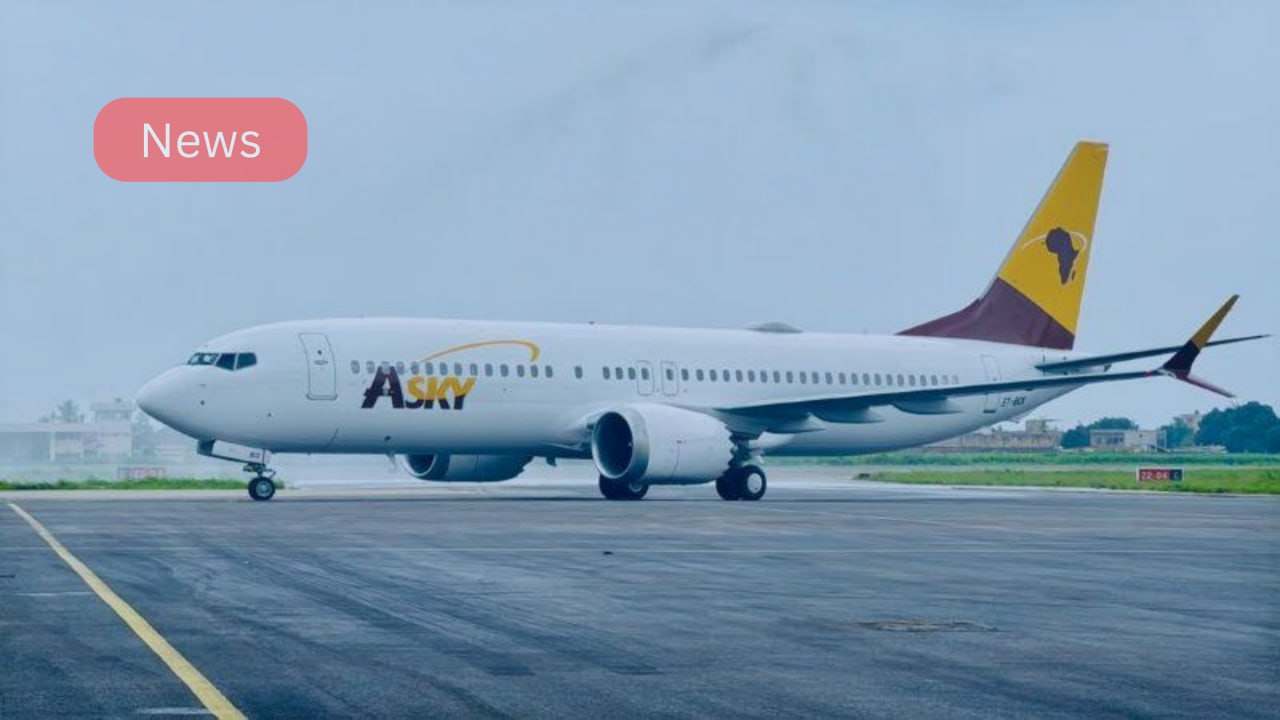

ASKY Airlines is accelerating its regional growth strategy by expanding its operational fleet and calling for critical airport infrastructure upgrades across West Africa. According to Aviation Week correspondent Kurt Hofmann, the Togo-based carrier is introducing additional Boeing aircraft to meet rising passenger demand across its pan-African route network. However, management emphasizes that regional airport facilities must keep pace with airline capacity growth to prevent severe operational bottlenecks.
As a major regional player founded in 2010 through a strategic partnership with Ethiopian Airlines, ASKY Airlines operates a vital air bridge connecting Central and West Africa. The carrier relies on its primary hub at Gnassingbé Eyadéma International Airport in Lomé, Togo, to link more than 20 regional destinations.
Fleet Modernization Strategy and African Aviation Growth
The airline’s latest growth phase centers on adding modern Boeing 737-800 and 737 MAX 8 jetliners to increase seat capacity and operational efficiency. By standardizing its fleet on Boeing narrowbody aircraft, ASKY achieves significant operational synergies, lower maintenance overhead, and reduced fuel burn on key regional corridors.
ASKY Airlines Fleet at a Glance
- Primary Aircraft Types: Boeing 737-700, Boeing 737-800, and Boeing 737 MAX 8
- Strategic Hub: Lomé-Tokoin International Airport (LFW), Togo
- Strategic Partner: Ethiopian Airlines (provides technical, management, and maintenance support)
- Destinations Served: Over 26 cities across West, Central, and Southern Africa
This aggressive fleet growth directly supports the goals of the Single African Air Transport Market (SAATM). Sponsored by the African Union and supported by the International Civil Aviation Organization (ICAO), SAATM aims to create a unified air transport market across the continent. Improved regional fleet capacity allows airlines like ASKY to open new non-stop routes and lower average airfares for passengers.
Infrastructure Bottlenecks Facing West African Aviation
While airline capacities expand rapidly, physical airport infrastructure across several West African gateways remains a significant operational challenge. ASKY leadership has urged local government authorities and civil aviation regulators to prioritize terminal capacity expansions, modern ground handling equipment, and runway maintenance.
Key operational hurdles facing West African aviation include:
- Terminal Congestion: Peak-hour passenger processing bottlenecks at regional airport terminals due to limited gate infrastructure.
- Ground Handling Delays: Shortages of modern ground support equipment (GSE), leading to longer aircraft turnaround times.
- High Operational Costs: Excessive fuel taxes, airport passenger charges, and navigation fees that raise overall ticket prices compared to global averages.
- Maintenance Facilities: Limited regional Maintenance, Repair, and Overhaul (MRO) centers requiring carriers to ferry aircraft abroad for major service checks.
To maintain reliable flight schedules, airlines require seamless airport operations. Upgrading airport infrastructure allows carriers to maximize aircraft utilization and improve on-time performance across interconnected regional flight schedules.
Industry Outlook: Navigating Challenges to Expand Connectivity
Despite regional operational constraints, the outlook for West African commercial aviation remains positive. Passenger volumes across Central and West Africa continue to bounce back, driven by regional trade integration, business travel, and expanding middle-class demographics.
Collaboration between airlines, regional civil aviation authorities, and private airport operators will prove essential over the coming decade. As ASKY Airlines continues to deploy newer, fuel-efficient Boeing 737 aircraft, corresponding investments in modern airport terminals, automated customs processing, and expanded apron space will decide how effectively West African aviation can sustain long-term growth.







