
Commercial aviation is undergoing a structural shift toward point-to-point long-distance connectivity. According to aviation journalist Steven Walker at Simple Flying, a select group of advanced twin-engine airliners is completely redefining how airlines operate extreme point-to-point networks. These ultra-long-haul aircraft allow carriers to bypass intermediate hub stops, connecting distant continents on nonstop flights exceeding 19 hours.
This technological transformation began with early extended-range widebodies and has culminated in custom-built airframes designed for extreme endurance. Modern twin-engine efficiency has effectively rendered older four-engine quadjets obsolete on long routes. As fuel burn decreases and airframe ranges expand, airlines are redesigning global route networks around bypass capability.
Pioneers of Long-Range Twin-Engine Travel
The foundation for modern ultra-long-range flying was built by the Boeing 777 family. Long before composite-heavy airframes dominated long-haul routes, the Boeing 777-200LR demonstrated that twin-engine planes could cross vast oceans safely. In 2005, the variant set a record by flying 11,664 nautical miles nonstop from Hong Kong to London. Powered by massive General Electric GE90-115B engines, these aircraft proved the financial viability of twin-engine transoceanic travel.
777-200LR World Record (2005): 11,664 NM (21,601 km) nonstop
Building on this progress, the Boeing 787-9 Dreamliner introduced lightweight carbon-composite structures to long-haul networks. The Dreamliner enabled Qantas to connect Perth directly to London Heathrow, establishing the first nonstop scheduled service between Australia and Europe. By offering long range in a medium-sized widebody platform, the 787-9 helped decentralize airline route networks.
Current Record Holders in Commercial Service
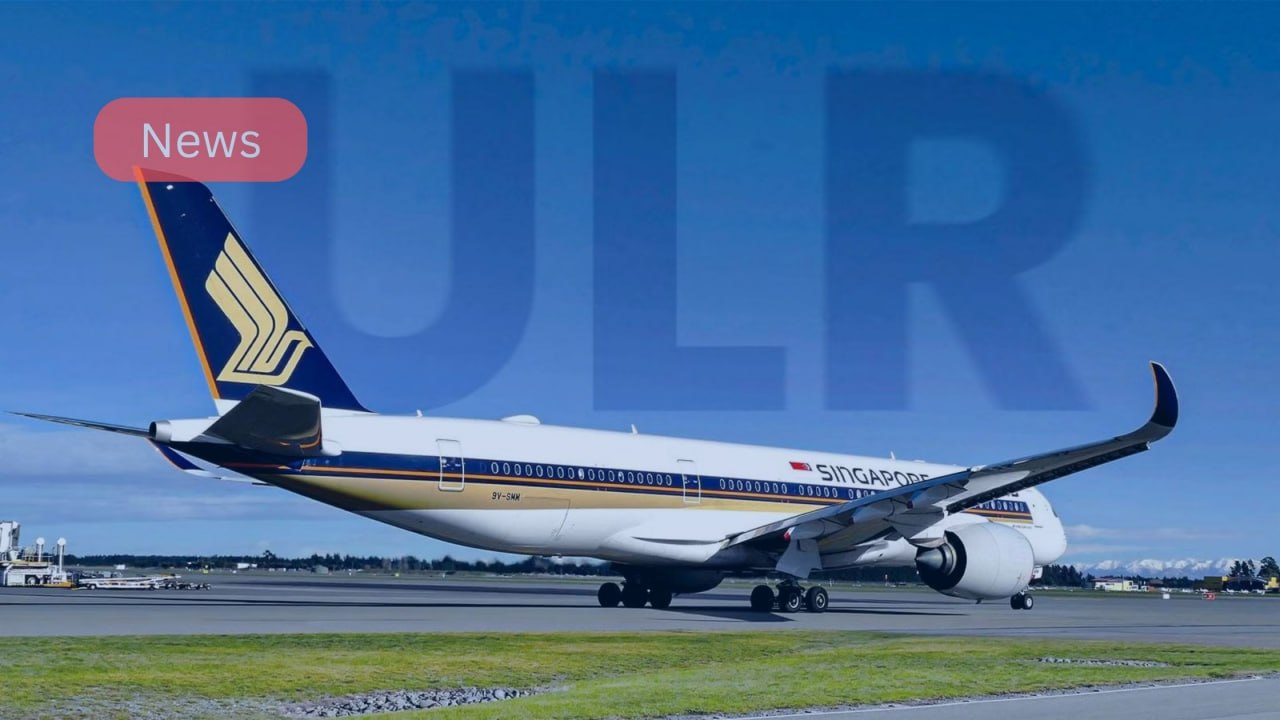
Today, the Airbus A350-900ULR holds the title for operating the world’s longest scheduled nonstop commercial route. Flown exclusively by Singapore Airlines, the aircraft links Singapore directly to Newark and New York JFK. Covering distances up to 8,288 nautical miles, these sectors require up to 19 hours of continuous flight.
To achieve this range without payload penalties, Airbus modified the fuel system to hold an additional 24,000 liters of fuel without adding external auxiliary tanks. The cabin is configured exclusively with Business Class and Premium Economy seats, lowering overall structural weight.
Next-Generation Jets Shaping the Future
As airlines look to expand direct point-to-point routes, two upcoming aircraft programs represent the next step in long-range efficiency.
The Boeing 777X Series
The Boeing 777X represents the largest twin-engine widebody program under development. Driven by dual GE Aerospace GE9X engines—the largest commercial turbofans ever built—the 777-9 can carry over 400 passengers while reducing fuel consumption compared to earlier widebodies. The longer-range 777-8 variant targets a range of 8,745 nautical miles, catering to carriers that need high payload capacity across extreme distances.
Airbus A350-1000ULR and Project Sunrise
Designed specifically for Qantas’ ambitious “Project Sunrise,” the Airbus A350-1000ULR represents the peak of custom long-range engineering.
Key design features include:
- Rear Center Tank: A non-removable fuel tank holding 5,283 additional gallons (20,000 liters) of fuel.
- Extended Range: Operational capability reaching 10,000 nautical miles (18,520 km).
- Dedicated Passenger Comfort: Incorporates dedicated passenger wellbeing zones to assist passenger comfort on 20-plus hour sectors.
Driven by Rolls-Royce Trent XWB-97 engines, this aircraft will enable nonstop connections from Sydney and Melbourne to London and New York, bypassing traditional transfer hubs in the Middle East and Southeast Asia.
Regulatory and Regional Aviation Context
The growth of ultra-long-haul flying relies heavily on global regulatory frameworks. Under International Civil Aviation Organization (ICAO) standards and Extended-range Twin-engine Operational Performance Standards (ETOPS), modern airliners are certified to fly up to 330 minutes or more from the nearest suitable diversion airport on a single engine.
These safety certifications, combined with high-bypass turbofan engines, give twin-engine aircraft the operational flexibility previously reserved for four-engine airliners. Additionally, regional airspace restrictions and changing geopolitical flight paths have forced airlines to optimize aircraft range to allow for necessary tactical rerouting.
Industry Outlook: What’s Next for Global Connectivity?
The rise of dedicated ultra-long-haul aircraft is altering airline fleet strategies worldwide. While four-engine jets were historically required for extreme long-distance routes, new twin-engine designs offer better economics and reduced carbon emissions per seat-mile.
Over the coming years, the launch of Qantas’ Project Sunrise flights and the entry of the Boeing 777X into service will test traveler demand for 20-hour nonstop flights. If successful, these aircraft will further decentralize global aviation, making hub-bypassing point-to-point connections the standard for global air travel.







