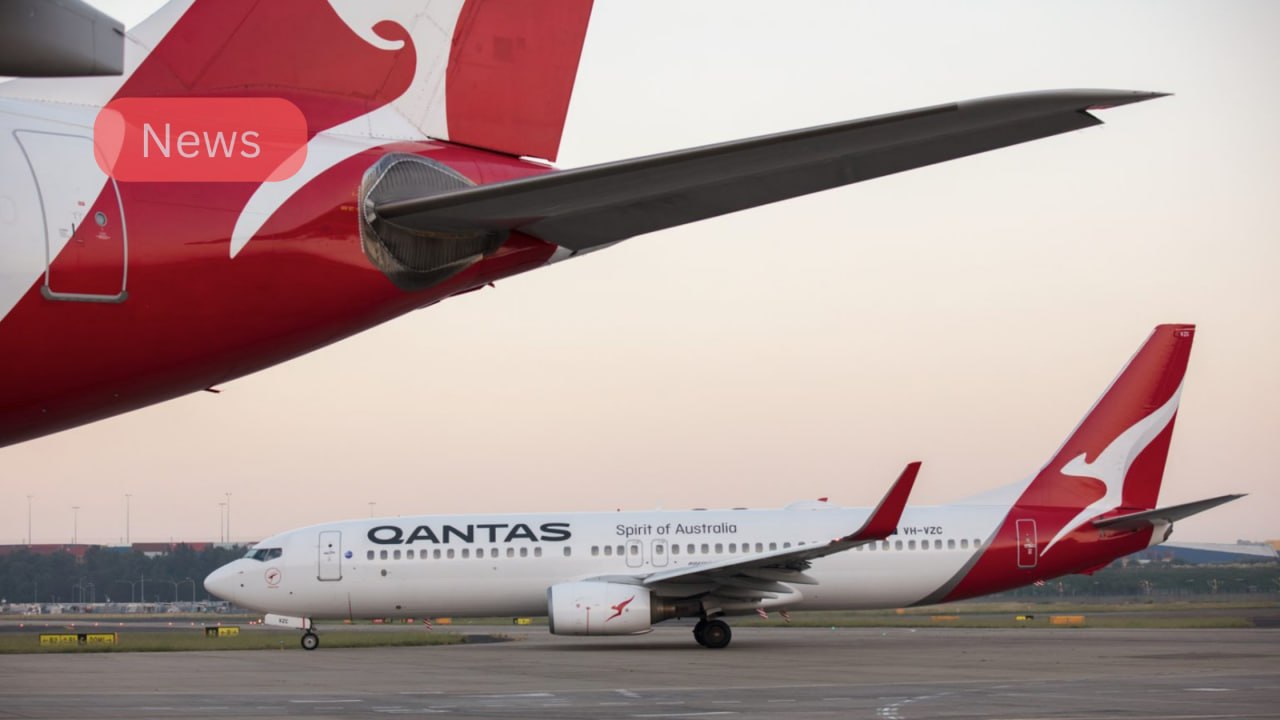

British aviation aftermarket specialist AerFin has reached a historic agreement with Australian flag carrier Qantas to acquire 44 Boeing 737 Next Generation (737NG) aircraft and their associated 88 CFM International CFM56-7B engines. Reported initially by aerospace publication FlightGlobal, this agreement stands as the largest single transaction in AerFin’s corporate history.
The phased transaction provides AerFin with a massive pipeline of valuable assets while supporting Qantas as it systematically modernizes its domestic narrowbody fleet. Deliveries are structured to transfer progressively over a seven-year timeline, ensuring that Qantas maintains operational stability and scheduling flexibility.
Driving Fleet Modernization and Aftermarket Supply
As reported by FlightGlobal, the landmark agreement allows Qantas to execute the gradual retirement of its older Boeing 737-800 aircraft. This fleet renewal coincides with the carrier’s broader integration of next-generation aircraft types, such as the Airbus A321neo, into its active domestic network.
For AerFin, acquiring 44 aircraft and 88 CFM56-7B engines significantly expands its footprint in the Asia-Pacific region. The acquired components and engine assets will be channeled into AerFin’s global supply chain to support airlines, lessors, and maintenance, repair, and overhaul (MRO) providers.
- Transaction Scale: 44 Boeing 737NG aircraft and 88 CFM56-7B engines.
- Transfer Window: Phased delivery schedule spanning seven years.
- Strategic Outcome: Fleet renewal for Qantas paired with used serviceable material (USM) expansion for AerFin.
Industry Impact on Middle East Aviation and Global MRO
While anchored in the Asia-Pacific region, transactions of this magnitude carry substantial weight across global Middle East aviation news and international secondary markets. With tight constraints plaguing global supply chains and new aircraft delivery delays affecting carriers worldwide, the demand for high-quality used serviceable material (USM) has skyrocketed.
Aviation analysts note that extracting multi-year asset streams from major tier-one airlines like Qantas ensures that established aircraft types continue to provide cost-effective life-cycle support. Rather than immediate retirement ending an aircraft’s utility, systematic teardowns and component harvesting maximize sustainability across global aviation networks.
What’s Next / Industry Outlook
The coming years will test how smoothly major carriers balance multi-vendor narrowbody transitions against ongoing global supply chain bottlenecks. As the first phase of the Qantas-AerFin transfer gets underway, industry watchers will monitor delivery milestones and asset utilization rates. This record-breaking arrangement illustrates a growing trend: mature aircraft retirement programs are increasingly synchronized with advanced aftermarket asset management to keep global fleets flying efficiently.







