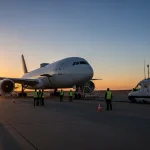
Air Burkina has taken delivery of a second Embraer E190 aircraft, landing at Ouagadougou International Airport on 30 October 2025 in a ceremony attended by government officials. The addition marks a key step in the carrier’s post-restructuring recovery and is being promoted as a catalyst for improved regional connectivity and a boost to Burkina Faso’s nascent tourism recovery.
The aircraft, an E190 narrow-body jet well suited to short- and medium-haul regional routes, complements Air Burkina’s existing fleet and is expected to restore and expand services across West Africa, improving access for leisure and business travellers. Officials at the handover framed the acquisition as part of a broader strategy to strengthen national transport links and support tourism receipts.
What happened and why it matters
Air Burkina’s second Embraer E190 arrived on 30 Oct 2025, increasing the airline’s operational resilience after a period of grounding and wet-leases in 2025. The E190’s capacity (typically ~90–100 seats) and range make it efficient for the short international sectors that underpin intra-West African travel: routes to Abidjan, Dakar, Accra and neighbouring capitals. Restoring reliable schedules on these city pairs is key to re-opening tourism corridors and business travel links.
Operational impact and timelines
- Delivery date: 30 Oct 2025 (Ouagadougou).
- Fleet effect: Brings Air Burkina from one owned E190 to two, improving redundancy and reducing reliance on short ACMI leases.
- Near-term routes: Expect prioritisation of core regional links (Bamako, Abidjan, Dakar, Cotonou) with phased schedule restoration over 4-8 weeks as crew and maintenance cycles normalise. (Operational schedules to be confirmed on the carrier’s timetable.)
Background and context
Air Burkina has faced a turbulent period since 2024, grounding, wet-leases and operational pauses were followed by a relaunch push backed by government support. The E190 addition is part of that recovery narrative: modern regional jets like Embraer’s E-family provide lower per-seat costs and improved fuel efficiency versus older types, making them attractive for carriers rebuilding networks after several years of underinvestment.
From the tourism side, Burkina Faso’s visitor numbers remain modest compared with regional peers; independent forecasts from travel-economics sources show gradual recovery potential but not a rapid surge. The arrival of additional capacity is necessary but not sufficient to drive tourism growth; parallel investment in marketing, visa facilitation and security perceptions will be needed.
Risks and caveats
- Single-aircraft risk reduced but not eliminated: While a second E190 cuts single-aircraft exposure, fleet depth remains light; unscheduled maintenance or supply-chain issues could still force ACMI leases or cancellations.
- Tourism impact is conditional: Aircraft are an enabler, broader gains require stable security, destination promotion and infrastructure. Tourism forecasts remain modest; conversion from airlift to actual visitor growth is not automatic.
What’s next? industry outlook
- Short term: Air Burkina is likely to publish phased schedule restorations and confirm regional route priorities on its website and booking portals. Monitor NOTAMs and the carrier’s timetable for exact dates.
- Medium term: If the airline sustains on-time performance and fares, expect modest increases in seat capacity on key West African city pairs. This could encourage tour operators to re-introduce package products, but public-private coordination will be critical.
Sources
- APA News, Air Burkina adds new Embraer 190 to its fleet (published ~1 Nov 2025).
- EcofinAgency, Air Burkina expands fleet in push to revive national connectivity (Oct/Nov 2025).
- Air Burkina, official website (destinations, schedules, fleet pages).
- TravelNews.Africa / NewsAero / WAVN, regional aviation coverage corroborating delivery and operational context.
- WTTC and World Bank tourism datasets (for visitor context and forecasts).