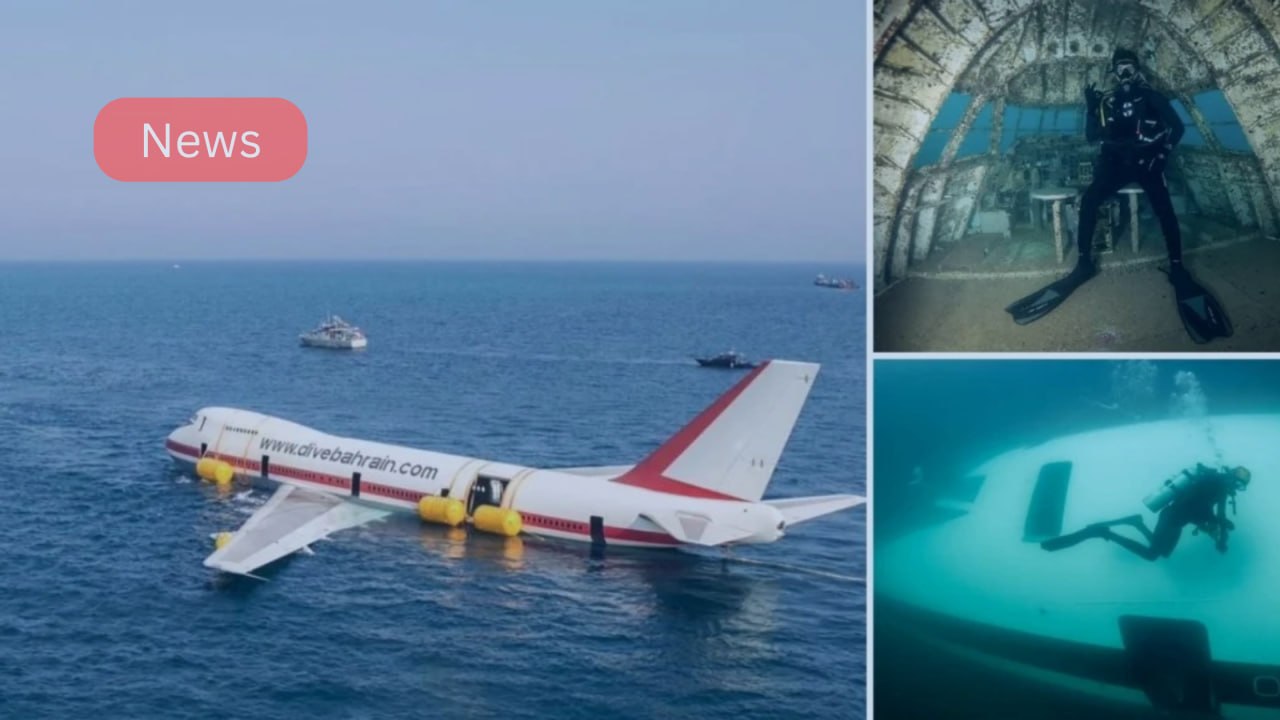

Bahrain transformed commercial aviation history by sinking a retired jumbo jet to create the centerpiece of the world’s largest underwater eco-park. As reported by publisher Luxury Launches, the Kingdom acquired a decommissioned jumbo jet from the UAE for approximately $100,000. Engineers spent seven months stripping hazardous materials from the aircraft before lowering it onto the Gulf seabe
The project positioned a 70-meter Bahrain underwater Boeing 747 approximately 18 miles north of the Amwaj Islands at a depth of 20 to 24 meters. The site forms the anchor for Dive Bahrain, a 100,000-square-meter marine attraction designed for divers and researchers. Officials officially opened the site following an inspection dive by government environmental leaders.
Decontamination Protocols for Decommissioned Aircraft Reefing
Repurposing a commercial airliner into a marine habitat requires strict compliance with international marine protection standards. The engineering team spent over 200 days removing hazardous contaminants. Every fuel line, hydraulic circuit, wiring harness, and plastic component was extracted to prevent chemical leakage into the Arabian Gulf.
Key Preparation Milestones:
- System Stripping: Workers extracted thousands of feet of copper wiring, insulation, and rubber seals.
- Chemical Washing: Technicians degreased and washed every metal fastener to eliminate oil residue.
- Structural Transport: Engineers removed the wings to transport the fuselage by road to Fujairah port before reassembling them.
- Liveried Tribute: Painters applied a custom livery mirroring Boeing’s iconic 1969 prototype City of Everett.
Bahrain Eco-Tourism Aviation and Marine Impact
The project highlights a growing trend where regional authorities merge retired aviation assets with eco-tourism goals. According to the Bahrain Tourism and Exhibitions Authority (BTEA), the artificial reef supports marine biodiversity while expanding leisure diving.
The aircraft rests with its nose slightly elevated. This orientation allows divers of varying skill levels to navigate the forward fuselage safely. Beyond the jet, the Dive Bahrain theme park includes a replica of a traditional Bahraini pearl merchant’s house, artificial coral nurseries, and marine sculptures.
- The 70-meter fuselage serves as a substrate for coral propagation.
- Local fish populations use the interior cabin structure as shelter.
- Marine biology researchers utilize the site as an active living laboratory.
Industry Outlook: The Future of End-of-Life Aircraft
As global fleets retire older widebody aircraft, operators seek eco-friendly disposal solutions. Aircraft recycling typically involves scrap metal harvesting. However, projects like Dive Bahrain offer an alternative second life for decommissioned airframes.
The success of decommissioned aircraft reefing relies on rigorous environmental oversight. Strict adherence to the International Maritime Organization (IMO) guidelines ensures artificial reefs enrich local ecosystems without introducing microplastics or heavy metals. Bahrain’s project demonstrates how aviation history and marine conservation can intersect effectively.
Sources







