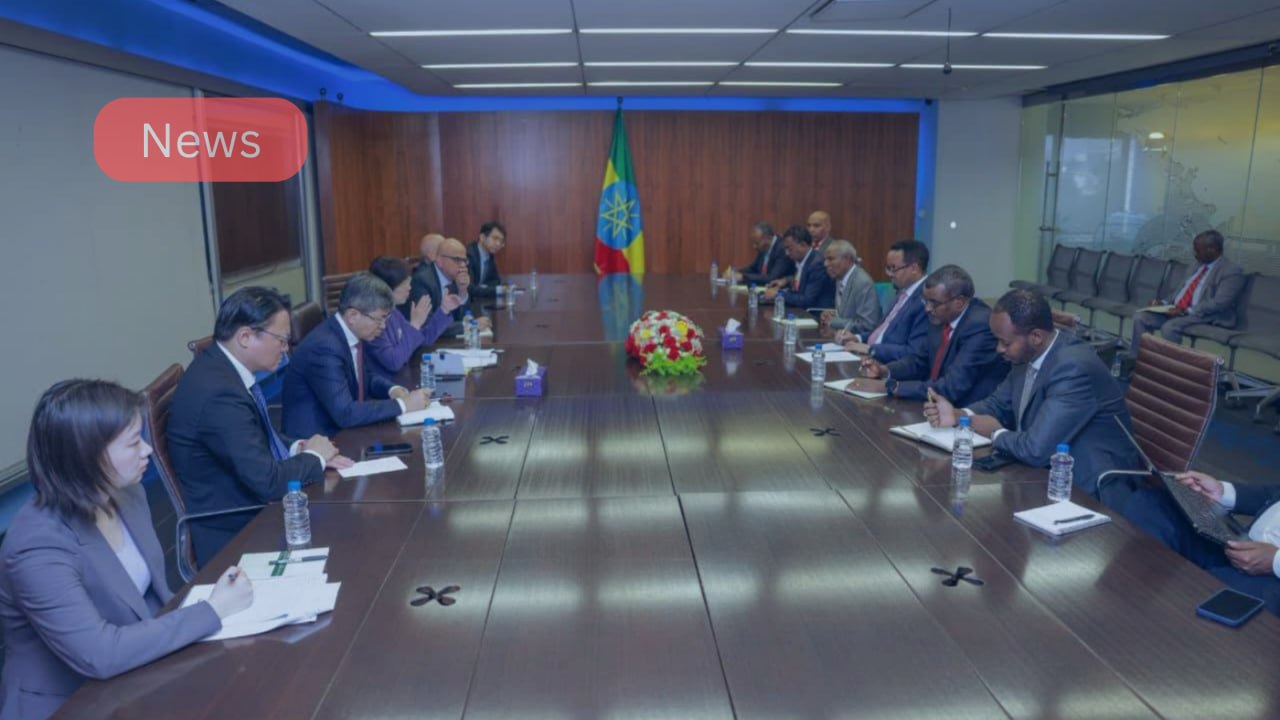

Ethiopia has opened high-level financing talks with the Asian Infrastructure Investment Bank (AIIB) to secure funding for the megaproject set to transform East African connectivity. The diplomatic push aims to address the Bishoftu International Airport financing structure as the Horn of Africa nation seeks international partners to build the continent’s largest aviation hub.
According to Birr Metrics journalist Amanuel Kindeya, Ethiopian Finance Minister Ahmed Shide and Ethiopian Airlines Group CEO Mesfin Tasew presented the $12.5 billion airport master plan directly to AIIB President Zou Jiayi. Ethiopian officials framed the mega-hub as a regional transport and trade engine rather than a simple replacement for Addis Ababa Bole International Airport.
While the talks have not yet resulted in a binding loan agreement, bringing the Beijing-headquartered AIIB into negotiations marks a significant expansion of Ethiopia’s capital search. The move integrates the multilateral lender into a broader international consortium led by the African Development Bank (AfDB) to construct Africa’s most expensive airport project.
Understanding the Bishoftu International Airport Financing Model
Ethiopian Airlines plans to cover 30 percent of the project’s total $12.5 billion cost through internal revenue generation. This strategy leaves an external funding requirement of $8.75 billion to be raised from foreign commercial banks, sovereign funds, and multilateral lender.
The African Development Bank has already assumed the role of lead financial arranger for the external capital package. The AfDB announced plans to contribute $500 million directly while attempting to mobilize up to $8 billion from international co-financiers across Europe, North America, and the Middle East.
Strategic Capacity and Operational Timeline
Located approximately 45 kilometers southeast of Addis Ababa, Bishoftu International Airport addresses severe operational constraints at Bole International Airport. Surrounded by urban density and constrained by high-altitude runways, Bole handles roughly 12 million passengers annually and faces near-term capacity saturation.
Under standard International Civil Aviation Organization (ICAO) safety and operational guidelines, mega-hub developments require extensive multimodal transport corridors. Bishoftu’s master plan integrates high-speed rail and highway linkages connecting the airport directly to Addis Ababa and regional industrial zones.
Industry Outlook: Expanding East African Aviation Trade
The inclusion of the AIIB aligns with the bank’s strategic mandate to allocate 25 to 30 percent of its portfolio toward cross-border connectivity projects by 2030. Ethiopian state negotiators highlighted that Bishoftu will serve as an anchor for air cargo, tourism, and Horn of Africa supply chain integration.
As Ethiopian Airlines expands its modern fleet—including long-haul Airbus A350-1000 and Boeing 787 aircraft—securing stable long-term debt financing remains crucial. If the AfDB and AIIB successfully syndicate the $8.75 billion package, Bishoftu will redefine air traffic flows across Africa, Europe, and Asia for decades to come.







