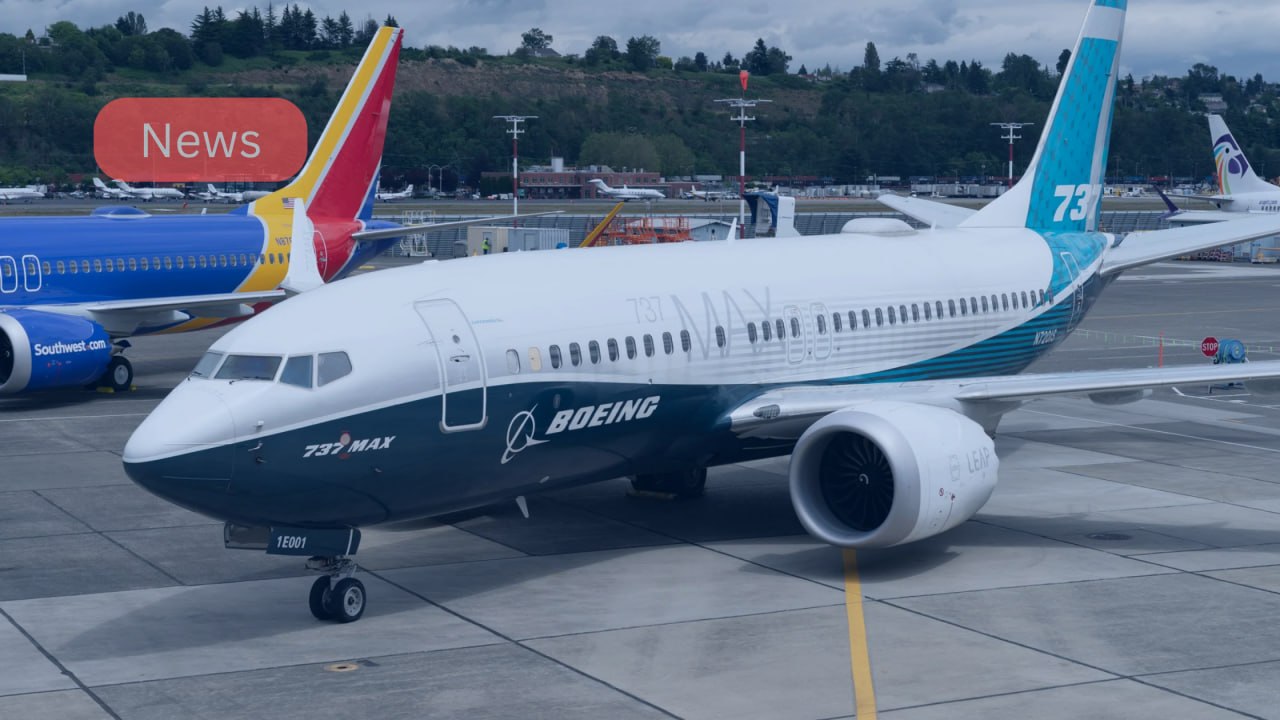

In a landmark decision for commercial aviation news, the Federal Aviation Administration (FAA) officially granted flight certification to the Boeing 737 MAX 7 on August 3, 2026. The regulatory approval marks the end of a four-year clearance delay for the smallest member of Boeing’s modernized single-aisle aircraft family.
According to reporting by aviation journalist David Slotnick on The Points Guy, Boeing and launch customer Southwest Airlines are actively preparing for initial deliveries. The approval clears the path for airlines to introduce the longest-range MAX variant into passenger service in the coming months.
The FAA required multiple system redesigns prior to granting approval. These changes focused on updating flight-control software, enhancing the flight-crew alerting system, and overhaul of the engine anti-ice system.
Technical Features and Operational Impact on Southwest Airlines Fleet
The 737 MAX 7 occupies a distinct role in the Southwest Airlines fleet. Designed to seat between 135 and 160 passengers in a standard cabin layout, it provides the longest flight range in the 737 MAX family at 4,300 miles.
This high-range, lower-capacity configuration offers superior operational economics on longer, “thinner” routes. Airlines can efficiently serve city pairs that lack the passenger volume needed for larger narrow-body or wide-body jets.
A Southwest Airlines spokesperson confirmed that the carrier expects to begin commercial flights three to six months following the receipt of its first delivery. While current published schedules through early 2027 do not explicitly list MAX 7 routes, airline planners can now integrate the aircraft into upcoming network adjustments.
Regulatory Timeline and Boeing Narrow-Body Aircraft Upgrades
The journey to Boeing 737 MAX 7 FAA certification involved extensive safety reviews following the global grounding of the MAX family in 2019. Regulatory authorities instituted stricter certification frameworks under International Civil Aviation Organization (ICAO) oversight guidelines.
Key Regulatory Milestones:
- 2019–2020: Global grounding of 737 MAX family; overhaul of certification protocols.
- 2022–2025: Mandated design revisions for flight-control software and anti-ice protection.
- August 2026: FAA officially certifies the 737 MAX 7 for commercial service.
Boeing has already manufactured approximately 30 MAX 7 aircraft that were placed in storage pending FAA sign-off. The clearance of the MAX 7 also creates momentum for the certification of the larger MAX 10 variant, which shares similar software and safety architecture upgrades.
Industry Outlook: What’s Next for FAA Aircraft Certification
The clearance of the MAX 7 signals a crucial step in stabilizing Boeing’s narrow-body delivery pipeline. Industry analysts expect the FAA to finalize evaluation of the MAX 10 in the near future, completing the lineup for global carriers.
As airlines work to modernize their fleets with fuel-efficient aircraft, the entry of the MAX 7 gives operators greater flexibility to manage capacity and reduce carbon emissions across regional and intercontinental route networks.







