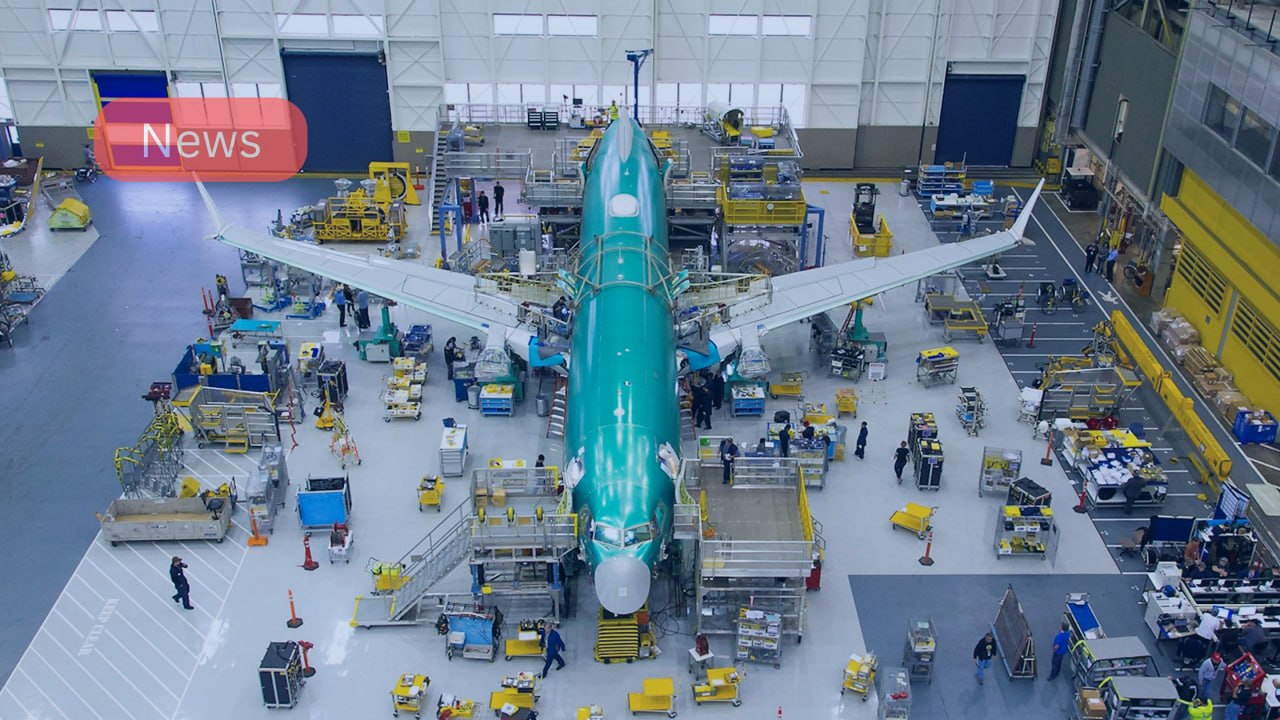

Boeing is evaluating plans for a new single-aisle jet that could eventually replace parts of the 737 MAX family, according to reporting by Natalia Shelley for Aviation A2Z.
The report, which cites Bloomberg and aviation industry executives, says Boeing may launch the aircraft around 2030. The proposed jet would reportedly sit above the Boeing 737 MAX 10 in size and compete more directly with Airbus’ successful A321neo family.
The development comes as Boeing continues recovering from years of regulatory scrutiny, certification delays, and production disruptions following the 737 MAX crisis.
Why Boeing Needs a New Narrowbody Aircraft
The single-aisle aircraft market remains the most profitable segment in commercial aviation. Airbus currently dominates the higher-capacity narrowbody category through the A321neo and A321XLR.
Boeing’s current largest narrowbody aircraft, the 737 MAX 10, has faced repeated certification delays. The aircraft still requires final approval from the U.S. Federal Aviation Administration (FAA).
Industry analysts believe Boeing needs a more modern platform because the original 737 design dates back to the 1960s. Airbus has steadily gained market share while Boeing delayed launching a clean-sheet replacement program.
According to Reuters reporting, Boeing continues working through certification challenges involving engine anti-icing systems on both the MAX 7 and MAX 10.
Boeing New Single-Aisle Jet May Target Larger Capacity Segment
The proposed Boeing new single-aisle jet would reportedly target the upper narrowbody market.
Industry sources cited by Aviation A2Z suggest the aircraft could resemble the retired Boeing 757 in size and range capability. That would allow airlines to operate:
- High-density domestic routes
- Medium-haul international services
- Long thin routes currently dominated by the Airbus A321XLR
The aircraft would likely feature:
- Improved fuel efficiency
- Advanced composite wings
- Updated cockpit systems
- New-generation turbofan engines
Boeing is reportedly favoring a conservative aircraft architecture instead of more radical open-rotor concepts.
Engine Debate Shapes Boeing’s Aircraft Strategy
Engine technology remains one of the biggest decisions for Boeing and Airbus.
The report says Boeing is discussing future propulsion systems with:
- GE Aerospace
- Safran
- Rolls-Royce
Open-rotor engine concepts promise major fuel savings. However, airlines remain cautious about:
- Noise levels
- Certification complexity
- Passenger perception
- Safety concerns
Steve Udvar-Hazy, executive chairman of Air Lease Corporation, reportedly warned about potential safety risks involving exposed rotor blades.
The aviation industry has also experienced reliability challenges with recent engine programs. Pratt & Whitney’s geared turbofan engine issues forced airlines worldwide to ground aircraft for inspections and repairs.
Boeing Faces Strong Competition From Airbus
The Boeing vs Airbus narrowbody competition remains central to the global commercial aviation market.
Airbus currently leads in the large narrowbody segment thanks to:
- A321neo popularity
- Earlier product modernization
- Strong fuel efficiency performance
Boeing still maintains a large order backlog exceeding 6,000 commercial aircraft. Reuters reported strong Boeing order activity in April 2026, including significant 737 MAX and 787 sales.
However, Boeing must balance future aircraft investment with ongoing financial pressures. The company continues managing billions in debt while ramping up production stability.
China Could Play a Major Role in Boeing’s Recovery
The article also highlights Boeing’s potential negotiations with Chinese airlines.
Reports indicate Boeing could secure a major aircraft order tied to improving U.S.-China trade relations. Reuters recently reported renewed expectations for Boeing sales activity in China following years of geopolitical tensions.
China represents one of the world’s fastest-growing aviation markets. A renewed Boeing-China relationship would significantly strengthen Boeing’s commercial recovery strategy.
Industry Outlook
Boeing has not officially launched the new aircraft program. Many details remain preliminary and subject to change.
Still, the broader industry trend is clear:
- Airlines want more fuel-efficient aircraft.
- Airbus continues expanding its narrowbody advantage.
- Boeing must modernize beyond the aging 737 platform.
The next several years will likely determine whether Boeing pursues a conservative evolutionary aircraft or a more technologically ambitious clean-sheet design.
Certification progress for the 737 MAX 7, MAX 10, and 777X will also influence Boeing’s financial flexibility and development timeline.







