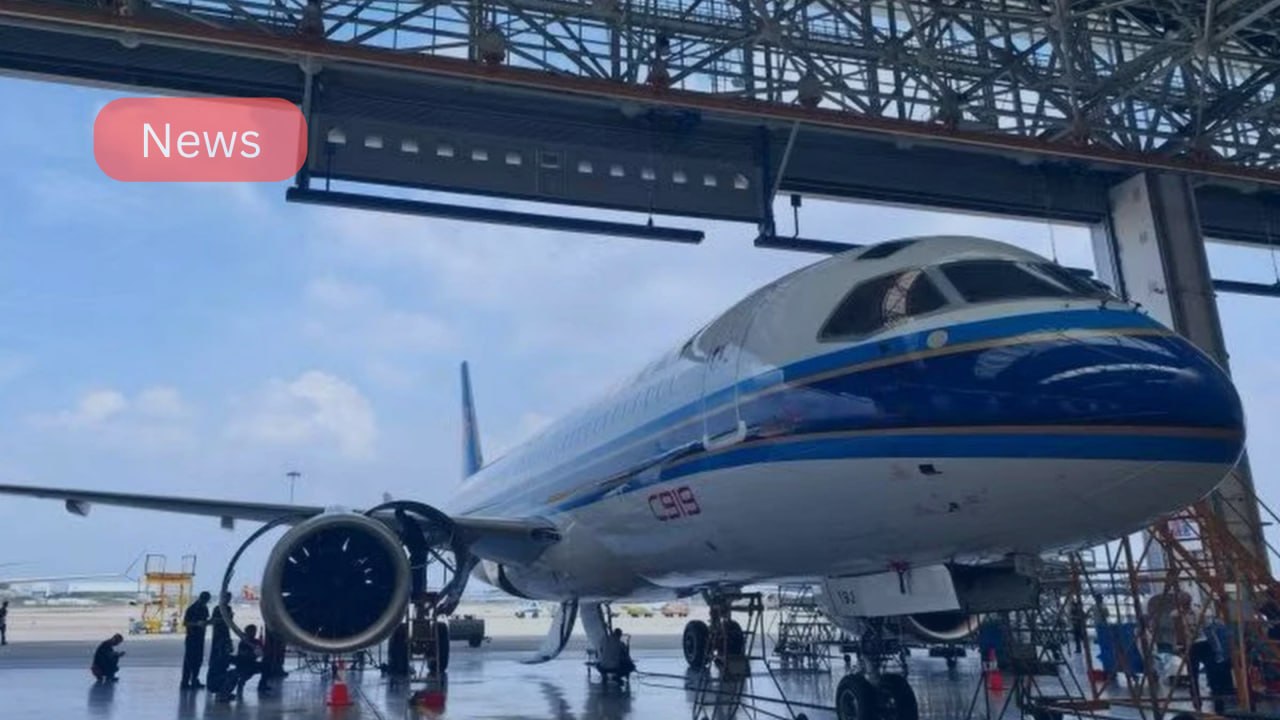

China’s first C919 C-checks are now underway, marking an important milestone for the country’s domestically developed commercial airliner as it seeks wider international acceptance.
According to Shanghai-based journalist Frank Chen of the South China Morning Post, China Southern Airlines recently completed the first major C-check on its C919 fleet. The maintenance program lasted approximately three weeks and required around 6,000 labor hours.
The development comes as the European Union Aviation Safety Agency (EASA) continues evaluating the aircraft for potential certification, a key step if the COMAC C919 is to compete internationally against Airbus and Boeing aircraft.
What Are C919 C-Checks?
A C-check is one of the most extensive routine inspections performed on a commercial aircraft.
Under international aviation maintenance frameworks, airlines perform inspections according to a hierarchy:
- A Check
- B Check
- C Check
- D Check
The C-check is considered a deep structural and systems inspection. Technicians remove panels, inspect major systems, and test components that are not examined during routine maintenance.
According to China Southern Airlines, the C919 inspection required partial component disassembly and comprehensive testing procedures.
For regulators, successful completion of these inspections provides valuable information about aircraft durability, maintenance requirements, and long-term operational reliability.
Why European Aviation Certification Matters
The COMAC C919 currently operates primarily within China.
To expand internationally, COMAC must obtain certification from major aviation authorities, particularly EASA.
Reuters reported in January 2026 that EASA completed evaluation flights involving the C919 in Shanghai as part of its certification process. The agency confirmed the flights were conducted under its validation activities program.
Industry analysts generally regard EASA certification as one of the world’s most demanding aviation approval standards. Certification would significantly improve the aircraft’s export prospects.
Key Certification Milestones
- Chinese certification already achieved.
- Commercial service underway with Chinese carriers.
- EASA validation flights completed.
- Maintenance reliability data now being collected.
- Further technical reviews remain ongoing.
The COMAC C919’s Strategic Importance
The COMAC C919 is China’s first serious attempt to challenge the global single-aisle market dominated by:
- Airbus A320neo family
- Boeing 737 MAX family
The aircraft represents a central component of Beijing’s long-term aerospace strategy.
Although many major systems and engines still originate from international suppliers, China hopes the aircraft will eventually reduce dependence on foreign aerospace manufacturers while creating a globally competitive aviation sector.
Aviation Safety and Regulatory Context
Both EASA and China’s Civil Aviation Administration follow internationally recognized airworthiness principles developed through standards established by organizations such as:
- International Civil Aviation Organization
- International Air Transport Association
Aircraft certification involves far more than flight testing. Regulators evaluate:
- Flight performance
- Maintenance procedures
- Safety systems
- Reliability records
- Manufacturing quality controls
- Operational data
The newly completed C919 C-checks provide another source of real-world operational evidence for regulators assessing long-term aircraft performance.
Industry Outlook
The completion of the first C919 C-checks represents an important transition from aircraft introduction to long-term fleet operation.
For COMAC, successful maintenance outcomes could strengthen confidence among regulators and potential international customers.
However, significant work remains before the aircraft achieves widespread global certification. EASA has indicated that its validation process continues and has not announced a final approval timeline.
As additional airlines accumulate operational experience with the C919, maintenance reliability data will become increasingly important in determining whether China’s flagship airliner can establish itself as a credible competitor to Airbus and Boeing in international markets.







