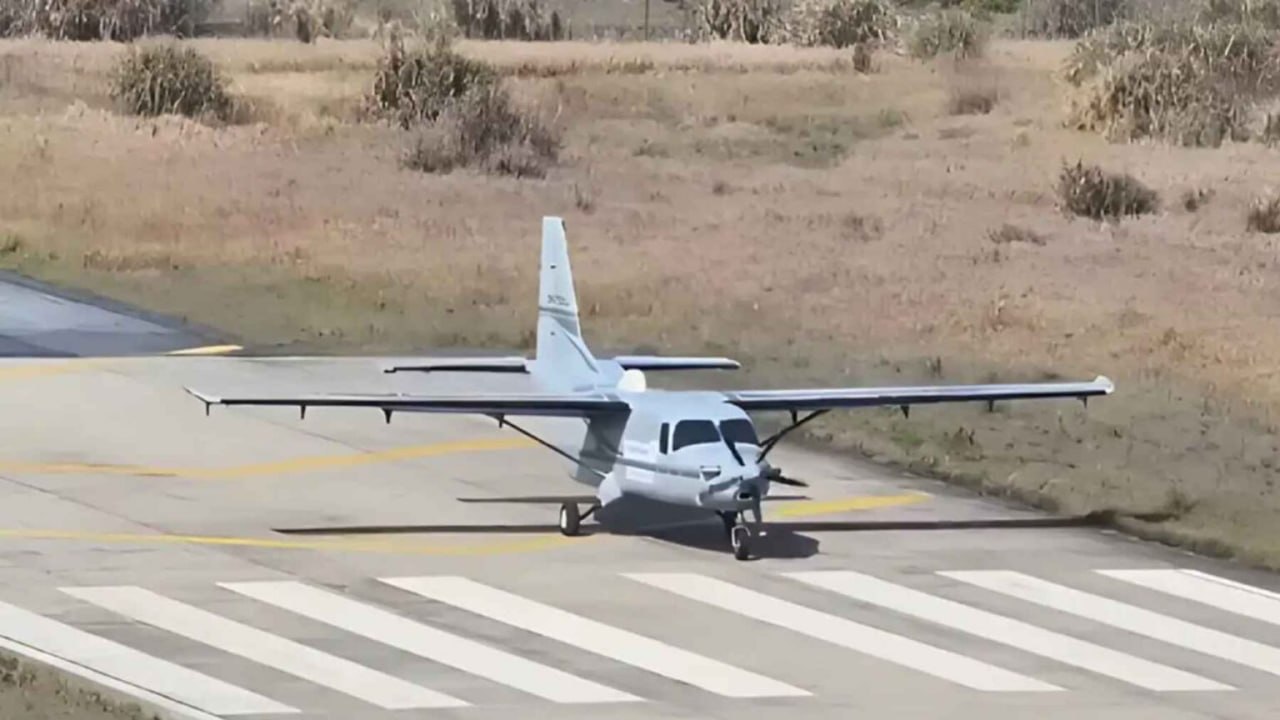

According to environmental news publisher Ecoticias and author Kevin Montien, China has successfully completed a test flight of a 7.5-ton unmanned cargo aircraft powered by the AEP100 hydrogen-fueled turboprop engine. The flight took place in Zhuzhou, Hunan Province, on April 4, 2026.
The milestone marks what Chinese developer AECC describes as the world’s first flight test of a megawatt-class hydrogen-fueled turboprop engine. During the demonstration, the aircraft flew for 16 minutes, covered 36 kilometers, reached an altitude of 300 meters, and maintained a speed of approximately 220 km/h.
The aircraft was powered by the AEP100 engine developed by the Aero Engine Corporation of China. Unlike hydrogen fuel-cell aircraft concepts, the AEP100 burns hydrogen directly in a turbine engine similar to conventional turboprop systems.
According to AECC, the engine operated normally throughout the flight and completed all planned maneuvers before landing safely.
Flight Test Highlights
- Flight date: April 4, 2026
- Location: Zhuzhou, Hunan Province, China
- Aircraft weight: 7.5 tonnes
- Flight duration: 16 minutes
- Distance covered: 36 km
- Cruise speed: 220 km/h
- Altitude: 300 meters
- Engine: AEP100 hydrogen-fueled turboprop
Hydrogen Aviation Technology Gains Momentum
Hydrogen is increasingly viewed as a potential long-term alternative to conventional aviation fuels. When hydrogen is burned, it does not directly emit carbon dioxide. However, experts note that overall environmental benefits depend heavily on the production method used to generate the hydrogen.
Green hydrogen, produced using renewable electricity, offers the greatest emissions reduction potential. Aviation manufacturers and regulators worldwide continue to study hydrogen’s role in achieving long-term decarbonization targets.
Challenges Facing Hydrogen-Powered Aircraft
Despite the successful demonstration, significant hurdles remain before widespread commercial adoption.
Key challenges include:
- Hydrogen storage requirements at extremely low temperatures
- Airport fueling infrastructure development
- Aircraft certification standards
- Operational economics
- Long-term engine durability testing
Industry analysts note that short experimental flights are important milestones but do not guarantee near-term commercial deployment.
Implications for Unmanned Cargo Aircraft
Hydrogen propulsion may first find commercial use in unmanned cargo operations, regional transport, and island logistics networks.
According to AECC, hydrogen aviation technology could initially serve low-altitude freight operations before expanding to larger regional aircraft.
This approach mirrors broader industry trends where cargo platforms often serve as testing grounds for emerging aviation technologies before passenger applications.
Industry Outlook
The successful flight represents an important engineering achievement for hydrogen aviation development. However, the event should be viewed as an early-stage technology demonstration rather than a commercial breakthrough.
Future milestones will include:
- Longer-duration flights
- Higher-altitude operations
- Expanded payload testing
- Certification pathways
- Hydrogen infrastructure deployment
If these challenges are addressed, hydrogen-powered aircraft could become an important component of future sustainable aviation strategies alongside sustainable aviation fuels, electric propulsion, and hybrid systems.







