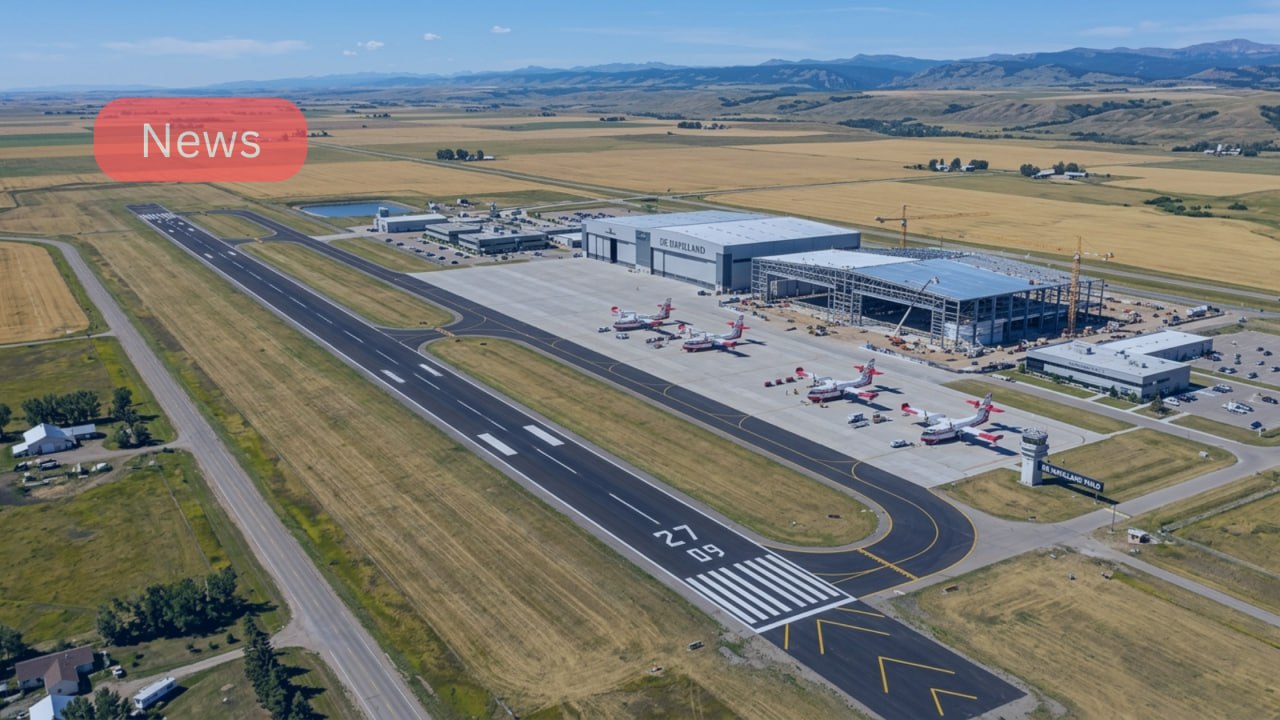

De Havilland Canada has officially launched construction of De Havilland Field in Wheatland County, Alberta, marking one of the most ambitious aerospace infrastructure projects in Canada in recent years. According to De Havilland Canada’s official announcement, the groundbreaking ceremony took place on May 15, 2026.
The new aerospace campus will support aircraft manufacturing, maintenance, parts distribution, and pilot and workforce training. The project also reflects growing Canadian efforts to strengthen domestic aerospace production and reduce dependence on foreign industrial supply chains.
Government representatives from Alberta and Canada attended the event alongside De Havilland executives and regional officials.
What Is De Havilland Field?
The De Havilland Field groundbreaking project centers on a large aerospace manufacturing campus located about 30 minutes east of Calgary in Wheatland County, Alberta. The site was first announced in 2022.
According to aviation industry reports, the facility is expected to include:
- Aircraft assembly lines
- A dedicated runway and airfield
- Maintenance, repair, and overhaul facilities
- Parts manufacturing centers
- Logistics and distribution infrastructure
- Aerospace training facilities
- Office and support buildings
Industry publication Journal Aviation reported that future production at the site will include the DHC-515 water bomber, Twin Otter aircraft, and Dash 8-400 programs.
De Havilland Field Groundbreaking Supports DHC-515 Production
One of the most strategically important aspects of the project involves production of the DHC-515 firefighting aircraft.
Reuters previously reported growing global demand for amphibious firefighting aircraft as wildfires intensify across Europe and North America. The DHC-515 program already has international orders from countries including Greece, France, Spain, Croatia, and Portugal.
The aircraft can scoop approximately 1,400 gallons of water in less than 12 seconds and conduct multiple water drops during firefighting operations. Reuters also noted that De Havilland estimates global demand for up to 350 firefighting aircraft in coming years.
This demand gives De Havilland Field broader international significance beyond Canada’s domestic aviation market.
Canadian Aerospace Manufacturing Gains Strategic Importance
The project reflects wider trends across the global aviation industry.
Countries increasingly seek domestic aerospace manufacturing capability due to:
- Supply chain disruptions
- Defense industrial policy concerns
- Specialized aircraft demand
- Wildfire response requirements
- Regional economic diversification
De Havilland CEO Brian Chafe described the project as part of building “sovereign capability in Canadian aerospace.”
The facility also aligns with Canada’s broader aerospace sector, which remains among the world’s largest aviation industries. Canada is home to major aerospace firms and specialized aircraft manufacturers concentrated in Quebec, Ontario, and increasingly Alberta.
Economic Impact on Alberta Aviation Industry
Construction and long-term operations are expected to create thousands of jobs across:
- Engineering
- Skilled trades
- Aircraft manufacturing
- Maintenance operations
- Aviation services
Construction industry reporting estimates the site could generate roughly 3,000 permanent jobs once fully operational.
The Alberta government has also announced plans to purchase DHC-515 aircraft for wildfire response operations.
This combination of manufacturing and procurement support may strengthen Alberta’s position in the North American aviation sector.
Industry Outlook
The De Havilland Field groundbreaking represents more than a regional construction project. It signals a long-term push to expand Canadian aircraft manufacturing capacity at a time when global aerospace supply chains remain under pressure.
The success of the project will likely depend on:
- Continued aircraft demand
- Government procurement support
- Successful DHC-515 production ramp-up
- Global firefighting aircraft requirements
- Labor and supply chain stability
If construction progresses as planned, De Havilland Field could become one of Canada’s most important aerospace manufacturing hubs during the next decade.







