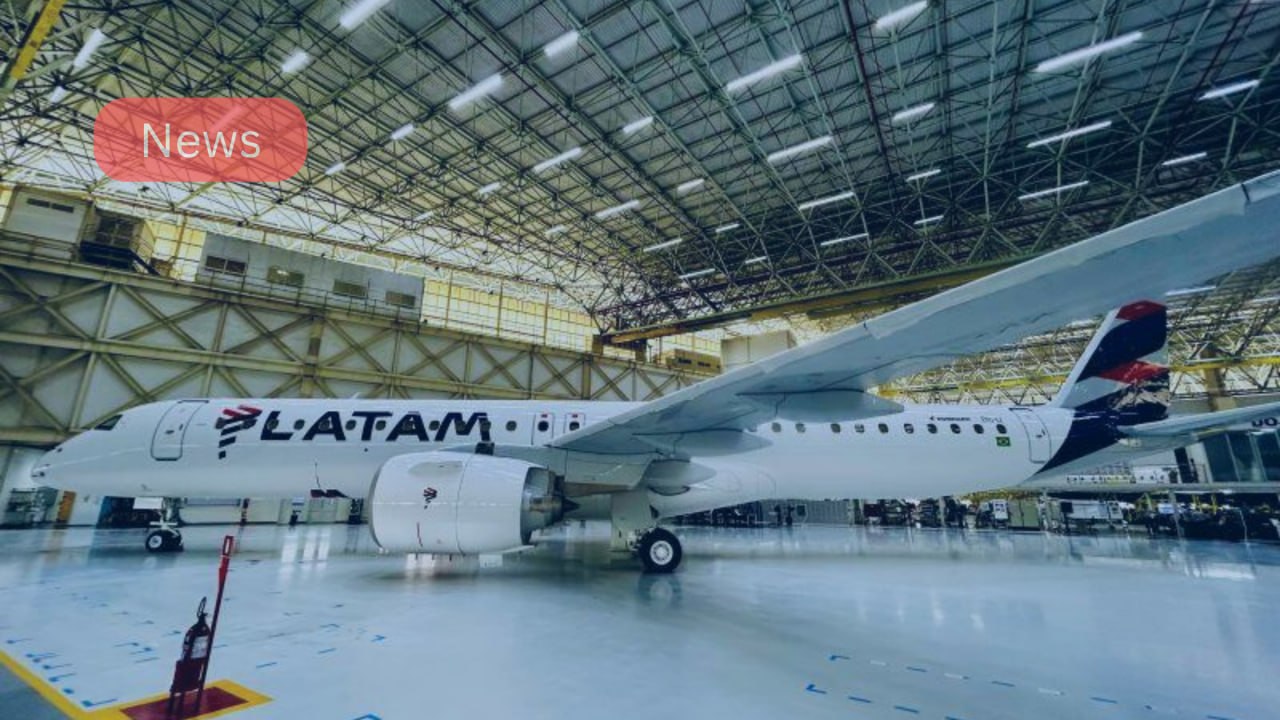

Brazilian aircraft manufacturer Embraer says its Embraer E2 production program is gaining momentum despite ongoing supply-chain challenges.
According to aviation journalist Kurt Hofmann writing for Aviation Week Network, Embraer executives reported significant improvements in production efficiency and growing demand for the E2 regional jet family during a media briefing in São José dos Campos, Brazil.
The update comes shortly after the 2026 IATA Annual General Meeting in Rio de Janeiro, where industry leaders discussed aircraft availability, supply-chain constraints, and airline fleet expansion plans.
Embraer Targets Higher Commercial Aircraft Deliveries
Embraer President and CEO Francisco Gomes Neto said the manufacturer expects to deliver between 80 and 85 commercial aircraft in 2026.
The company attributes the improvement to several operational initiatives designed to shorten production cycles and improve supplier coordination. According to Embraer, manufacturing time has fallen significantly since 2021.
Key developments include:
- Reduced aircraft production cycle times.
- Improved supplier collaboration.
- More stable manufacturing workflows.
- Increased final assembly efficiency.
Reuters separately confirmed Embraer’s 2026 delivery target and reported that the company aims to further increase output in 2027 if supply-chain conditions continue improving.
Embraer E2 Production Benefits From Strong Order Backlog
A major driver behind the expansion is growing demand for the Embraer E190-E2 and Embraer E195-E2 aircraft.
Embraer Commercial Aviation CEO Arjan Meijer said the company holds a commercial aircraft backlog worth approximately $14.5 billion, representing nearly five years of production activity.
Recent developments support that outlook:
- Leasing company Azorra ordered 15 additional E195-E2 aircraft.
- Total E2 program bookings surpassed 500 aircraft.
- More than 200 E2 aircraft have already been delivered globally.
The E2 family competes primarily with the Airbus A220 in the regional jet market.
Pratt & Whitney Engine Issues Continue to Improve
One challenge facing many airlines operating next-generation aircraft has been durability issues involving Pratt & Whitney geared turbofan (GTF) engines.
However, Embraer executives reported major improvements.
According to Meijer, only one or two E2 aircraft remain grounded because of GTF-related issues, compared with significantly higher disruption levels previously experienced across the industry.
The development could improve fleet reliability and strengthen airline confidence in future Embraer E2 acquisitions.
Why the E2 Matters in Aviation Manufacturing
The E2 family occupies an important niche between larger narrowbody aircraft and smaller regional jets.
Industry analysts note that airlines increasingly seek aircraft that can:
- Match capacity with fluctuating demand.
- Improve fuel efficiency.
- Open thinner routes profitably.
- Reduce operating costs.
The aircraft family has accumulated more than 1.25 million flight hours since entering service in 2018, demonstrating growing operational maturity.
Aviation Industry Context
The global aviation sector continues to face supply-chain constraints affecting manufacturers worldwide.
Both Airbus and Boeing have struggled with delivery delays, creating opportunities for alternative manufacturers such as Embraer.
The International Air Transport Association (IATA) has repeatedly highlighted aircraft availability as a major industry concern because airlines need new aircraft to support passenger growth and sustainability goals. Airlines also seek more fuel-efficient fleets to reduce emissions and operating expenses.
Against this backdrop, Embraer’s improved production performance may strengthen its position in the commercial aviation market.
What’s Next for Embraer?
Several developments will be closely watched over the coming year:
- Achievement of the 80–85 aircraft delivery target.
- Continued recovery of the aerospace supply chain.
- Additional E2 orders from airlines and leasing companies.
- Expansion into markets such as China.
- Further reductions in Pratt & Whitney GTF disruptions.
If current trends continue, Embraer could further strengthen its position in the regional and small narrowbody aircraft segment while benefiting from growing airline demand worldwide.







