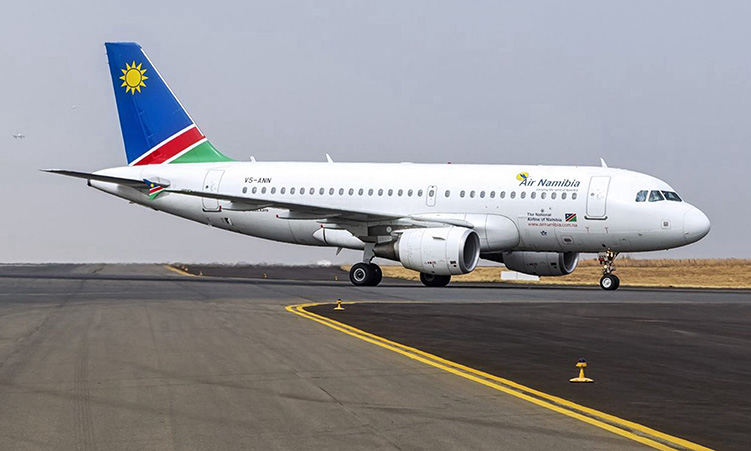

Government reviews Namibia Air following completion of feasibility study
Namibia has completed a feasibility study for a proposed new national airline, marking another step toward restoring a state-owned carrier five years after the collapse of Air Namibia. According to aviation journalist Chamwe Chowa Kaira writing for African Pilot Magazine, the study is now under government review as officials evaluate the most commercially sustainable operating model.
The study forms part of the Namibian government’s broader strategy to improve national air connectivity, strengthen tourism, and support economic development while avoiding the financial shortcomings that led to Air Namibia’s liquidation in 2021.
The proposal includes assessing strategic partnerships with established international airlines, including possible collaboration with Ethiopian Airlines, alongside alternative ownership and operating structures.
Why Namibia Wants a New National Airline
The feasibility study comes after the closure of Air Namibia, which ceased operations in February 2021 following years of financial losses.
According to government figures referenced in the study:
- More than N$8 billion was spent supporting Air Namibia.
- The airline carried liabilities approaching N$5.4 billion.
- Assets were valued at just over N$1 billion.
- More than 600 employees were affected by the liquidation.
Rather than reviving Air Namibia, the government has opted to establish an entirely new airline under the proposed name Namibia Air, with a stronger commercial foundation and improved governance.
Government Examines Multiple Operating Models
Minister of Works and Transport Veikko Nekundi confirmed that the technical assessment has been completed and is undergoing detailed review.
The evaluation involves representatives from:
- Ministry of Works and Transport
- Ministry of Finance
- Office of the Attorney General
- Namibia Civil Aviation Authority
- Namibia Airports Company
- Namibia Investment Promotion and Development Board
- Aviation industry specialists
Officials are examining several business models before making any final decision on launching the airline.
Among the options being considered are:
- Strategic airline partnerships
- State-owned operating model
- Public-private partnerships
- Commercial management agreements
- Fleet acquisition strategies
Why Connectivity Matters
Namibia has experienced improving international connectivity since Air Namibia’s closure.
Regional carriers and international airlines have expanded services into Windhoek, while additional long-haul routes are expected during 2026. Improved connectivity has supported tourism and business travel without relying solely on a national carrier.
However, many policymakers argue that a national airline could:
- Improve domestic connectivity
- Expand regional air links
- Support tourism growth
- Enhance cargo logistics
- Increase national aviation resilience
The challenge will be achieving these objectives without repeating the financial difficulties experienced by the former flag carrier.
Aviation Policy Context
The proposal aligns with broader African efforts to strengthen intra-African connectivity under initiatives such as the Single African Air Transport Market (SAATM), which aims to liberalise air services across participating African states.
Industry studies continue to show that stronger air connectivity contributes to tourism growth, trade expansion and economic integration across the continent, provided airlines operate on commercially sustainable principles.
Any future Namibia Air operation would also need to comply with standards established by the International Civil Aviation Organization (ICAO) regarding safety oversight, certification and operational governance.
Industry Implications
If approved, Namibia Air could reshape the country’s aviation landscape.
Potential benefits include:
- Greater regional connectivity
- Improved tourism access
- Increased employment opportunities
- Enhanced cargo capacity
- Stronger integration with Southern African aviation networks
However, aviation analysts generally agree that success will depend on disciplined financial management, appropriate fleet selection and sustainable route planning rather than government subsidies alone.
What’s Next?
The Namibian government is expected to complete its review of the feasibility study before deciding whether to proceed with the launch of Namibia Air.
Key decisions will include:
- Selecting the preferred business model
- Identifying strategic airline partners
- Determining fleet requirements
- Establishing governance structures
- Setting a potential launch timeline
Should the project move forward, Namibia would rejoin a growing number of African nations investing in national aviation capacity while attempting to balance strategic connectivity with commercial sustainability.
Sources
- African Pilot Magazine. Namibia Completes Feasibility Study for New National Airline. Written by Chamwe Chowa Kaira. 25 June 2026.
- The Villager Namibia. Namibia Air Feasibility Study Has Been Completed.
- Historical background on Air Namibia.
- Namibia airport connectivity developments.







