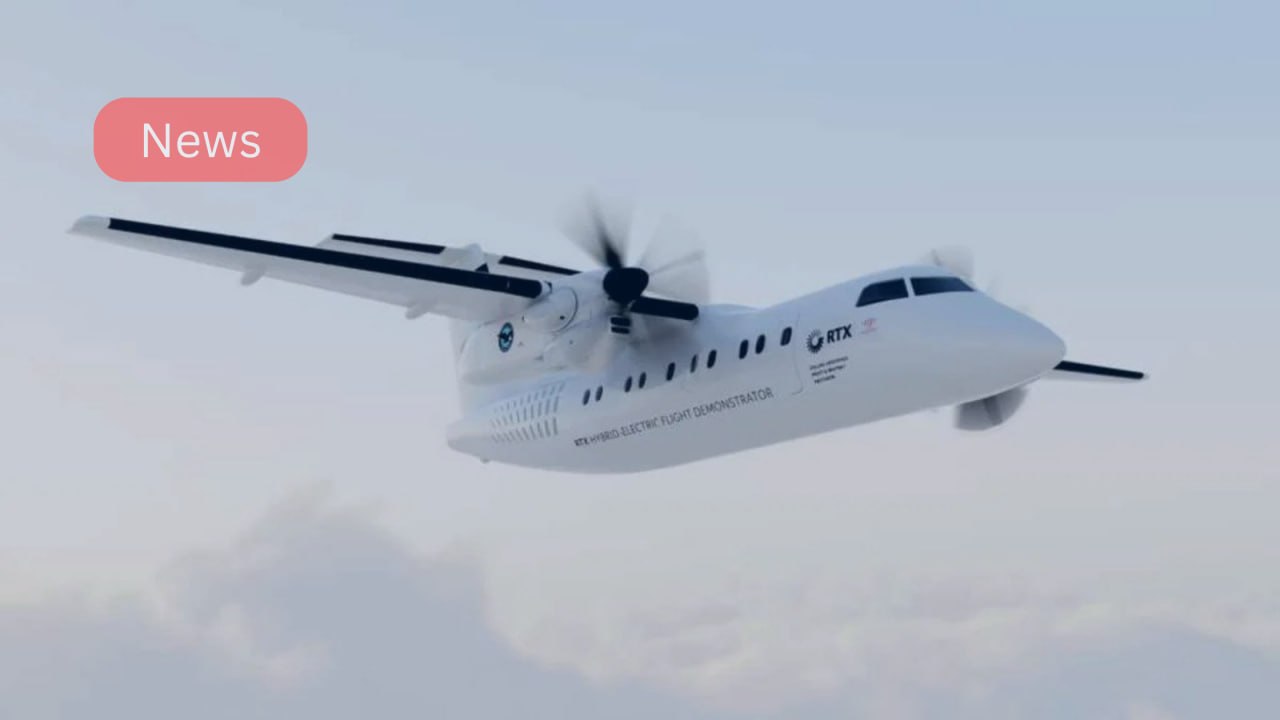

LONGUEUIL, Quebec Pratt & Whitney Canada has officially initiated ground testing for its flight-standard hybrid-electric propulsion system, according to senior aviation journalist Meg Godlewski in a report published by FLYING Magazine and syndicated via Yahoo Tech.
Engineers are running the full-scale propulsion system and propeller through test sequences in Longueuil, Quebec. This milestone marks a significant step forward for the RTX Hybrid-Electric Flight Demonstrator program. Once ground evaluations finish, technicians will integrate the powertrain onto an experimental de Havilland Canada Dash 8-100 aircraft for flight testing in 2027.
“Assembling the final, flight-standard propulsion system brings us one step closer to proving hybrid-electric technology in flight,” said Jean Thomassin, Executive Director of New Products and Services Introduction for Pratt & Whitney Canada. “We are advancing thermal engine and hybrid-electric technologies which could enhance fuel efficiency and performance for a wide range of future aircraft applications.”
Next-Generation Aerospace Engine Innovation and Architecture
The novel propulsion architecture pairs a high-efficiency Pratt & Whitney Canada thermal engine with a 1-megawatt electric motor developed by sister company Collins Aerospace. Swiss energy developer H55 S.A. supplies the certifiable energy storage battery system.
During high-demand mission phases like takeoff and initial climb, the collins aerospace electric motor provides auxiliary power. This boost allows the main thermal engine to run at an optimized, constant setting, driving down fuel consumption and carbon output.
Key Performance Specifications
- Target Efficiency: Up to a 30% reduction in fuel burn and carbon emissions on a typical 250-nautical-mile regional mission.
- Electric Motor Capacity: 1-megawatt electric motor and integrated controller.
- Flight Testbed: De Havilland Canada Dash 8-100 experimental turboprop platform.
- Target Flight Date: Scheduled for first flight tests in 2027.
Driving Sustainable Aviation Technology Across Regional Routes
Regional airlines face mounting pressure from international regulators to curb emissions. Both the International Civil Aviation Organization (ICAO) and the International Air Transport Association (IATA) have set targets for net-zero carbon aviation by 2050.
Hybrid architecture serves as a practical bridge while full hydrogen or pure-electric systems mature. Because current battery energy densities limit pure-electric flight to light aircraft, combining thermal and electric systems offers immediate regional turboprop fuel efficiency benefits for 30-to-80 seat commercial airliners.
Industry consortia are accelerating these advancements. The Canadian government supports the project through the Initiative for Sustainable Aviation Technology (INSAT/Strix), alongside key partners including AeroTEC, GKN Aerospace, Ricardo, and the National Research Council of Canada.
Industry Outlook: What’s Next for Regional Turboprop Modernization?
As ground testing progresses in Quebec, the joint engineering teams will focus on system integration, thermal control, and high-voltage electrical management. Ground verification ensures that electrical harmonics and power handoffs between the fuel engine and motor operate seamlessly before airframe mounting.
If flight tests in 2027 validate the projected 30% efficiency gain, regional aviation operators could see dramatic cuts in direct operating costs. This aerospace engine innovation sets the foundation for retrofitting existing regional fleets and powering the next generation of eco-friendly commercial aircraft.







