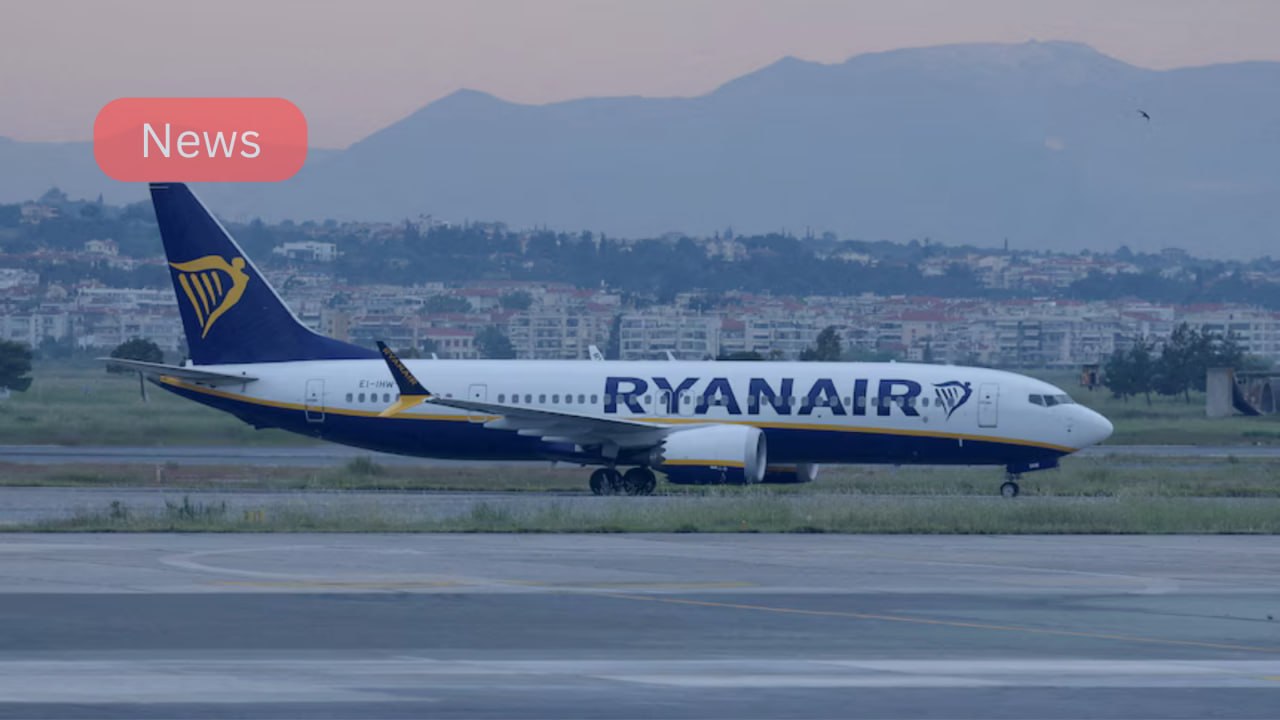

A Ryanair passenger window incident forced a Boeing 737 to make an emergency return to Thessaloniki, Greece, after a cabin window became dislodged shortly after take-off on 10 July 2026. According to Reuters reporting published by ABC News Australia, a Serbian passenger was partially pulled through the opening before fellow passengers managed to pull him back into the aircraft. The aircraft landed safely, and the injured passenger was hospitalized with non-life-threatening injuries.
Reuters reported that the aircraft was operating from Thessaloniki to Memmingen, Germany. Ryanair confirmed that a passenger window became dislodged during flight and stated that the aircraft landed normally before passengers continued their journey on a replacement aircraft. Boeing said it is supporting the official investigation.
What Happened During the Boeing 737 Emergency?
The incident occurred shortly after departure when the aircraft experienced rapid cabin depressurization after a passenger window became dislodged.
Officials confirmed:
- The flight returned safely to Thessaloniki.
- Oxygen masks deployed.
- One passenger required hospital treatment.
- A replacement aircraft completed the scheduled service.
Investigators have not yet determined why the window failed.
Reuters reported that two airport sources and local Greek media suggested engine debris may have struck the fuselage and window, but investigators have not confirmed that theory.
North Macedonia Leads the Aviation Safety Investigation
The investigation is being led by North Macedonia because the occurrence took place within its airspace, consistent with ICAO Annex 13 accident investigation procedures.
Boeing confirmed it is cooperating with investigators, while the U.S. National Transportation Safety Board stated it has been notified and may participate under international investigation protocols.
Similarities to Southwest Flight 1380
The event has drawn comparisons with Southwest Airlines Flight 1380 in 2018.
That accident also involved:
- a Boeing 737 Next Generation aircraft,
- an uncontained CFM56 engine fan blade failure,
- debris striking the fuselage,
- cabin decompression through a damaged passenger window.
Following that accident, the NTSB recommended additional design improvements, and the FAA later issued directives requiring Boeing modifications for affected aircraft.
Aviation Safety Context
Cabin depressurization events remain extremely rare in commercial aviation.
International safety regulations established by ICAO require comprehensive accident investigations before determining probable causes. Airlines and manufacturers typically avoid definitive conclusions until investigators analyze aircraft components, flight data, maintenance records, and engine evidence.
The current investigation will determine whether the event resulted from engine failure, structural damage, maintenance issues, or another technical factor.
Industry Outlook
Investigators are expected to inspect the aircraft, engine components, and maintenance history before issuing preliminary findings. Until then, aviation authorities continue to treat the reported engine-debris scenario as an unconfirmed line of inquiry rather than an established cause.
The investigation’s findings may influence future Boeing 737 inspection procedures if any systemic issues are identified.







