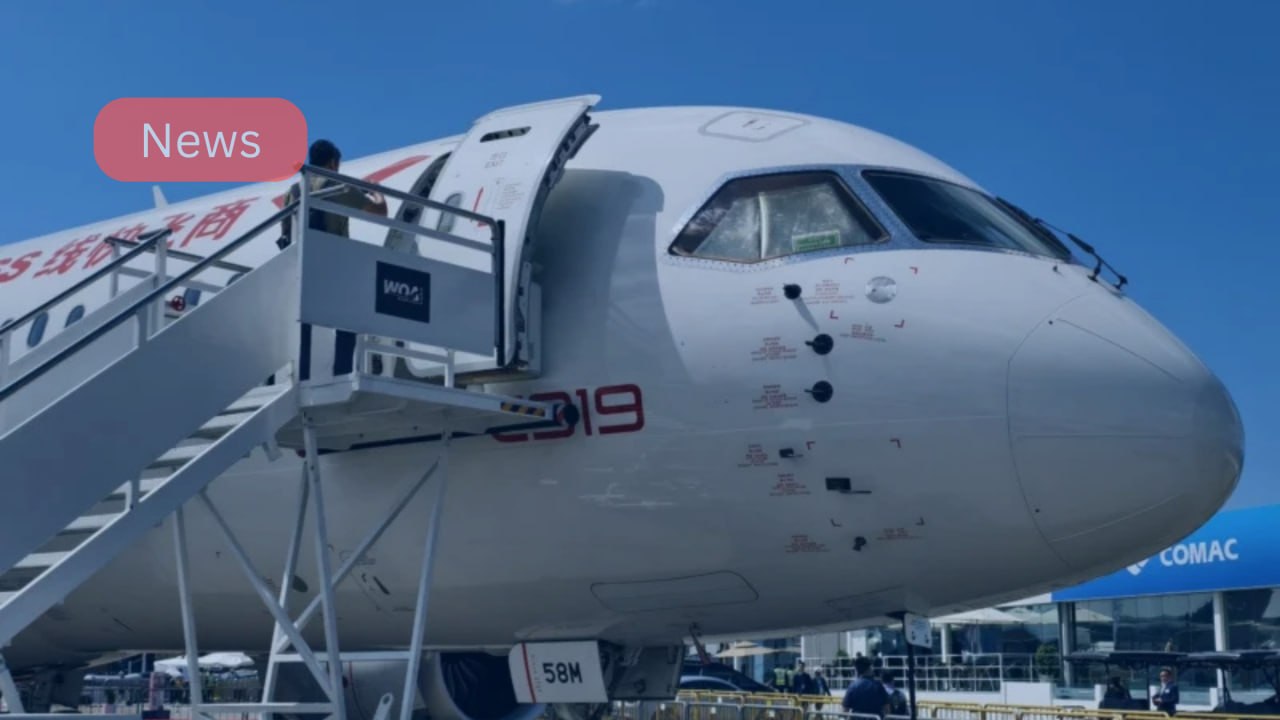

China’s commercial aerospace sector achieved a critical technical breakthrough as the high-altitude COMAC C919-600 variant completed its maiden test flight at Shanghai Pudong International Airport (PVG). The shortened derivative of China’s flagship narrow-body jet remained airborne for one hour and 59 minutes, completing all planned test objectives before landing safely.
According to aviation journalist reporting by AeroTime, the prototype aircraft (registered B-002U) represents the second distinct member of the C919 family to enter active flight testing. Commercial Aircraft Corporation of China (COMAC) engineers specifically tailored this new model to handle the aerodynamic challenges of operating at high-elevation airports across the Tibetan Plateau and southwestern China.
This milestone demonstrates rapid progress in China’s indigenous airliner program. By developing specialized variants, COMAC aims to replace aging foreign fleets operating in high-plateau routes while expanding its footprint across commercial aviation news headlines worldwide.
Tailored Engineering for High-Plateau Airport Access
Operating commercial airliners at high-altitude airports requires distinct engineering modifications due to lower air density. Lower atmospheric pressure reduces both engine thrust and wing lift during takeoff and landing maneuvers.
To address these atmospheric constraints, COMAC removed six fuselage frames from the standard C919-100 baseline. This modification shortens the overall airframe and reduces basic empty weight, allowing optimal climb performance from high-elevation runways.
The C919-600 accommodates between 140 and 160 passengers in a typical two-class layout. The compact structure gives operators higher power-to-weight margins needed for airports situated above 1,524 meters (5,000 feet) sea level.
Strategic Importance for Regional Air Mobility
China holds the largest network of high-altitude airports globally, with over 40 facilities classified as high-elevation or ultra-high-elevation airports. Regional routes in regions like Xizang (Tibet) and Yunnan have historically depended on specialized imports like the Airbus A319neo and Boeing 737-700.
Launch customer Xizang Airlines signed a firm order for 40 C919-600 aircraft in February 2024. The airline plans to deploy the fleet across high-altitude domestic networks, directly connecting mountainous regions to major economic hubs in eastern China.
Aviation market analysts emphasize that domestic fleet self-sufficiency reduces reliance on foreign original equipment manufacturers (OEMs). Providing specialized regional regional aircraft allows Chinese carriers to maintain reliable air connectivity across challenging terrain.
Regulatory Pathways Under CAAC Standards
The maiden flight officially initiates the intensive flight test campaign required for type certification by the Civil Aviation Administration of China (CAAC). Test pilots will evaluate high-elevation takeoff performance, engine relight capabilities, and stall margins in thin-air conditions.
International Air Transport Association (IATA) guidelines require rigorous environmental testing before commercial passenger introduction. COMAC will likely conduct secondary test phases at high-altitude airports such as Lhasa Gonggar Airport (3,570 meters elevation) to gather real-world flight envelope data.
Industry Outlook: What’s Next for the C919 Program?
The maiden flight of the C919-600 marks a broader push by COMAC to build out a complete single-aisle family.
- Certification Timeline: Testing will continue through 2026 and 2027, focusing on high-altitude handling qualities and cold-weather operations.
- Stretched Variant Development: Alongside the shortened C919-600, COMAC is advancing designs for a stretched C919 variant targeting 210 passengers to compete directly against the Airbus A321neo.
- Global Market Presence: While CAAC certification remains the primary goal, COMAC continues seeking international approvals to enable export sales in Southeast Asia and Africa.
As the test campaign progresses, industry observers will closely monitor flight test hours, system reliability, and delivery schedules for launch customer Xizang Airlines.







