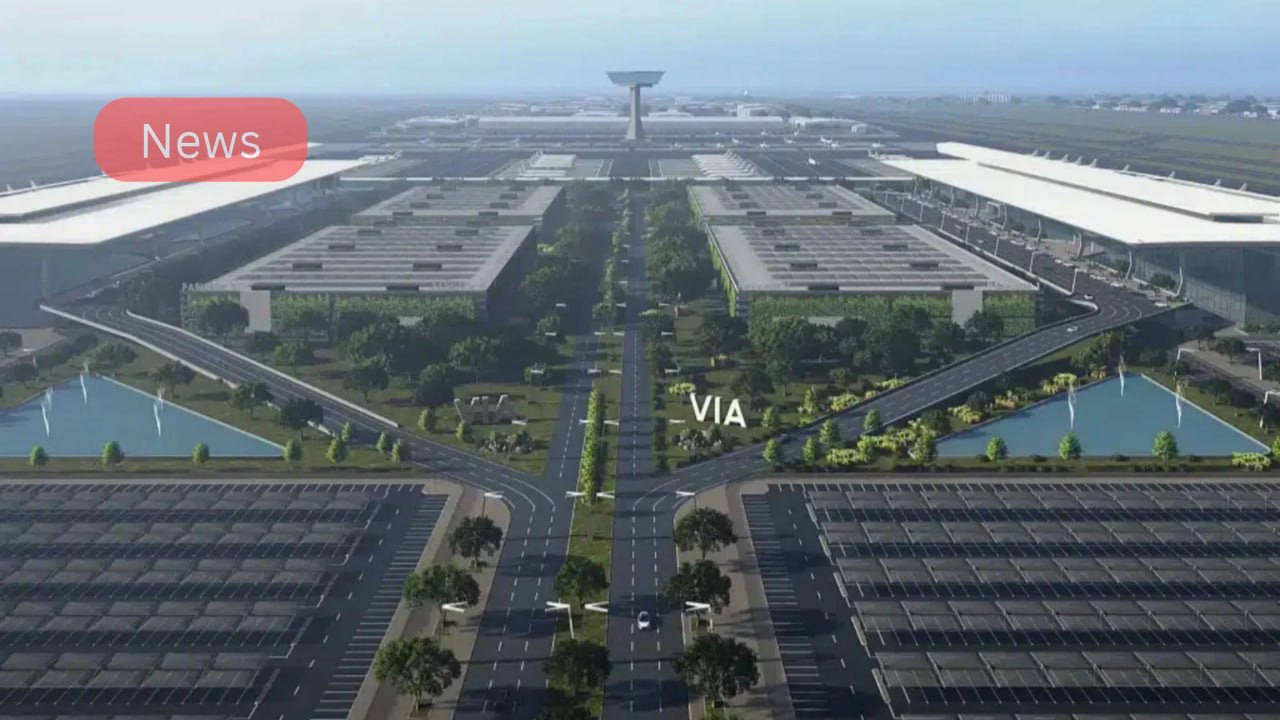

Gauteng is advancing regulatory work on a major greenfield gateway to reshape South African freight and commercial aviation. According to reporting by Daily Investor journalist Declan Thompson, the proposed Vaal Aerotropolis international airport has officially entered its environmental scoping phase. Vaal Aerozone, the master developer leading the project, is seeking statutory environmental clearance to establish an integrated aviation hub and Special Economic Zone (SEZ) in the Emfuleni Local Municipality south of Johannesburg.
The overall project represents a projected capital expenditure of R22.6 billion ($1.28 billion). The airport itself accounts for roughly R12.2 billion of the total outlay, according to estimates released by the Sedibeng District Municipality. Designed to stimulate industrial renewal across the historic Vaal Triangle, the development blends international aviation transit, multi-modal freight operations, and clean-energy infrastructure.
Project Scope and Technical Specifications
The aerotropolis site spans portions of 13 farms situated approximately 9 kilometres west of the N1 highway near Vanderbijlpark. Project developers have positioned the development as a primary air cargo logistics hub. It is planned to be the only airport in Gauteng conceived from inception with dedicated, fully integrated freight processing facilities.
Phase 1 focuses on building the essential airfield infrastructure:
- Airside Operations: A 4,200-metre runway configured to International Civil Aviation Organization (ICAO) Code F standards, permitting heavy wide-body freighters such as the Boeing 747-8F and Airbus A380, supported by dual rapid-exit taxiways.
- Passenger Capacity: A dual-terminal complex engineered to process up to 7.2 million commercial passengers annually during its baseline configuration.
- Freight Handling: A dedicated cargo terminal engineered to handle an initial throughput of 150,000 tonnes of air freight per year.
- Airport City Integration: Ancillary facilities including a 90-room hotel, corporate office parks, medical consulting suites, a solar generation farm, and an agricultural export zone.
Regional Context and Gauteng Aviation Infrastructure
South Africa’s industrial heartland relies heavily on O.R. Tambo International Airport (ORTIA) in Kempton Park for international air connectivity and freight. However, rapid commercial growth across southern Gauteng and the northern Free State has increased road haulage congestion along central freight arteries.
The Vaal Aerotropolis international airport aims to balance regional logistics by redirecting heavy freight away from central urban corridors. It integrates directly into the Vaal SEZ, an industrial revival initiative first outlined by provincial authorities in 2020 to restore heavy manufacturing and export capability to the region.
Funding for the development combines public framework enablement with private capital commitments. In 2023, Citibank South Africa committed R1.38 billion toward the preliminary financing package for Phase 1. The bank noted that targeted infrastructure investments in specialized commercial zones frequently mobilize secondary private capital at multiples exceeding the initial anchor loan.
South Africa Airport Development and Sector Headwinds
This venture unfolds alongside a broader national push in South Africa airport development. State-owned Airports Company South Africa (ACSA) has already committed roughly R21.7 billion toward rehabilitating its existing nine-airport network, including modernizing cargo facilities at O.R. Tambo and extending regional terminal capacities.
Despite substantial commercial interest, aviation economists urge cautious timeline evaluations. Greenfield airport developments regularly confront regulatory, airspace, and capital barriers. Initial government statements in 2024 claimed the broader project would attract R200 billion in investment—a figure that drew public skepticism and was later clarified as an aggregate estimate for the entire multi-decade SEZ rather than the airfield itself. By comparison, KwaZulu-Natal’s greenfield King Shaka International Airport cost R6.8 billion when constructed ahead of 2010.
Municipal projections suggest that the project will create roughly 12,000 short-term construction jobs, alongside 6,000 permanent operational roles upon commissioning. Achieving those employment targets depends on navigating environmental authorizations and securing long-term tenant commitments from global air cargo carriers.
Industry Outlook: What’s Next?
The project is currently proceeding through its environmental scoping phase. Environmental assessment practitioner EMS Africa released the official Background Information Document, opening public submissions until December 2, 2026.
Key milestones to monitor include:
- December 2, 2026: Closure of the statutory public participation and stakeholder commentary window.
- 2027: Submission and review of the final Environmental Scoping Report by the Gauteng Department of Agriculture, Rural Development and Environment.
- 2028: Finalization of airspace coordination protocols with the South African Civil Aviation Authority (SACAA) and Air Traffic and Navigation Services (ATNS).
- 2029–2031: Targeted Phase 1 construction program.
- 2032: Planned commencement of commercial flight and freight operations.
If approved and built to specification, the hub will provide southern Gauteng with dedicated heavy air-cargo infrastructure, reshaping trade distribution and regional freight networks.







