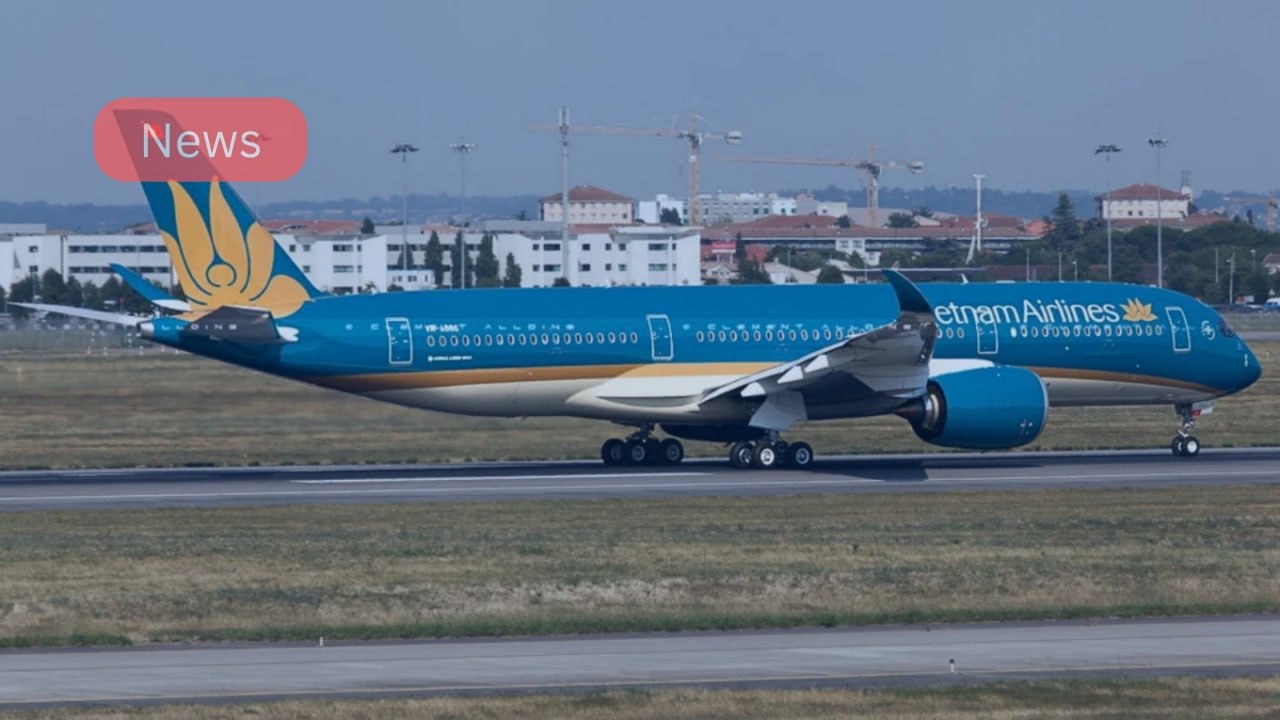

Vietnam Airlines has signed a memorandum of understanding (MoU) with Airbus covering five Airbus A350-900 aircraft, marking another step in its long-term Vietnam Airlines A350-900 deal and fleet expansion strategy. The MoU was exchanged in Paris on September 10, 2026, during Vietnamese General Secretary and President To Lam’s official visit to France. Deliveries are expected in 2033 and 2034.
The development was reported by Karan Bhatta of Aviation A2Z on September 12. Independent reporting by Reuters and confirmation from Vietnam Airlines and Vietnam’s Civil Aviation Authority support the article’s central claims.
Vietnam Airlines A350-900 Deal Is an MoU, Not Yet a Firm Order
The five aircraft form part of Vietnam Airlines’ broader plan to acquire 30 widebody aircraft beyond 2030. The airline says the investment is intended to support international travel demand and expand capacity on medium- and long-haul routes.
However, the terminology matters. The transaction is an MoU for a proposed sale, rather than a confirmed firm purchase order. Vietnam Airlines and the Vietnamese aviation authority say further studies, negotiations and investment and procurement procedures must take place before the acquisition is finalized.
Why the Airbus A350-900 Matters
Vietnam Airlines already has substantial experience with the A350-900. The carrier currently operates 14 A350 aircraft within an Airbus fleet of 81 aircraft, according to Vietnam’s aviation authority.
The airline introduced the A350-900 into commercial service in 2015. Maintaining the same widebody type can provide operational commonality across areas such as crew training, engineering and maintenance, although the actual benefits will depend on the final fleet plan and procurement decisions.
Airbus’ August 2026 statistics show 733 A350 aircraft in its global in-service fleet, illustrating the aircraft’s established position in the long-haul market.
Vietnam Airlines Fleet Expansion Targets Long-Term International Growth
The proposed aircraft are scheduled for delivery more than six years after the signing of the MoU. This makes the agreement primarily a long-term fleet-planning measure rather than an immediate response to current capacity requirements.
Vietnam Airlines has said it will also use leased aircraft to address nearer-term international capacity needs while preparing for longer-term fleet investment.
The fleet strategy involves several stages:
- September 10, 2026: Vietnam Airlines and Airbus exchange the A350-900 MoU in Paris.
- 2033–2034: Expected delivery period for the five proposed A350-900 aircraft.
- Beyond 2030: Vietnam Airlines’ broader strategy identifies up to 30 widebody aircraft as a strategic fleet requirement.
- Before final acquisition: Further technical, financial, investment and procurement work remains necessary.
Southeast Asia Aviation Demand Provides the Broader Context
Vietnam Airlines is planning its widebody expansion against a wider recovery in international aviation. IATA’s 2026 traffic data has shown significant differences between regions and months, while Vietnam itself has faced capacity constraints linked to jet-fuel import limits during part of the year.
The A350 proposal therefore fits into a longer planning cycle. The aircraft would not enter Vietnam Airlines’ fleet until 2033–2034, giving the carrier several years to determine routes, financing, training, maintenance requirements and procurement arrangements.
The agreement also reflects the broader industrial relationship between Vietnam and France. The A350 MoU was exchanged during an official Vietnamese visit to France and alongside other aviation-related agreements involving Airbus.
Aviation Regulation and Procurement Context
International aviation regulations do not themselves constitute an approval for an airline to purchase an aircraft. Aircraft acquisitions are instead subject to the airline’s corporate and financial processes and applicable national investment and procurement requirements.
Vietnam Airlines has specifically stated that further procedures will be required before the proposed acquisition can proceed. This distinction is important because an MoU establishes a framework for further negotiations but does not necessarily create the same commitment as a firm aircraft order.
From an industry perspective, ICAO standards remain relevant to the eventual operation of aircraft through areas such as safety, airworthiness, flight operations and international aviation standards. IATA, meanwhile, provides industry-level traffic and airline economics data rather than approving individual aircraft purchases.
Industry Outlook
The Vietnam Airlines A350-900 deal gives the carrier a longer-term pathway for maintaining and expanding its widebody capabilities. The five proposed A350-900s would complement an existing fleet that already includes 14 A350s.
The immediate next steps are more important than the headline number of aircraft. Vietnam Airlines and Airbus must continue technical and commercial discussions, while the airline works through investment, financing, procurement and delivery planning.
For the aviation industry, the development is significant primarily because it provides an early indication of how Vietnam Airlines intends to structure its post-2030 widebody fleet. The final fleet size, aircraft mix and timing will depend on decisions made during the years ahead.







