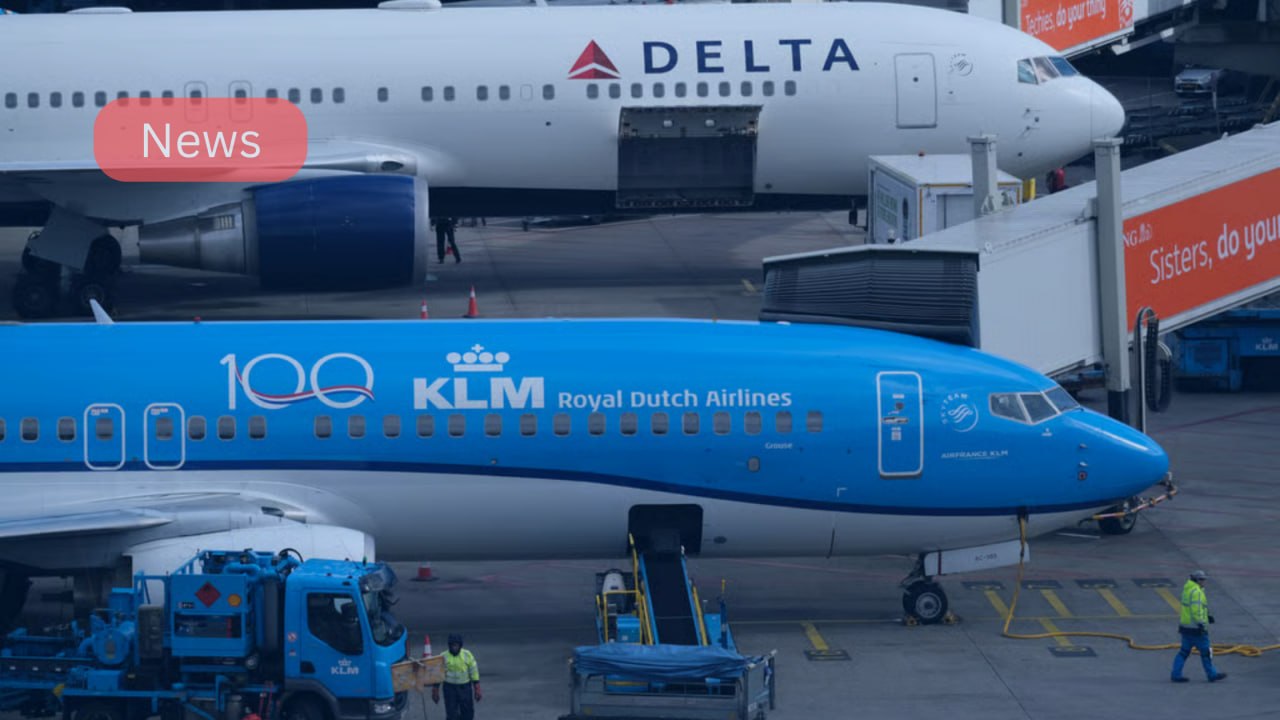

The European Union is moving closer to expanding carbon pricing rules to cover more international aviation routes, a decision that could reshape airline operating costs and global aviation climate policy.
According to reporting from POLITICO Europe, EU policymakers are intensifying efforts to extend the bloc’s emissions trading framework beyond intra-European flights. The proposal forms part of a broader review of the EU Emissions Trading System (EU ETS), one of the world’s largest carbon markets.
The move comes as Brussels seeks stronger measures to reduce aviation carbon emissions and meet its legally binding climate targets for 2030 and 2040.
Reuters separately confirmed that European Commission officials are evaluating whether emissions from flights departing the EU should face expanded carbon pricing obligations.
What the EU ETS Means for Airlines
The EU ETS currently applies mainly to flights operating within the European Economic Area.
Under the system:
- Airlines must purchase carbon allowances for emissions.
- The number of available permits gradually declines.
- Higher carbon costs encourage lower emissions and cleaner fuel adoption.
The European Commission states that the aviation ETS has maintained compliance rates above 99%.
However, long-haul international flights remain largely outside the system because the EU previously limited the scheme’s scope while ICAO developed a global aviation emissions mechanism known as CORSIA.
International Civil Aviation Organization introduced CORSIA in 2016 as a global offsetting framework for international aviation emissions.
Why Brussels Wants Tougher Aviation Climate Rules
European officials argue that current aviation climate measures do not reduce emissions fast enough.
Recent research cited by environmental analysts showed:
- European aviation emissions exceeded pre-pandemic levels in 2025.
- Long-haul routes generate substantial emissions outside the ETS system.
- Low-cost carrier expansion contributed to higher overall emissions.
The European Commission is expected to assess by July 2026 whether:
- The ETS should expand to outbound international flights.
- The EU should continue relying partly on CORSIA.
- Additional climate measures are needed for aviation decarbonization.
Airline Industry Concerns Over EU ETS Aviation Policy
The airline industry supports decarbonization goals but warns against overlapping regulatory systems.
International Air Transport Association recently urged the EU to avoid duplicating CORSIA obligations with separate regional carbon pricing rules.
IATA Director General Willie Walsh argued that fragmented carbon rules could:
- Increase airline operating costs
- Distort competition
- Reduce European connectivity
- Divert investment away from sustainable aviation fuel
IATA also warned that airlines already face growing compliance expenses as free emissions allowances are phased out.
ICAO CORSIA vs EU Carbon Pricing
The debate centers on whether global or regional climate systems should regulate aviation emissions.
Key Differences
| System | Coverage | Approach |
| EU ETS | Mainly intra-European flights | Carbon pricing through emissions permits |
| CORSIA | International aviation routes | Carbon offsetting |
Critics of CORSIA argue the framework relies too heavily on offsets rather than direct emissions reductions.
Supporters say a single global system avoids regulatory fragmentation and trade disputes.
The EU previously faced opposition from the United States and other countries when it attempted to apply carbon pricing more broadly to international aviation. Reuters noted that similar tensions could re-emerge if Brussels expands the ETS again.
Potential Impact on Airlines and Passengers
If the EU carbon tax on international flights expands, several industry effects could follow.
Possible Industry Impacts
- Higher ticket prices on long-haul routes
- Increased compliance costs for airlines
- Stronger investment in sustainable aviation fuel
- Greater pressure on older aircraft fleets
- Competitive challenges for European carriers
Academic research published in 2026 suggested stricter carbon pricing could significantly reduce airline profitability while generating billions in carbon revenues.
Sustainable Aviation Fuel and Decarbonization
European regulators increasingly view sustainable aviation fuel (SAF) as essential for reducing emissions.
Industry groups argue that ETS revenues should help:
- Expand SAF production capacity
- Support hydrogen aviation research
- Accelerate zero-emission aircraft development
The EU’s broader climate strategy targets major reductions in greenhouse gas emissions by 2040 and climate neutrality by 2050.
What’s Next for European Aviation Climate Rules
The European Commission’s 2026 review will determine whether international departing flights become fully integrated into the EU ETS.
Key decisions expected include:
- Scope of international flight coverage
- Coordination with ICAO CORSIA
- Future airline emissions caps
- Allocation of free carbon allowances
The outcome could influence aviation policy far beyond Europe as regulators worldwide debate how aggressively the sector should decarbonize.
For airlines already navigating fuel volatility, fleet renewal costs, and geopolitical disruptions, the next phase of EU aviation climate regulation may become one of the industry’s most significant financial and operational challenges.
Major Sources
- POLITICO Europe: EU Doubles Down on Carbon Tax on International Flights
- Reuters: EU weighs extending carbon market to flights beyond Europe
- IATA: EU Must Review EU ETS to Support Competitiveness as Aviation Decarbonizes







